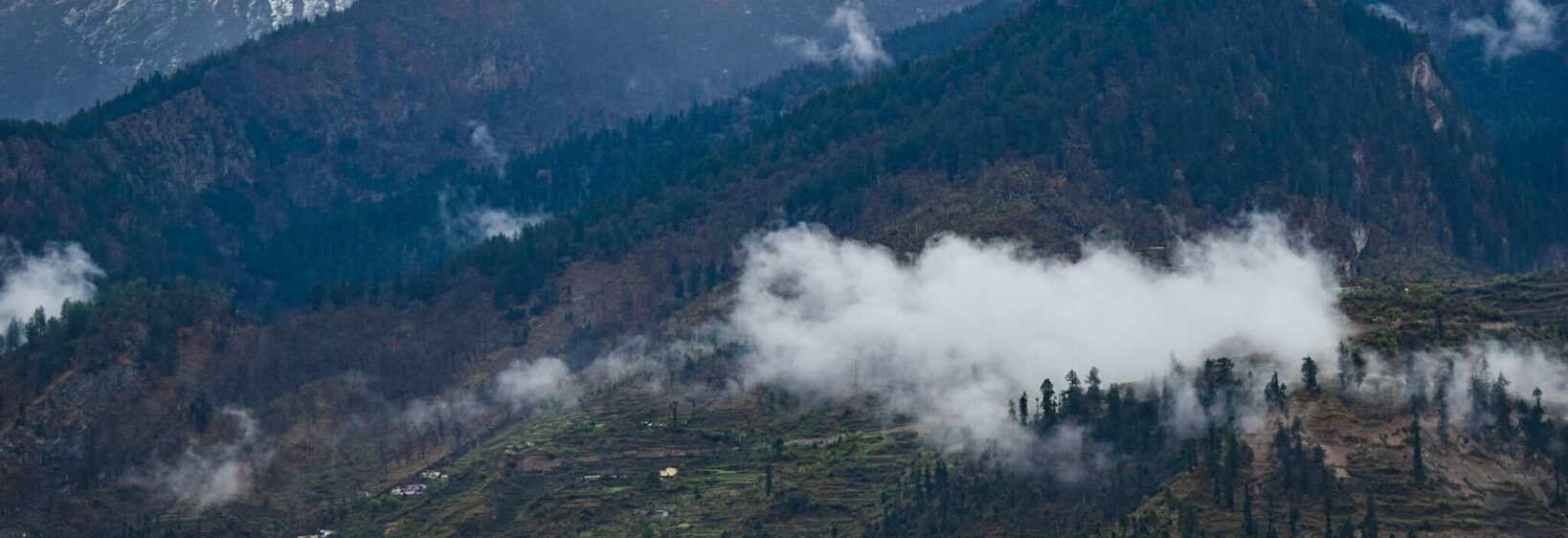
Photographing Himalayan Monals in Nanda Devi National Park
The Himalayan monal is one of Uttarakhand’s most striking birds. Its iridescent plumage can flash green, blue, copper, and violet when sunlight reaches it through the forest. Photographing this pheasant in the high Garhwal Himalaya is rewarding, but the experience depends as much on patience and responsible conduct as on camera equipment.
Nanda Devi National Park lies within the Nanda Devi Biosphere Reserve, a protected mountain landscape shaped by glaciers, alpine meadows, oak forests, and steep Himalayan valleys. Access is regulated, and visitors must follow current permissions, route conditions, and local guidance. For many birdwatchers, nearby areas around Joshimath and the reserve’s permitted approaches provide the most practical base for planning.
Good wildlife photography here is slow and observant. Instead of chasing a rare bird through dense woodland, watch feeding clearings, forest edges, and quiet trails where monals may appear briefly. The best images often come from staying still long enough for the bird to resume its natural behaviour.
Where the Himalayan monal can be found
Himalayan monals inhabit mountain forests and open slopes across the Himalaya. In and around the Nanda Devi landscape, look for mixed conifer, birch, rhododendron, and oak habitats, especially where forest gives way to grassy patches. Their seasonal movements can change with snow, food availability, and elevation.
Males are easier to identify because of their brilliant colours and upright crest, while females have mottled brown plumage that blends into leaf litter and rocky ground. Both sexes may forage by scratching the soil for roots, insects, seeds, and tubers. Early morning is particularly productive because birds are active before the day becomes busy.
Planning a respectful birdwatching trip
A visit requires more preparation than an ordinary sightseeing excursion. Check entry rules, seasonal closures, weather reports, and forest department permissions before travelling. A local naturalist or registered guide can help interpret bird calls, choose suitable trails, and prevent accidental entry into restricted areas.
Joshimath is a useful regional base for exploring the wider Nanda Devi area, with accommodation, transport connections, and access to experienced mountain guides. Visitors can also consult Uttarakhand travel notes for destination context before combining birdwatching with nearby cultural and pilgrimage stops.
Keep your group small and avoid loud conversation. Monals are sensitive to sudden movement, so muted clothing, slow steps, and a concealed position near the trail are more effective than approaching quickly for a closer frame.
Camera settings for mountain forest light
Forest shade can be dim even after sunrise, while open slopes may produce harsh highlights. A telephoto lens in the 300–600 mm range is useful, but a shorter zoom can work when the bird comes near. Carry spare batteries because cold temperatures reduce battery life.
| Situation | Useful starting point | Practical adjustment |
|---|---|---|
| Monal standing in shade | 1/1000 sec, f/5.6, Auto ISO | Raise ISO if the bird moves |
| Bird walking or feeding | 1/1250 sec, f/6.3 | Use continuous autofocus |
| Bright alpine meadow | 1/1600 sec, f/7.1 | Reduce exposure to protect feathers |
| Bird taking flight | 1/2000 sec or faster | Track smoothly and leave space ahead |
Use aperture priority or manual exposure according to your confidence. Spot-check the histogram because iridescent feathers can lose detail in direct light. Focus on the eye, keep the shutter speed high enough to freeze head movement, and use burst mode sparingly rather than filling every memory card.
Finding strong compositions
A monal partly hidden by fern, grass, or low branches can make a more natural photograph than a completely open portrait. Use surrounding vegetation to show habitat and scale. Low angles are often attractive, but never lie across a trail or move into sensitive vegetation simply to improve perspective.
Watch the direction of light. Side lighting can reveal the bird’s metallic colours, while soft cloud cover produces even tones across the body. Leave open space in front of the monal’s gaze or movement, and include the mountain forest when the landscape adds meaning to the image.
Patience also creates behavioural photographs: a male displaying his crest, a female scratching through leaf litter, or a bird crossing a snow-dusted slope. These moments are more valuable than repeated close-ups of a stationary subject.
Ethical fieldcraft in a protected habitat
Never play recorded calls, whistle repeatedly, throw food, or approach a nest. Feeding wildlife can alter natural behaviour and draw birds toward roads, camps, and people. If a monal becomes alert, freezes, or moves away, increase your distance immediately.
Avoid flash, especially in dim woodland where repeated bursts may disturb birds. Keep dogs outside protected areas, carry every wrapper back out, and stay on authorised paths. Binoculars are essential because they allow observation without forcing the camera to replace a respectful viewing distance.
The reserve is also home to fragile plants and other wildlife, including musk deer, pheasants, raptors, and high-altitude mammals. Photographing the Himalayan monals should fit into a wider practice of low-impact birdwatching rather than becoming a pursuit of one spectacular species.
A practical field checklist
Mountain weather can change quickly, so prepare for cold, rain, and slippery ground even during a favourable forecast. A waterproof cover protects the camera, while a small ground sheet keeps equipment away from wet soil during long waits.
Before setting out, confirm that your guide, permits, transport, and accommodation are arranged. Keep digital copies of essential documents, carry drinking water, and allow extra time for mountain roads and trail conditions.
- Carry binoculars, spare batteries, memory cards, and a rain cover.
- Wear quiet, layered clothing with sturdy footwear.
- Use a telephoto lens without approaching the bird.
- Record the location discreetly and avoid publishing nest details.
- Follow every instruction from forest staff and local guides.
Bring the experience home
A strong monal photograph combines identification, habitat, behaviour, and atmosphere. Caption images with the season, general area, and observation conditions, while withholding precise locations that could expose sensitive bird sites. This turns a personal trip into useful natural-history documentation.
Plan your visit around conservation rules, travel with a qualified local guide, and give the birds time to accept your presence. With careful preparation and a quiet approach, the forests around Nanda Devi can offer memorable encounters with one of the Himalaya’s most beautiful pheasants.