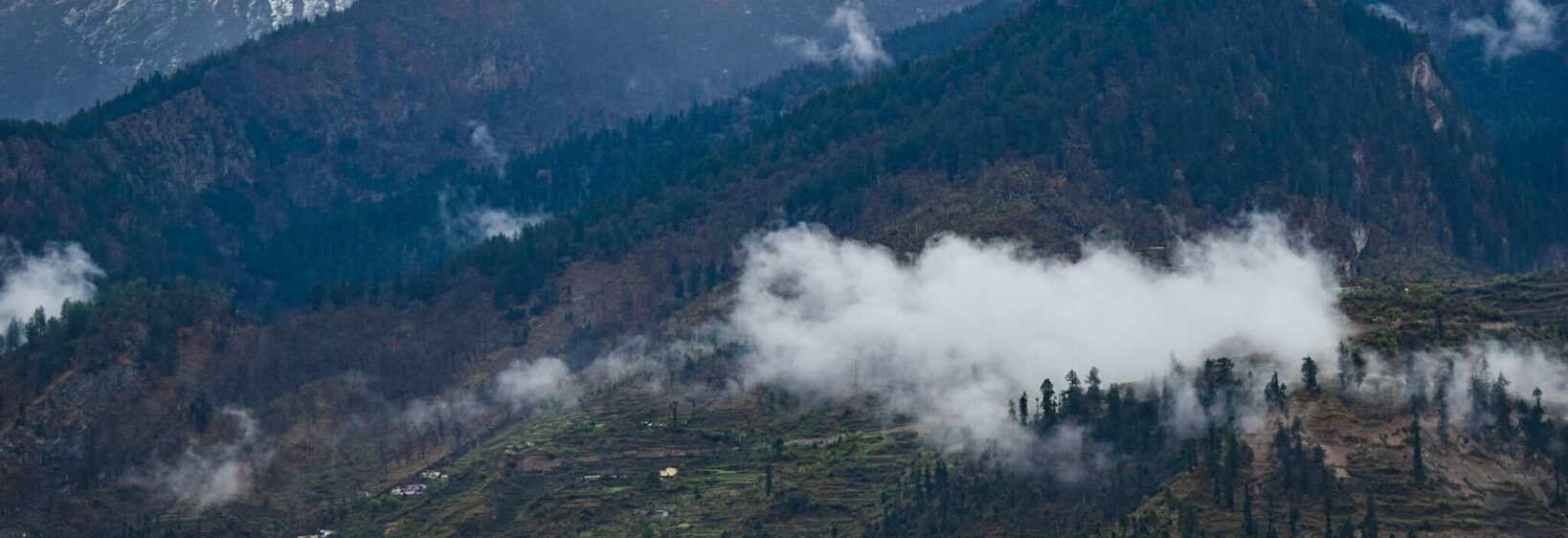
Malari Village And Life In Niti Valley
Malari is a remote settlement in Uttarakhand’s Chamoli district, positioned in the upper Niti Valley near the border with Tibet. At roughly 3,000 metres above sea level, the village is shaped by steep mountains, severe winters, limited roads, and a culture adapted to the high Himalaya.
The journey to Malari follows the Dhauli Ganga valley from Joshimath through settlements such as Tapovan, Raini, and Niti. The landscape changes quickly: pine forests give way to open slopes, rocky cliffs, alpine meadows, and snow-covered ridges. For visitors interested in Himalayan photography and local life, the route offers a rare view of a less commercial side of Uttarakhand.
A Village At The Edge Of The Himalaya
Malari lies close to the Indo-Tibetan frontier, where altitude and climate strongly influence everyday routines. Traditional houses are built with stone, timber, and slate, providing protection from cold winds and heavy snowfall. Their compact forms reflect practical mountain architecture rather than decorative planning.
The settlement has historically been connected with trans-Himalayan trade and seasonal movement. Families in the Niti Valley traditionally moved between high summer villages and lower winter locations, following the availability of pasture, water, and more favourable weather. This pattern is often described as transhumance, a way of life shared by several Himalayan communities.
Seasonal Life In Niti Valley
Winter transforms Malari into a difficult place to inhabit. Snow, freezing temperatures, and blocked routes can isolate the upper valley for long periods. Many residents traditionally relocate to lower areas during the coldest months, returning when the high pastures become accessible in spring and summer.
During the warmer season, agriculture and animal husbandry become central to village life. Crops suited to the short growing period may include potatoes, peas, barley, and other hardy grains. Sheep, goats, and cattle remain important for household income, wool, transport, and food, although modern employment and changing lifestyles are gradually reshaping the local economy.
Culture, Language, And Local Memory
The Niti Valley has a distinctive cultural identity influenced by Bhoti-speaking communities, Hindu traditions, Buddhist connections, and centuries of interaction across mountain routes. Local songs, clothing, food, and festivals preserve memories of an era when trade caravans crossed high passes between India and Tibet.
Hospitality is an important part of village culture, but visitors should remember that Malari is a living community rather than an open-air museum. Photographing homes, residents, livestock, or religious spaces should be done respectfully and with permission. A quiet approach allows travellers to notice details such as carved wooden doorways, woollen garments, grain stores, and stone courtyards without intruding.
Reaching Malari From Joshimath
Malari is generally approached by road from Joshimath, with the route following the Dhauli Ganga and passing through dramatic mountain terrain. Road conditions can change because of landslides, snowfall, construction, and monsoon damage. Travel times are therefore variable, and local advice is essential before departure.
Entry rules and road access may also be affected by the village’s proximity to a sensitive international border. Travellers should carry valid identification, check current permissions, and follow instructions from local authorities. A practical overview of Uttarakhand destinations, including travel-focused material and regional photography, is available through the Uttarakhand travel gallery.
| Aspect | What Travellers Should Expect |
|---|---|
| Location | Upper Niti Valley in Chamoli district |
| Approximate elevation | Around 3,000 metres |
| Main approach | Road from Joshimath via the Dhauli Ganga valley |
| Climate | Short, cool summers and severe snowy winters |
| Local livelihood | Seasonal farming, livestock rearing, trade, and public services |
| Travel character | Remote, quiet, weather-dependent, and culturally sensitive |
| Best planning period | Usually late spring to early autumn, subject to local conditions |
Landscape And Photography
The visual character of Malari changes throughout the day. Early light catches the cliffs and snow lines, while afternoon shadows emphasise the depth of the valley. In summer, small fields and grazing animals add colour to an otherwise rugged landscape; after snowfall, the settlement appears enclosed by white slopes and dark stone walls.
Photography enthusiasts may find it useful to compare Malari’s stark alpine environment with the softer mountain scenery of lower Uttarakhand. The Kausani tea gardens offer a contrasting perspective, where green plantations and rolling hills replace the severe terrain of Niti Valley. At Malari, wide-angle views are valuable, but close details often tell the stronger story.
Responsible Travel In A Remote Settlement
Because facilities are limited, visitors should prepare carefully. Accommodation may be basic or unavailable, mobile connectivity can be inconsistent, and medical support is not close at hand. Warm clothing, sturdy footwear, sun protection, personal medicines, drinking water arrangements, and offline maps are sensible essentials.
Responsible travel also means reducing pressure on local resources and respecting security restrictions. Avoid littering, do not enter private fields or homes without permission, and refrain from flying drones unless officially allowed. Hiring local drivers or guides can improve safety while contributing directly to the mountain economy.
Practical Steps Before Visiting
- Confirm road conditions, permits, and border-area requirements with local authorities.
- Allow extra time for delays caused by weather, landslides, or traffic restrictions.
- Carry cash, essential medicines, warm layers, and food for unexpected interruptions.
- Acclimatise gradually and watch for headache, nausea, breathlessness, or unusual fatigue.
- Ask permission before taking portraits or photographing religious and military locations.
Malari offers an opportunity to see how people maintain community, work, and cultural memory in a demanding high-altitude environment. Plan the journey with patience, travel lightly, and use the visit to support local people while recording the remarkable landscapes of Niti Valley.