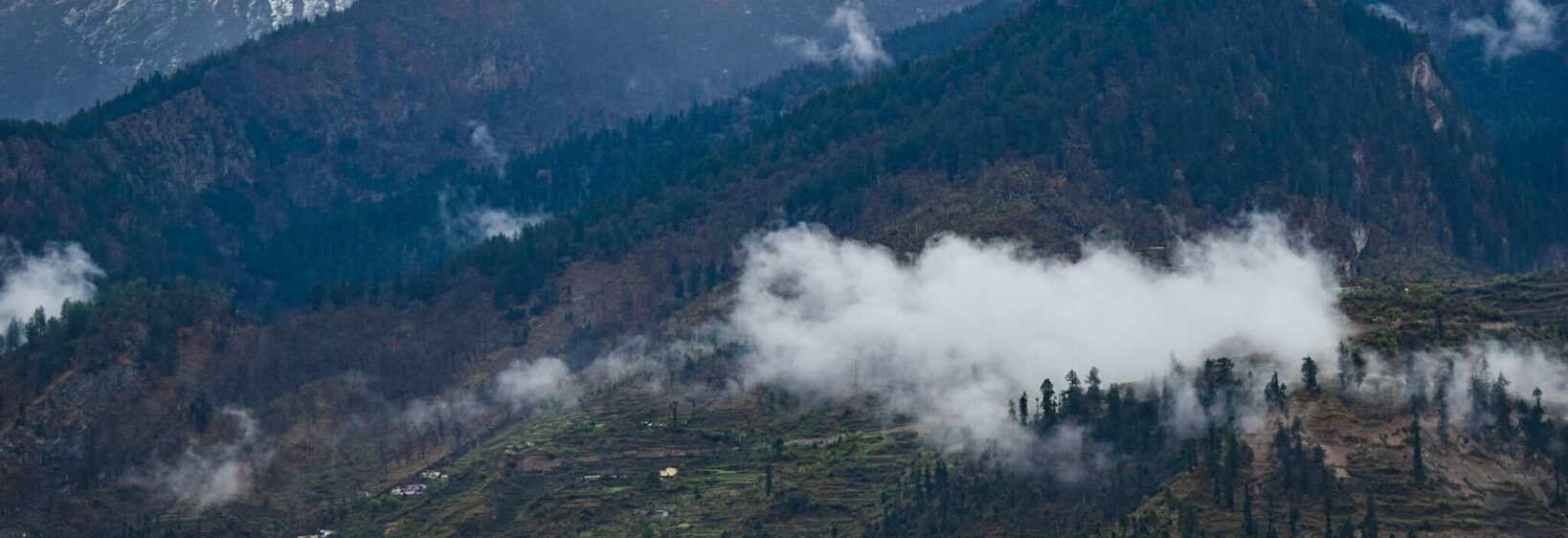
The Tawaghat suspension bridge: a photo subject over the Kali River
In Pithoragarh district, where the mountains narrow around the Kali River, the Tawaghat suspension bridge offers a striking meeting point between landscape, movement, and everyday life. Its cables, deck, and towering valley walls create strong visual lines, while the river below adds depth and atmosphere to every frame.
Tawaghat is close to Dharchula and serves as an important route toward the Darma, Vyas, and Kuthi valleys. The area feels more like a working mountain gateway than a conventional sightseeing stop. Porters, villagers, traders, travellers, and local vehicles give the bridge a living character that staged viewpoints cannot reproduce.
For photographers visiting Kumaon, this footbridge is valuable because it connects several themes in one location: Himalayan terrain, borderland culture, river scenery, traditional movement, and changing light. A thoughtful visit can produce much more than a single postcard image.
Where Tawaghat fits into the Himalayan landscape
Tawaghat lies in the upper Kali River region of Uttarakhand, in a landscape shaped by steep slopes and glacially fed waterways. The Kali, also known as the Mahakali along parts of its course, forms a natural frontier between India and Nepal. Across the water, the Nepalese hills contribute another layer to wide-angle compositions.
The suspension bridge is best understood as part of the local transport network. It links communities on either side of the river and supports access to remote valleys and villages. This practical role is important to show in photographs: an empty bridge can be beautiful, but a bridge being used tells a stronger story about life in the mountains.
Framing the bridge and river
The most obvious composition looks along the bridge, using its cables and railings as leading lines toward the opposite bank. A low viewpoint can emphasise the deck against the river, while a higher roadside position may reveal the full span, rocky slopes, and layered ridges behind it.
Try both horizontal and vertical frames. Horizontal images work well for the broad valley and river channel; vertical photographs highlight the bridge’s height and the steepness of the surrounding terrain. On clear mornings, shadows across the gorge can add contrast, while late afternoon light often brings warmer colour to the cliffs and bridge structure.
People, movement, and local character
A bridge photograph becomes more meaningful when it includes scale. A single person crossing the deck can show its length and height, while a group of travellers or porters can communicate the route’s importance. Use a fast shutter speed for walking subjects, but leave enough surrounding space to preserve the mountain setting.
Ask before making close portraits, especially when photographing residents, workers, or religious travellers. Avoid blocking the bridge, gathering at narrow sections, or asking people to repeat a natural action. The best documentary images usually come from patience and observation rather than direction.
Photography in Uttarakhand also benefits from a wider visual awareness. The same respect applies when documenting quiet retreats elsewhere in the state, including the reflective atmosphere described in this Rishikesh camping story.
Light, weather, and seasonal changes
Clear winter days can provide crisp visibility across the Kali valley, although mornings may be cold and roads can be affected by frost or weather farther uphill. Spring brings softer light and increasing colour on the slopes. During the monsoon, clouds and mist can create dramatic images, but landslides, slippery paths, and sudden river changes require extra caution.
The bridge may look completely different under various conditions. A bright day reveals texture in the steel and rock; cloud cover creates subdued, atmospheric tones; and post-rain conditions can make the Kali River appear more powerful. Carry weather protection for camera equipment and avoid standing close to exposed edges for a better angle.
| Photographic element | Useful approach |
|---|---|
| Bridge structure | Use cables, rails, and repeating supports as leading lines |
| Kali River | Try a slower shutter speed only from a stable, safe position |
| Human scale | Include a consenting person crossing naturally |
| Mountain background | Use a wide lens and leave space around the bridge |
| Changing light | Visit in morning or late afternoon for softer contrast |
| Weather | Protect equipment and avoid unstable riverbanks |
Practical access and responsible photography
Tawaghat is generally approached by road from Dharchula, but travel times can change with road conditions, construction, traffic, and seasonal weather. Confirm local access before setting out, particularly if continuing toward higher valleys. A local driver or guide can provide useful information about safe stopping points and current conditions.
Keep camera bags compact when crossing, and do not lean over railings or place equipment where it could fall onto the deck or river. Follow local instructions around border-sensitive areas, security posts, and restricted viewpoints. The bridge is a passageway first, so allow people to cross freely.
Building a stronger photo story
Instead of taking only a wide shot, create a sequence: an establishing image of the gorge, a medium view of the bridge, a detail of cables or weathered metal, and a human-scale frame showing daily use. Add photographs of nearby paths, river stones, mountain homes, or distant ridgelines to give the location a fuller sense of place.
Recommended choices for a respectful and varied visit:
- Carry a wide lens, a standard zoom, and a lightweight rain cover.
- Photograph early or late in the day for gentler shadows and richer colour.
- Ask permission before making identifiable close portraits.
- Stay on stable ground and keep clear of the active crossing route.
- Record local place names and stories accurately when publishing captions.
The Tawaghat bridge rewards photographers who slow down and watch how the landscape works. Bring home images that show its engineering, its dramatic Himalayan setting, and the people who depend on it, then share the story with accurate captions and respect for the communities along the Kali River.