Naukuchiatal Lake: Seven Corners and Reflection Photography
Naukuchiatal Lake, in Uttarakhand’s Kumaon region, is a peaceful destination for travellers who enjoy landscape photography, village life and quiet waters. Surrounded by forested hills, terraced fields and small settlements, the lake offers a softer alternative to busier hill stations such as Nainital and Mussoorie.
The name Naukuchiatal traditionally means “lake of nine corners”, yet a seven-corner photography route can create a practical way to explore its changing viewpoints. For Australian visitors, it is an appealing stop on a longer Kumaon journey, especially for anyone who enjoys bushwalking, sunrise images and an unhurried arvo beside the water.
Where the nine-cornered lake gets its name
Local tradition describes Naukuchiatal as a lake with nine distinct corners. Legends suggest that seeing all nine corners at once is difficult, adding a sense of mystery to the landscape. In practical terms, trees, bends in the shoreline and rising slopes conceal parts of the lake from most viewpoints.
The water body sits at roughly 1,200 metres above sea level and is fed by underground springs. Its edges include boating areas, walking paths, gardens and quieter stretches where reeds and woodland meet the water. The surrounding countryside feels more rural than the commercial centre of Nainital, with village homes, small cafés and roadside stalls shaping the experience.
How reflections change through the day
Early morning is usually the best time for a clear lake reflection. Before the breeze strengthens, the water can mirror pine-covered slopes, clouds and pale sunlight. A calm surface also helps photographers compose balanced images with the shoreline placed low in the frame.
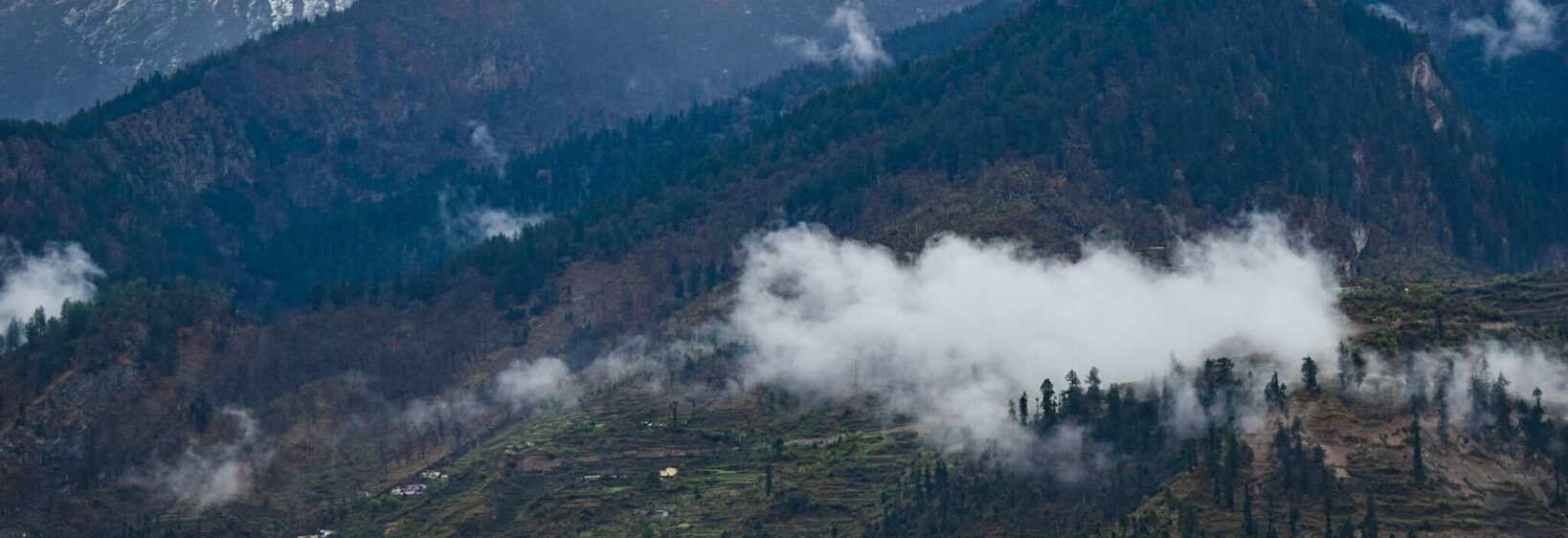
By late morning, boat movement and rising air currents often break the reflection into ripples. That does not make the scene less useful: broken shapes can add texture, while sunlight on moving water creates a more energetic image. During the wet season, cloud layers and darker hills can produce atmospheric photographs with a distinctly Himalayan mood.
A seven-corner photography route
A seven-stop route might begin at the main lakeside promenade, continue to a boating jetty, then follow the road towards quieter northern and eastern viewpoints. A village edge, a wooded slope, a hillside clearing and a return position near the water can complete the sequence. Each location offers a different relationship between foreground, lake and ridge.
This route is a creative framework rather than an official map of seven corners. Use it to photograph seven distinct visual moods: a wide panorama, a close reflection, a boat scene, a human-scale village view, a forest frame, a cloud study and a sunset composition. Keeping the series consistent can turn a day trip into a small photo essay.
Choosing viewpoints and lenses
A wide-angle lens is useful for showing the lake beneath broad skies, but a standard zoom often produces more natural proportions. A telephoto lens can isolate a boat, temple detail or distant roofline, especially when haze softens the far hills.
For reflections, lower the camera close to the shoreline while keeping the lens hood near the water without touching it. A polarising filter can reduce glare, though it may also weaken reflections when turned too strongly. Shoot in RAW if possible, and check highlights on bright clouds rather than relying only on the camera screen.
Planning from Australia
Australian travellers can build Naukuchiatal into a North India itinerary after reaching Delhi, with onward road travel through the Kumaon hills. Allow extra time for mountain traffic; a distance that looks short on a map can take several hours. Travelling outside the busiest Indian holiday periods may also mean calmer paths and better access to viewpoints.
For visitors used to booking through Australian operators, compare transport, accommodation and guide services carefully. Prices may be listed in Indian rupees, and inclusions such as breakfast, airport transfers or boating fees are not always the same. An Australian camera enthusiast might describe the outing as a “proper bushwalk”, but local paths can be uneven, steep or slippery, so sturdy footwear matters.
Local life around the water
Naukuchiatal is more than a scenic backdrop. Residents use the surrounding roads, fields and markets as part of everyday life, while tourism supports boat operators, guesthouses, cafés, drivers and small craft sellers. Ask before photographing people, homes, schoolchildren or religious activity, and avoid treating village streets as staged sets.
The lake is also associated with seasonal festivals and outdoor activities, including boating, kayaking and paragliding in the wider area. Visitors arriving from Sydney, Perth or Melbourne may find the pace refreshingly different from a tightly scheduled holiday. Browse Uttarakhand travel stories for wider ideas involving temples, trekking routes, local traditions and nearby destinations.
A simple field guide for better images
A little preparation makes the day easier, particularly for travellers carrying camera equipment through changing mountain weather. Pack water, sun protection and a light layer, as mornings can be cool while midday becomes warm.
Use these practical recommendations:
- Arrive near sunrise for the calmest reflections and gentlest light.
- Carry a small tripod, lens cloth and spare batteries.
- Photograph from public paths and ask permission before entering private land.
- Check boating charges, safety equipment and return times before departure.
- Keep a flexible schedule for clouds, road delays and changing lake conditions.
Leave room for non-photographic moments as well. A quiet tea stop, a conversation with a boatman or a slow walk through the surrounding hills may reveal details that a planned viewpoint misses. The strongest memory of Naukuchiatal often combines the finished image with the sounds, people and unhurried rhythm around the lake.