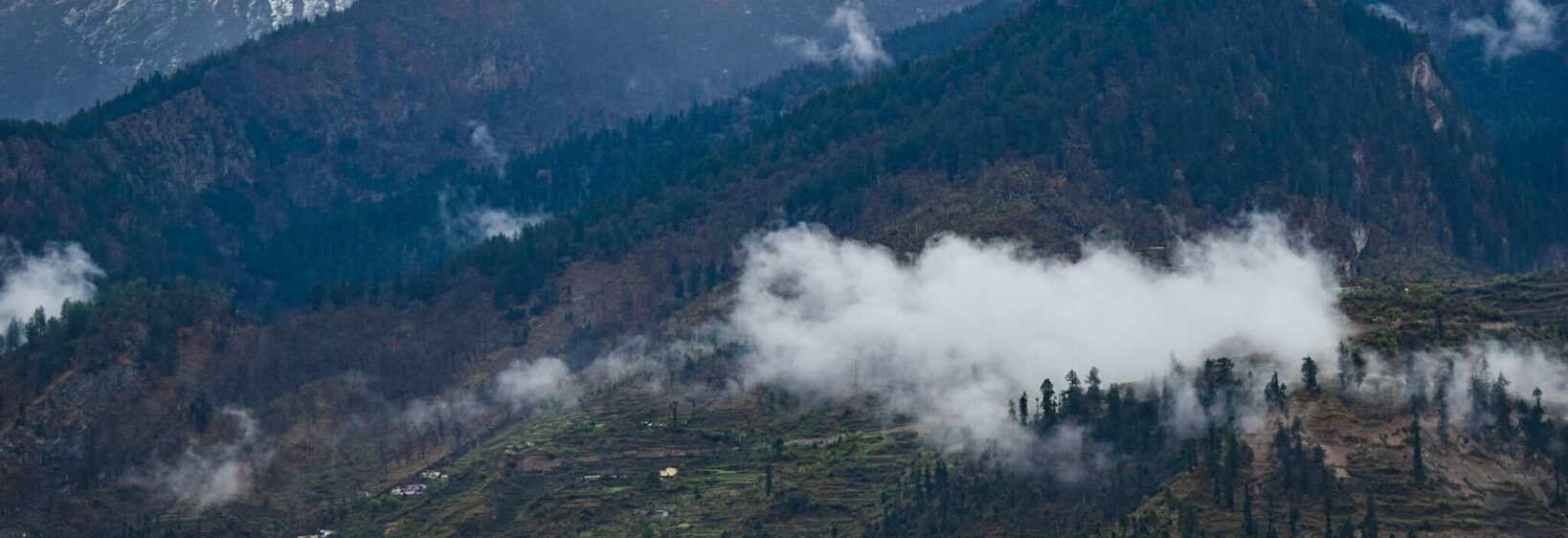
Dhanaulti Eco Park through morning fog and deodar forests
Before sunrise, the road from Mussoorie towards Dhanaulti feels almost suspended above the valleys. Pine-covered slopes fade into grey cloud, roadside tea stalls begin to open, and the air carries the clean, resinous scent of Himalayan cedar. For photographers, this quiet hour offers softer light and a more atmospheric view than the busy afternoon.
Dhanaulti Eco Park is a compact forest attraction in Uttarakhand, surrounded by tall deodar trees and mountain scenery. Its walking paths, viewpoints and open clearings make it suitable for relaxed landscape photography, family outings and short nature walks rather than demanding trekking.
The park is especially rewarding when morning mist moves between the trunks. A familiar trail can appear different every few minutes as the fog lifts, revealing layers of forest, distant ridges and small details such as moss, fallen cones and weathered wooden fences. More visual travel stories can be found in these Uttarakhand photo guides.
Why the early hours work so well
Morning fog acts like a natural diffuser. It reduces harsh contrast, softens the background and separates the nearest deodar trunks from the pale distance. This is useful for both phone photography and interchangeable-lens cameras because the scene already has a strong mood before editing begins.
Arriving early also helps avoid crowds. Visitors from Delhi, Dehradun and nearby hill towns often reach Dhanaulti later in the morning, particularly during school holidays. At first light, the forest paths are more peaceful, and the muted soundscape allows photographers to notice birdsong, wind through the canopy and footsteps on damp soil.
Framing the deodar forest
Look for repeating trunks that create a natural corridor through the frame. A low viewpoint can make the trees appear taller, while a vertical composition emphasises their height and the pale sky above. Try including a bend in the path, a railing or a person in muted clothing to give the photograph scale.
Foggy conditions reward patience. Instead of filling every image with scenery, focus on small patterns: droplets along a branch, rough cedar bark, green lichen or a single tree emerging from the mist. These close compositions often communicate the character of Dhanaulti better than a wide panorama.
Light, weather and camera settings
In dense fog, the camera may try to make the scene too dark. Slightly increasing exposure compensation can preserve the silvery quality of the mist, but check highlights in the sky. A moderate ISO and a shutter speed fast enough to manage movement from wind will usually produce cleaner files.
A wide-angle lens suits forest paths and mountain outlooks, while a short telephoto lens can compress layers of trunks and fog. Keep a microfibre cloth in an accessible pocket because condensation can collect on the front element when moving between a warm vehicle and the cool forest.
Planning a visit from Australia
For Australians travelling from Sydney, Melbourne, Brisbane or Perth, Dhanaulti is generally reached through Dehradun and Mussoorie. The final hill drive is winding, so allow extra time rather than planning the journey like a direct urban transfer. A private car with an experienced hill driver is often more comfortable than trying to combine several local connections before dawn.
Check the current Indian visa requirements through official government channels, and consult Smartraveller before departure. Australian travellers are accustomed to marked bushwalking tracks and strict park rules, but conditions in the Himalaya can change quickly. Carry water, warm layers and suitable footwear even when the forecast looks mild.
Returning to Australia also involves strict biosecurity requirements. Clean mud from boots, tripods and bags, and declare food, seeds or natural materials when required. Local environmental rules matter too: do not remove cones, plants or stones, and follow any restrictions on drones, fires and off-track walking.
A practical photography kit
The best equipment is the kit that can be carried comfortably along a damp forest trail. A lightweight camera, phone backup and weather-resistant bag are usually more useful than a heavy collection of lenses. A small tripod can help with still compositions, although it may be unnecessary if the fog is bright enough.
Australian travellers may find camera accessories easy to compare in the specialist markets of Melbourne or Sydney before leaving. Even so, pack spare batteries because cold mornings reduce battery life, and download offline maps while connected to reliable internet in the city.
Field checklist for a misty morning
Before leaving the hotel
- Check the sunrise time and local weather forecast.
- Carry water, a warm layer and rain protection.
- Charge batteries and clear enough storage space.
- Keep identification, permits and emergency contacts secure.
Inside the eco park
- Wipe moisture from the lens regularly.
- Stay on permitted paths and respect quiet areas.
- Photograph people only with their permission.
- Leave plants, wildlife and natural objects undisturbed.
Fog can make distances deceptive, so remain aware of the route back to the entrance. A simple location note or offline map is helpful when several forest paths look similar. Avoid playing loud music, and allow other visitors to enjoy the calm atmosphere.
For the strongest collection, combine wide establishing shots with detail photographs and a few images showing human scale. The result will feel more like a visual account of a Himalayan morning than a series of unrelated scenic views.
Turning the visit into a visual story
Start with the approach road or a mist-covered viewpoint, then move into the deodar forest as the main body of the story. Finish with the fog opening over the hills, a warm drink at a nearby café or a quiet detail from the trail. This sequence gives viewers a sense of movement through place and time.
Dhanaulti does not require dramatic weather to be memorable. Its appeal lies in subtle changes: a ridge appearing behind the trees, sunlight touching wet needles, or a silent path becoming visible for a few seconds. Careful observation turns a short eco-park visit into a thoughtful Uttarakhand photo essay.