The Dwarahat Group of Temples in Stone
In the quiet hills of Almora district, Dwarahat preserves a remarkable collection of early medieval shrines. Built largely from local stone, these temples show how Kumaoni craftsmen shaped sacred spaces with practical materials, careful proportions, and a strong sense of place.
The temple clusters are valuable for travellers who want more than a quick photograph. Their carved doorways, plain walls, weathered platforms, and mountain setting reveal changing ideas about worship, patronage, and community life in the central Himalaya. For visual references and regional travel stories, the UK Photos Gallery offers a useful companion to planning a Uttarakhand journey.
A sacred landscape shaped by the Katyuris
Dwarahat is commonly associated with the Katyuri period, broadly dated between the eighth and twelfth centuries, when several Himalayan settlements developed as centres of political and religious activity. Local tradition connects many of the temples with this era, although individual dates and attributions can be difficult to establish from inscriptions alone.
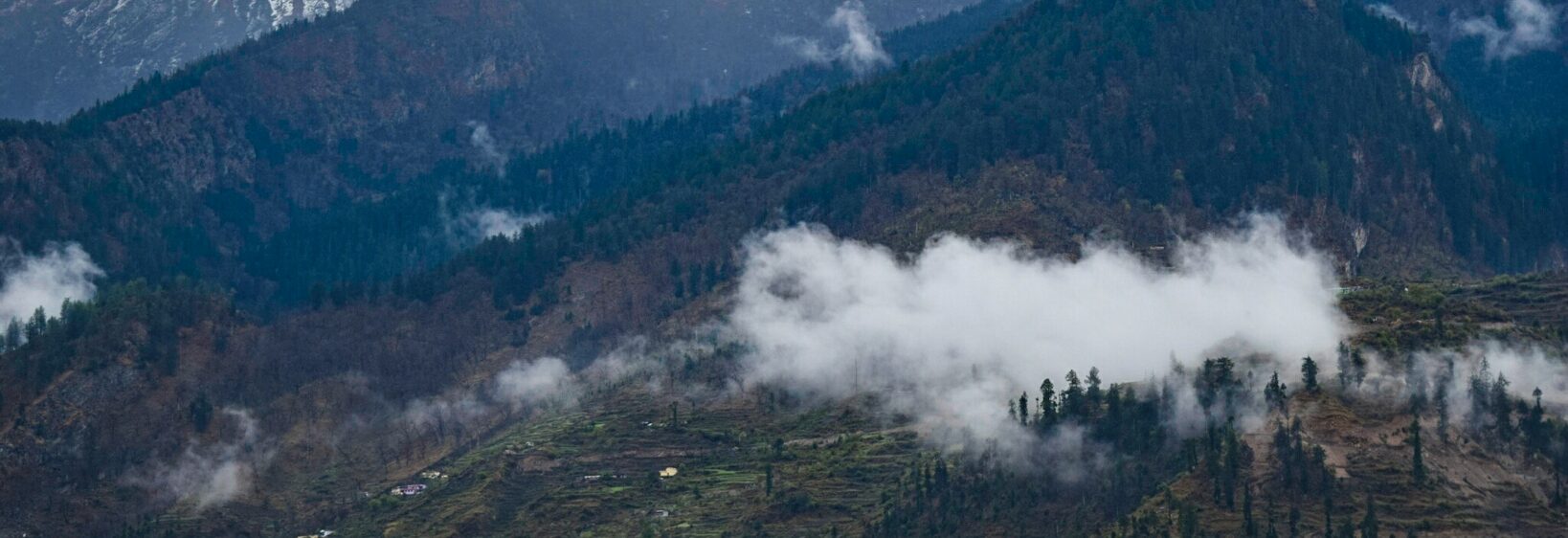
Rather than forming one enclosed monument, the temples appear as groups spread through the town and surrounding landscape. This arrangement reflects a living religious network: different shrines served particular deities, families, neighbourhoods, and festivals. The setting also makes the architecture feel connected to fields, forested slopes, and old routes across Kumaon.
Stone construction and temple proportions
The most striking feature is the use of locally available stone. Masons built thick walls from carefully set blocks, then finished selected surfaces around entrances, niches, and rooflines. The material gives the shrines a restrained appearance, while its uneven colour records centuries of rain, sunlight, smoke, and ritual activity.
Several temples follow a north Indian nagara tradition, with a compact sanctum and a rising tower, or shikhara. The towers are not always highly elaborate, yet their vertical form draws the eye upwards. Small projections, recessed panels, moulded bands, and layered courses create shadow across the masonry, especially in the early morning or late afternoon.
Doorways, carvings, and visual detail
A temple entrance often contains the richest surviving ornament. Look for jambs arranged in several vertical bands, lintels with geometric patterns, floral forms, and figures associated with Hindu worship. Even where carving has softened, the doorway remains a clear marker of status because it separates the ordinary village space from the sanctum.
The stonework should be read at close range as well as from a distance. Chisel marks, repaired corners, lichen, and slightly misaligned blocks are evidence of both construction and survival. The beauty is not limited to perfect decoration; it also lies in the texture produced by age and repeated acts of care.
Shrine groups and local worship
The Dwarahat temples are best understood as active sacred places rather than abandoned archaeological objects. Offerings, bells, vermilion, lamps, and seasonal decorations may appear beside ancient masonry. Visitors should observe quietly, avoid touching carvings, and ask before photographing worshippers or ceremonies.
Some shrines are modest in scale, but their importance comes from continuity. A local temple may remain central to a village’s annual calendar even when its original patron is forgotten. Festivals, processions, and oral histories help preserve meaning that cannot be read from the stone alone.
Details worth observing on site
A slow walk is more rewarding than trying to visit every shrine quickly. Dwarahat’s lanes, slopes, and scattered temple groups require attention to orientation, changing light, and the relationship between buildings and the surrounding settlement. Carry water, wear shoes with good grip, and allow extra time for pauses.
For Australian visitors, the journey may feel very different from a heritage walk in Melbourne, Sydney, or Adelaide. Mountain roads can be narrow, travel times are affected by weather, and mobile coverage may vary. As in Australian national parks, sensible footwear and respect for local rules matter, but visitors should also remember that many of these shrines are community places rather than managed tourist attractions.
A simple stone-reading checklist
- Study the plinth, wall courses, and tower before focusing on decoration.
- Compare shaded and sunlit surfaces to see changes in carving depth.
- Notice repairs, added tiles, painted areas, and newer ritual objects.
- Record the wider setting, including fields, houses, and ridgelines.
Visiting thoughtfully from Australia
Travel planning is easier when Dwarahat is combined with other Kumaon destinations such as Ranikhet, Almora, or Jageshwar. Australian travellers are accustomed to booking ahead during school holidays and checking road conditions before a regional trip; the same habit is useful here, particularly during monsoon months and busy pilgrimage periods.
Photography requires patience and cultural awareness. A guide to Rishikesh bridge photography can help with Himalayan composition, but Dwarahat calls for a quieter approach: use natural light, keep tripods clear of pathways, and avoid flash inside dark sanctums.
The local market is modest compared with shopping areas in Brisbane or Perth, so carry essential medication, cash, and a reusable water bottle. India’s heritage and religious-site rules can restrict drone use, commercial photography, access to sanctums, or the removal of stone and other materials. Check current local guidance, follow signs, and seek permission before making images for professional or promotional use.
Practical habits for a respectful visit
- Dress modestly and remove shoes wherever local practice requires it.
- Ask before photographing priests, residents, ceremonies, or private courtyards.
- Buy snacks and handicrafts locally without blocking shopfronts or temple paths.
- Keep rubbish with you until you find an appropriate bin.
The Dwarahat temple groups reward visitors who look closely. Their architectural power comes from the relationship between carved stone, mountain light, local worship, and long-term community care. Seen in that context, each shrine becomes part of a wider cultural landscape rather than an isolated monument.