Uttarakhand’s Tribal Communities: The Bhotiya and Jaunsari
Uttarakhand’s mountain identity is shaped by many communities, each with its own language, customs, architecture, food, and relationship with the landscape. Among the most distinctive are the Bhotiya people of the high Himalayan valleys and the Jaunsari community of the western hills.
Their heritage is visible in seasonal migration routes, woollen crafts, village festivals, sacred groves, traditional homes, and oral histories. For travellers, learning about these communities adds meaning to journeys through places such as Joshimath, Mana, Munsiyari, Chakrata, and the Jaunsar-Bawar region.
Living Heritage In Mountain Valleys
The term Bhotiya refers to several Himalayan groups rather than one completely uniform community. Many live in valleys and border areas of Chamoli, Pithoragarh, and Uttarkashi. Historically, families combined high-altitude pastoralism, farming, weaving, and trade across mountain routes. Seasonal movement between lower and higher settlements helped communities respond to severe winters and changing grazing conditions.
Bhotiya homes and village layouts reflect the environment. Stone, timber, slate, and compact forms help protect buildings from cold weather. Woollen shawls, carpets, socks, caps, and blankets remain important expressions of local skill, although contemporary livelihoods also include tourism, government employment, farming, and small businesses.
The Jaunsari community is concentrated mainly in the Jaunsar-Bawar area of Dehradun district, extending towards the western Himalayan foothills. Its cultural landscape includes terraced fields, forest villages, wooden houses, distinctive jewellery, community celebrations, and a strong tradition of singing and dancing.
Jaunsari is an Indo-Aryan language with several local variations, and family histories, legends, and customary practices are often preserved through spoken traditions. Agriculture, animal husbandry, forest resources, education, and employment outside the region all contribute to present-day life.
Language, Dress, And Celebration
Clothing and ornamentation can communicate age, marital status, community identity, and regional belonging, but visitors should avoid treating traditional dress as a costume. In many villages, people wear a blend of customary and modern clothing, choosing what suits work, weather, ceremonies, and personal preference.
Festivals bring together music, ritual, food, and social relationships. Jaunsari celebrations such as Bissu and local forms of Dussehra or Magh festivities may include group dances, drums, processions, and community feasts. Bhotiya villages also observe religious festivals connected with Hindu and Buddhist influences, local deities, agricultural cycles, and temple traditions.
Photography can preserve details that written descriptions miss: woven patterns, carved doorways, ceremonial instruments, and the changing colours of mountain settlements. Anyone planning a cultural photo session should seek permission before photographing people, private rituals, sacred objects, or homes. The guide to wedding photography in the hills also illustrates why landscape, weather, and local customs matter when documenting celebrations in Uttarakhand.
Two Communities At A Glance
Although Bhotiya and Jaunsari communities share the broader Himalayan environment, their histories and cultural expressions developed in different geographical settings. The following comparison offers a useful overview without suggesting that every family or village follows identical practices.
| Feature | Bhotiya Communities | Jaunsari Community |
|---|---|---|
| Main region | High valleys of Chamoli, Pithoragarh, and Uttarkashi | Jaunsar-Bawar and nearby western hills |
| Traditional livelihoods | Pastoralism, wool work, farming, and trans-Himalayan trade | Terraced agriculture, animal husbandry, forestry, and local trade |
| Languages | Several Himalayan languages and dialects, varying by region | Jaunsari and related local speech varieties |
| Cultural features | Woollen textiles, seasonal movement, mountain trade routes, temple traditions | Community dances, wooden architecture, festivals, oral history |
| Contemporary life | Tourism, crafts, farming, services, and education | Agriculture, public employment, education, tourism, and migration |
These categories are broad starting points rather than fixed definitions. Migration, inter-community contact, schooling, roads, digital media, and changing economic opportunities continue to shape both identities.
Landscapes That Shape Identity
For Bhotiya communities, the high-altitude landscape is closely linked with pasture, pilgrimage, border routes, and seasonal settlement. Valleys around Joshimath, Niti, Mana, and parts of Kumaon reveal how rivers, forests, snowfields, and trade paths influenced daily life. Visitors should remember that many high Himalayan routes are ecologically fragile and subject to weather or permit restrictions.
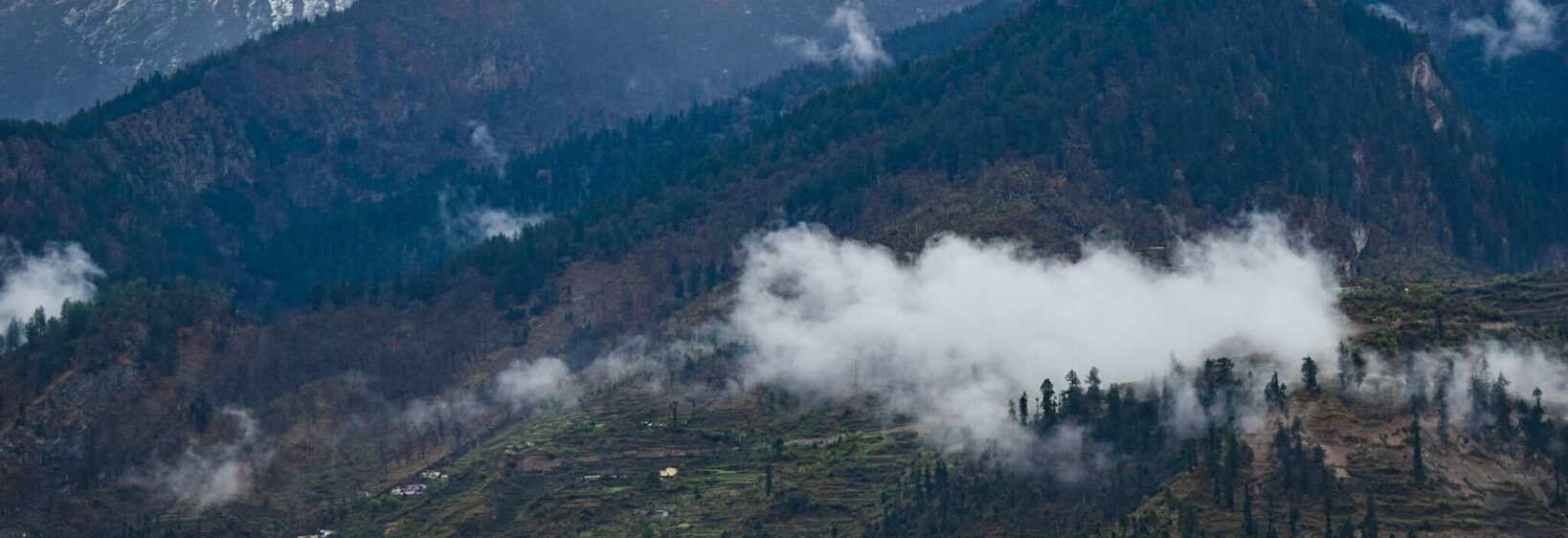
In Jaunsar-Bawar, the scenery changes to forested slopes, deep valleys, terraced farms, and ridgelines near Chakrata and Tyuni. Village architecture often uses locally available timber and stone, while agricultural fields show the practical adaptation of mountain communities to limited flat land.
Photography is especially rewarding during early morning and late afternoon, when ridges and fields receive softer light. A careful approach is more valuable than hurried image collection; a landscape photograph should include context rather than detach cultural places from the people who care for them. Similar principles can be seen in this visual guide to sunset at Bhimtal Lake.
Visiting With Cultural Respect
Responsible travel begins with recognising that villages are lived-in homes, not open-air museums. Ask before entering courtyards, touching objects, photographing ceremonies, or recording songs and conversations. When a local guide explains a custom, listen without forcing the experience into familiar tourist categories.
Buying directly from artisans, eating at locally run establishments, and choosing homestays can help keep travel income within the community. Travellers should also avoid bargaining aggressively over handmade wool products, carrying plastic into remote areas, or sharing identifiable images without consent.
Meaningful Ways To Learn
- Visit a community museum, village homestay, or craft centre led by local residents.
- Hire a knowledgeable guide who can explain language, history, ecology, and customary etiquette.
- Purchase authentic woven goods directly from artisans and ask about their materials and care.
- Attend public festivals respectfully, following local instructions about photography and movement.
- Record the names and stories behind images instead of treating cultural details as anonymous scenery.
A journey through Uttarakhand becomes richer when its mountains are understood as cultural landscapes. Explore Bhotiya and Jaunsari regions slowly, support local livelihoods, and share photographs in ways that honour the people, places, and traditions behind them.