Pithoragarh Jail Bhimsen Tower and the Old Himalayan City
Pithoragarh Jail Bhimsen Tower is one of the Kumaon region’s less familiar heritage landmarks. Set within the urban fabric of Pithoragarh, the historic tower brings together stories of royal administration, military movement, imprisonment and changing ideas of public space. Its weathered masonry offers a different experience from the grand temples and mountain viewpoints usually associated with Uttarakhand.
For Australian travellers, the site is best understood as a compact heritage stop rather than a conventional monument with a polished visitor complex. A walk through the surrounding streets reveals how an old structure remains connected to everyday life, local commerce and the broad Himalayan landscape. It can be included in a wider Pithoragarh itinerary alongside temples, markets and viewpoints.
A Landmark Shaped By Kumaon’s Past
Pithoragarh has long held strategic value because of its position in the eastern Kumaon hills and its routes towards the Nepal and Tibet borderlands. Different ruling powers passed through the area, including the Chand dynasty, the Gorkhas and the British administration. Each period influenced the town’s defensive buildings, roads and official institutions.
Local accounts connect Bhimsen Tower with the Gorkha period and the wider military history of the region. The name is commonly associated with Bhimsen Thapa, an important Gorkha statesman, although details about the tower’s precise construction and later use can vary between sources. That uncertainty is part of the site’s character: its story survives through historical writing, local memory and the physical remains.
Reading The Tower’s Architecture
The tower is valued for its sturdy, functional form rather than elaborate decoration. Thick walls, limited openings and a vertical profile suggest a building designed for security and control. Its traditional masonry reflects the practical architecture of a hill settlement, where materials had to be carried and structures had to withstand seasonal weather.
The surrounding jail complex adds another layer to the design. A tower viewed on its own might appear defensive, but its relationship with enclosed courtyards and institutional buildings points to a controlled administrative space. Look for variations in stonework, repairs and changes in surface texture; these details can show how a building has been adapted over many decades.
The Jail Campus And Changing Use
The word “jail” places the monument within a difficult history. Such institutions represented authority and punishment, while also becoming part of the civic landscape under later governments. The Bhimsen Tower therefore should not be treated only as a picturesque relic. Its importance lies in the way it records changing systems of power in the hills.
Access arrangements and the condition of nearby buildings may change, so visitors should respect official restrictions and avoid entering closed areas. Photography is most rewarding from public viewpoints and adjoining streets. A quiet visit, with attention to walls, gates and sightlines, gives a fuller impression than a quick stop for a single image.
A Window Into Pithoragarh’s Cityscape
The tower’s setting makes it especially interesting for people who enjoy urban history. Pithoragarh is not simply a backdrop of forested ridges; it is a working hill town with traffic, schools, shops, government offices and residential lanes. The monument sits within that living environment, showing how heritage and modern expansion overlap.
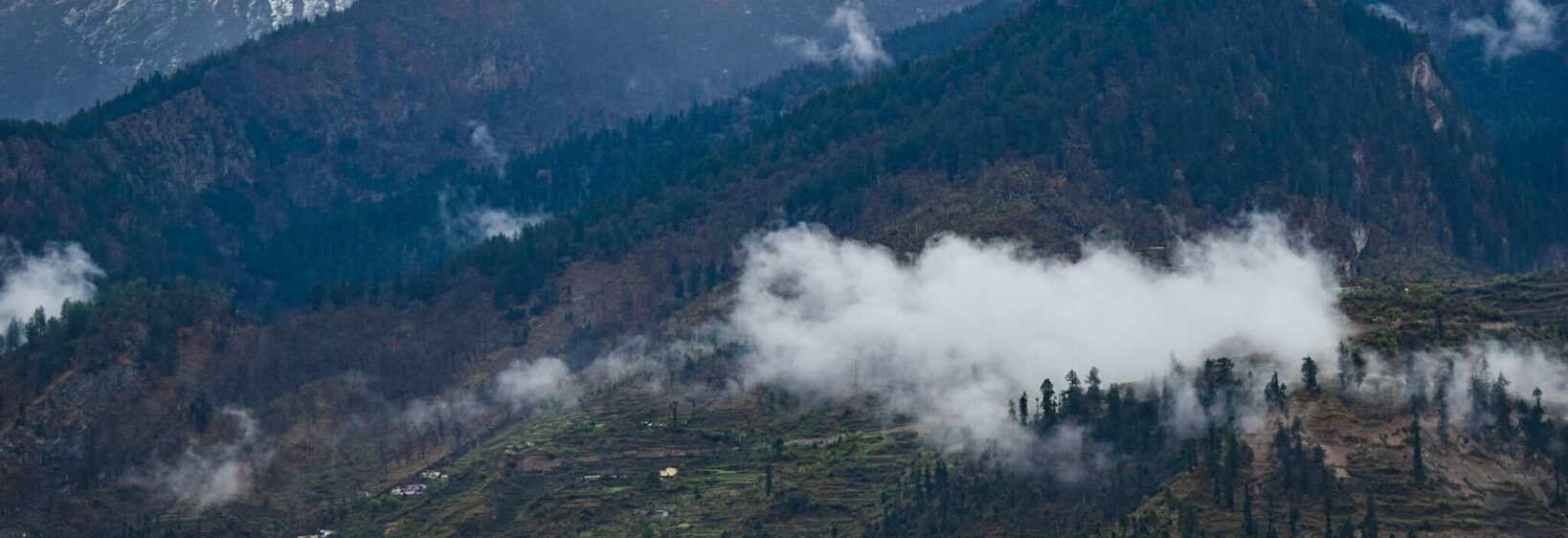
From suitable higher points around the city, the built-up valley can be read as a sequence of rooftops, roads and slopes. The contrast is striking for visitors from Melbourne or Sydney, where heritage buildings are often separated from dense modern development by formal precincts. In Pithoragarh, an old structure may stand close to ordinary daily activity, with the mountains always present beyond it.
Including It In A Travel Route
A visit can be combined with local temples, the Pithoragarh fort area, viewpoints and walks through the main bazaar. Travellers arriving from Almora, Binsar or Munsiyari may use Pithoragarh as a cultural pause before continuing towards the higher border districts. Road conditions and travel times can be unpredictable in the hills, particularly during monsoon rainfall.
For background reading, route ideas and photo-based coverage of Uttarakhand destinations, UK Photos Gallery provides a useful starting point. Independent travellers should still check current transport information, opening conditions and local advice before setting out, as heritage access is not always advertised in the same way as a major tourist attraction.
Local Life Around The Monument
The streets near the old jail are part of the experience. Small shops, tea stalls and produce sellers reveal the everyday rhythm of Pithoragarh more clearly than a staged cultural display. A respectful visitor can support local businesses by buying tea, snacks or regional goods, while keeping photography discreet around residents and working premises.
Australian visitors may recognise the social ease of a neighbourhood shopping strip, similar in spirit to a small market area in Adelaide or a regional New South Wales town, yet the setting is distinctly Himalayan. Hindi and Kumaoni are widely heard, and local food, woollen products and seasonal produce reflect the climate and mountain economy.
Practical Notes For Responsible Visitors
Allow time to walk slowly and observe the structure from several angles. Comfortable shoes are important because streets can be uneven, and a light jacket may be useful even when the daytime temperature feels mild. Carry water, use established paths and avoid touching fragile masonry. If you are travelling with a camera, early morning or late afternoon usually provides softer light across the stone.
The monument is most meaningful when approached as part of Pithoragarh’s cultural landscape rather than as an isolated photo opportunity. Its tower, jail setting and surrounding city preserve traces of political change, local memory and Himalayan town life. That combination gives the site a quiet historical presence that rewards careful exploration.