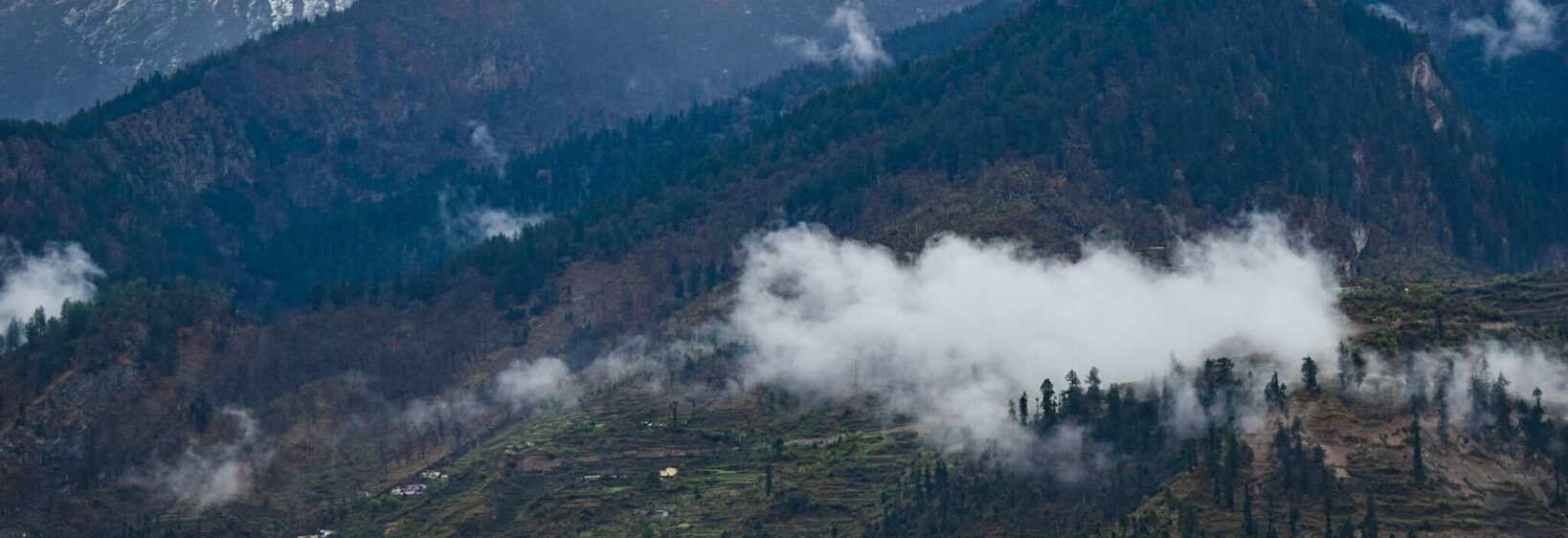
The Mandakini River Gorge Between Rudraprayag and Kund
The road from Rudraprayag to Kund follows one of Uttarakhand’s most visually striking river corridors. The Mandakini cuts through steep mountain country, with dark rock walls, forested slopes, suspension bridges, villages and bright ribbons of water appearing below the highway.
This is a journey for travellers who enjoy the road as much as the destination. Instead of a single viewpoint, the gorge offers a changing sequence of cliffside scenes, roadside shrines, cultivated terraces and high Himalayan ridges.
For visitors from Australia, the landscape can feel familiar in scale but different in rhythm. It has some of the raw drama of the Blue Mountains or the Great Ocean Road, yet the road traffic, pilgrimage movement and settlement patterns create a distinctly Uttarakhand experience.
| Travel style | Best feature | What to expect |
|---|---|---|
| Scenic road trip | Frequent valley views | Slow progress, bends and occasional traffic |
| Photography stop | River, cliffs and villages | Safe pull-offs are limited |
| Pilgrimage journey | Temples and sacred river sites | Busy periods around Kedarnath season |
| Short walking break | Terraces and local lanes | Uneven paths and changing weather |
Where the river shapes the route
At Rudraprayag, the Mandakini meets the Alaknanda, forming one of the celebrated confluences of the Garhwal Himalaya. From there, the road heads south-east through Agastyamuni and onward towards Kund. The river remains close for sections of the route, sometimes directly below the road and sometimes hidden behind trees and bends.
Between Rudraprayag and Kund, the gorge narrows and opens repeatedly. Massive slopes rise on both sides, while small settlements occupy the gentler shelves above the water. In the distance, ridgelines overlap in blue and grey layers, especially during the clear hours after rain.
Viewpoints, bends and photographic detail
The best photographs often come from ordinary roadside moments rather than famous lookout points. Look for a bend where the river appears beneath a bridge, a line of houses clinging to a slope, or terraced fields catching late afternoon light. Morning usually gives softer shadows, while late afternoon brings richer colour to exposed rock faces.
Take care when stopping. The highway can be narrow, and buses, shared jeeps and supply trucks use the same route. A wide lay-by, village approach or designated stopping area is preferable to standing close to the edge. A telephoto lens is useful for compressing the gorge, while a wide lens captures the relationship between river and mountains.
Villages, faith and living traditions
The Mandakini valley is a working cultural landscape, not an empty wilderness. You may see women carrying fodder, schoolchildren walking between settlements, farmers tending terraces and shopkeepers serving tea to pilgrims. Small shrines and painted temple entrances appear beside the road, reflecting the river’s religious importance.
The region’s visual character also extends into craft traditions. Visitors interested in locally made objects can explore Uttarakhand handicrafts, including wood carving and Aipan art. Buying directly from artisans or reputable local sellers helps keep cultural work connected to the communities that produce it.
When Australian travellers should go
April to June is generally comfortable for road travel, with clearer access towards the higher valleys before the monsoon. September to November often brings crisp air, improved visibility and strong mountain colours. July and August can deliver lush scenery, but heavy rain may cause landslides, road closures and delays.
An Australian traveller planning from Melbourne or Sydney should allow extra time beyond the driving distance shown online. Mountain roads are slow, and a route that looks manageable on a map may take much of an arvo. It is sensible to carry a light waterproof layer, even in warmer months, just as you would prepare for a changeable walk in the Blue Mountains.
Planning a safer river-gorge journey
Rudraprayag works well as an overnight base before travelling towards Kund, Guptkashi or Ukhimath. Local taxis and shared jeeps are commonly used, while private cars offer greater flexibility for photography stops. During pilgrimage season, accommodation and transport can become tight, so Australian visitors should book key nights ahead rather than relying on last-minute arrangements.
Keep the route flexible around weather reports and local advice. Avoid leaning over unprotected edges, walking on wet rocks or approaching the river during high flow. Carry cash for small cafés and transport, download maps before leaving larger towns, and respect photography preferences in villages and temples.
The gorge is most rewarding when experienced slowly. Pause for the sound of rushing water, watch the light move across the cliffs and allow room in the itinerary for a tea stop or an unexpected village view. Between Rudraprayag and Kund, the journey reveals how closely river, road, faith and everyday mountain life remain connected.