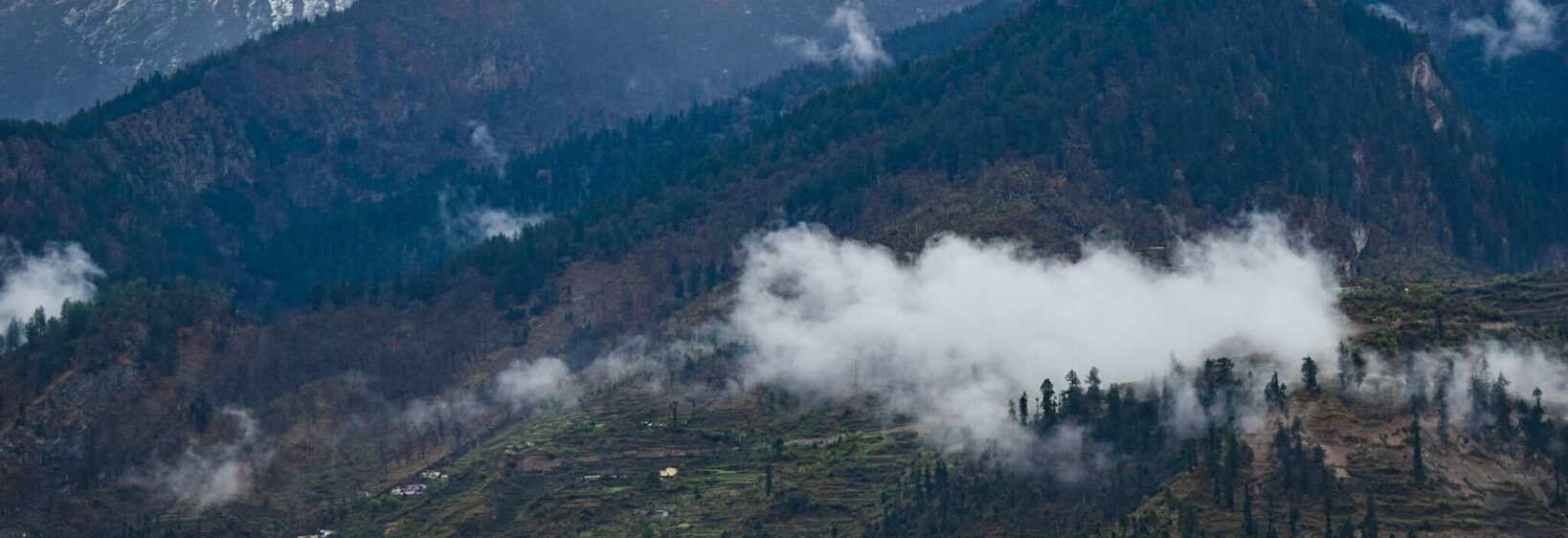
Khardon village: terrace fields, quiet mornings, working hands
Perched in the lower folds of Uttarakhand, Khardon is the sort of place that rewards travellers who prefer footpaths to fast highways. The village sits above the Alaknanda valley, where the road from Srinagar bends inland and the hills begin to step down in layers of stone and soil. Travellers from Sydney or Brisbane who fly into Delhi usually reach the hamlet after a long but scenic overnight train, a journey that Australian backpackers on the working holiday circuit often compare to the Indian Pacific in reverse.
The land here is shaped by hand. Farmers have cut terraces into the slope over generations, stacking low stone walls to catch the monsoon rains and hold the red clay in place. From the ridge above the village, the fields look like a soft green staircase climbing toward the forest, a view that photographers from Melbourne's wedding and portrait studios tend to describe as the Indian cousin of the Barossa Valley in spring.
What draws most visitors is the unhurried rhythm of the agricultural calendar. Sowing happens after the rains in June and July, while the harvest gathers pace through late September and October. Visitors timing their trip for autumn will find golden stacks of cut paddy drying along the lanes, oxen moving slowly between plots, and the air carrying the dusty sweetness of freshly threshed grain.
Reaching the terraces from down under
Most Australians heading to Khardon start with a flight into Delhi, often via Singapore or Kuala Lumpur on carriers that operate the Brisbane–Singapore route reliably year-round. From Indira Gandhi, a shared taxi or a private car covers the roughly 480 kilometres to the village in around twelve hours, broken with a stop for chai at a roadside dhaba near Rudraprayag.
Travellers who prefer not to drive overnight can break the journey in Rishikesh or Haridwar, both common first-night stops for Perth and Adelaide backpackers who want a soft landing before heading into the hills. Local buses connect the larger towns, though hiring a small jeep from Srinagar gives more flexibility for stopping at viewpoints and small hamlets along the Alaknanda corridor.
Australian passport holders need an Indian tourist visa, which is now available entirely online through the e-visa portal. The paperwork takes a short arvo to complete, and having a scanned passport and a digital photo ready speeds the process considerably for anyone applying from a regional town in New South Wales or Tasmania.
Walking the field edges
A morning walk from the village square to the upper terraces takes roughly ninety minutes at an easy pace. The path passes small shrines, a cluster of beehives tended by a single family, and several fields where women are transplanting seedlings by hand. It is one of the more photographed walks in the region, and the travel field notes capture the gradient of green that shifts with the season.
Locals tend to start their day before sunrise, so visitors who arrive early enough may be offered a cup of chai at a stone verandah. The custom is not commercial, and a small tip is appreciated rather than expected. Photographers should ask before pointing lenses at families, especially during the brief window when elders are conducting morning prayers at the small stone temple near the spring.
The terrace walls themselves are built without mortar in many cases, relying on weight and root systems to stay upright. After heavy monsoon showers, sections sometimes slump and are rebuilt collectively, a scene that tells visitors a great deal about how the village organises its labour and how decisions are made at the community level.
The look of the harvest
By late September the rice begins to yellow, and the entire hillside takes on a warm amber tone. Farmers cut the stalks with small sickles, leaving neat bundles that are then stacked on flat stones to dry before threshing. The scene is slow, repetitive and strangely meditative, the kind of agricultural rhythm that is increasingly rare in places where combine harvesters have replaced hands.
Photographers who have shot wheat harvests near Esperance or in the Wimmera will recognise the geometry of bundled stalks but find the vertical drama of stepped fields unfamiliar. Wide lenses work well from the upper ridge, while a 50mm or 85mm prime captures the detail of weathered hands and grain-streaked cloth at close range. Mid-morning and late-afternoon light brings out the texture of the stone walls, while overcast days soften the contrast across the terraces.
A short climb to the small Devi shrine above the village offers the cleanest vantage point. From there the fields read as a layered patchwork, with each terrace separated by a darker line of mossy stone. Visitors who arrive at sunrise often share the spot with a single herder guiding cattle down to the river for their morning drink.
Staying and eating in Khardon
There are no proper hotels in the village, which is part of its appeal. Most visitors stay in homestays arranged through families in the lower hamlet, where rooms are simple, food is served family-style, and hot water is typically heated by a wood-fired chipa. Meals rotate around local grains, lentils, seasonal greens and the occasional chicken or goat curry prepared for guests.
Vegetarians will find plenty of options, as the village follows a largely vegetarian diet through most of the year. Tea and snacks arrive with the morning light, lunch is the main meal, and dinner tends to be lighter. Travellers from Melbourne's large South Asian community often comment that the flavours here are simpler than restaurant food in suburbs like Dandenong or Footscray, with less spice and more reliance on mustard oil and fresh herbs.
Planning the trip
Khardon works best for travellers who already plan to spend time in Uttarakhand rather than as a stand-alone destination. Combining it with two or three nights in Rishikesh, a detour through Rudraprayag, and a few days in Joshimath gives a balanced view of the region's spiritual, agricultural and high-altitude landscapes.
The best seasons for visiting are March to early May for spring blossoms and clear mountain views, and September to November for the harvest itself. December through February can be cold at this elevation, with occasional light snow on the upper terraces. Monsoon months bring lush greenery but also landslip risks on the access road, which is why most tour operators shift their group departures to either side of the wet season.
Comparing Khardon with other Uttarakhand villages
| Feature | Khardon | Munsiyari | Naukuchiatal |
|---|---|---|---|
| Main draw | Stepped rice terraces | High-altitude views | Lake and ridge walks |
| Best season | Sept–Nov harvest | May–Jun meadows | Oct–Mar clear skies |
| Stay style | Family homestays | Small guesthouses | Mid-range resorts |
| Travel ease | Long drive from Delhi | Longer road journey | Easy from Nainital |
| Crowd level | Very low | Low | Moderate |
| Photography focus | Agriculture and stone walls | Snow peaks and forests | Sunrise reflections |
A final point worth making: the village is not a museum. Children still attend the local school, weddings still take place on the broad stone platforms above the lower fields, and the terraces are still worked by families whose names have appeared on the same plots for six or seven generations. Visitors who treat the place as a living community rather than a backdrop tend to leave with a more accurate sense of what rural Uttarakhand actually feels like in the present day.