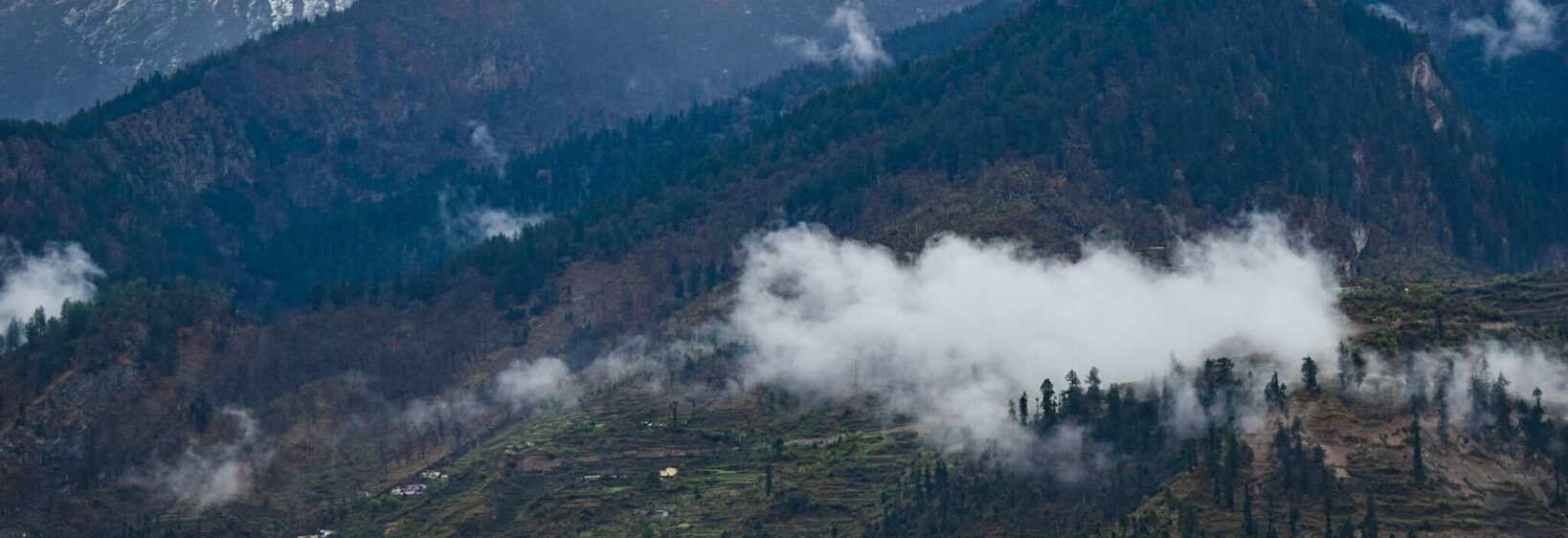
Kausani Pine Forests for Solo Photography Walks and Quiet Moments
The dense pine forests around Kausani rise gently over the Kumaon hills, offering some of the most peaceful walking ground in Uttarakhand. For photographers travelling alone, the whispering canopies and filtered sunlight create a meditative kind of creative space that feels worlds away from busy city life.
Travel photographers arriving from Sydney or Melbourne often expect noise and crowds when they land in India, and the hill stations deliver a gentle surprise. The Kausani pine forests reward slow movement, single-subject focus, and the patience required to capture fleeting beams through tall trunks.
Where the pine forests sit in the Kumaon landscape
The forests stretch across gentle ridges to the north and west of Kausani town, where Pinus roxburghii dominates the slopes. Walking these woods feels like moving through a soft, natural cathedral, with trunks rising straight overhead and a carpet of fallen needles muffling every footstep. Many solo walkers combine their forest time with a visit to the nearby Anasakti Ashram, though the pines themselves draw photographers looking for organic textures and shifting light.
Local guides from surrounding villages often know quiet corners that group tours miss entirely. Travellers arriving from Australia may want to factor in the time difference, since Uttarakhand runs roughly five and a half hours behind eastern Australian time, making early morning photography sessions easier to plan after a full night's rest.
Light, weather, and the quiet hours
Morning light in the Kausani pines carries a soft amber tone, especially between late September and March when the post-monsoon clarity settles over the hills. Mist often clings to the lower trunks in the early hours, producing the kind of atmospheric conditions that studio photographers in Brisbane or Perth chase with smoke machines and softboxes. Here the effect arrives naturally, simply by walking the trails before sunrise.
Cloud cover shifts quickly during the winter months, and solo walkers learn to read the sky for the openings that send single shafts of light through the canopy. Visitors should pack a light woollen layer even in spring, as the shaded forest floor stays cool long after the open meadows have warmed up.
Walking the trails alone and staying present
Solo photography walks require a different kind of attention than guided group tours. Without conversation to fill the silence, the small sounds grow louder: a woodpecker drumming somewhere overhead, the dry crackle of a branch giving way underfoot, distant cowbells drifting up from a neighbouring village. These are the moments that reward the lone walker with photographs and memories that few packaged holidays ever produce.
Trail markers vary in quality, so carrying an offline map is wise, and keeping a small first-aid kit makes long days more comfortable. Many Australian visitors carry a compact tripod, which doubles as a walking aid on steeper sections and proves essential for low-light forest scenes.
Quiet spots for reflection between shots
Every seasoned photographer knows that a walk needs pauses, and the Kausani pines offer several natural seats and clearings. A flat boulder near the trail's eastern bend makes a good resting point, while a small meadow where the pines thin out offers an unobstructed view of the Trishul range on clear afternoons. These breaks matter as much as the photography itself, giving the eyes time to adjust and the mind a chance to settle.
Australian travellers accustomed to long bushwalks in the Blue Mountains or Tasmania's Cradle Mountain will find familiar rhythms here, though the scale of the Himalayan backdrop adds something quite different to every pause. Bringing a small notebook helps record the conditions, the framing ideas, and the small details that might otherwise be forgotten by the next morning.
Framing the forest through a quiet lens
Photographing pines well means resisting the urge to capture everything. A single trunk catching side light, a curl of bark peeling away from weathered wood, or the geometric pattern of overlapping branches often says more than a wide overview. Solo walks give the photographer permission to linger on these details, returning to the same tree several times during a session as the light shifts.
Working slowly also opens space for portrait work, since local villagers occasionally pass through the forest carrying fodder or firewood. A respectful approach, a warm smile, and a few Hindi phrases usually earn a willing subject and a meaningful exchange.
Carrying the experience home
Editing the photographs taken in the Kausani pine forests often becomes its own reflective exercise, with each image carrying the memory of temperature, sound, and stillness. Sharing the resulting gallery with friends back in Adelaide or Canberra tends to spark conversations about slower travel and quieter destinations, which is a quiet form of advocacy for the region.
Readers inspired to explore more of Uttarakhand through images and travel notes will find plenty of visual storytelling at ukphotosgallery.com, where the forests, temples, and hill towns of the region are documented through a photographer's eye.