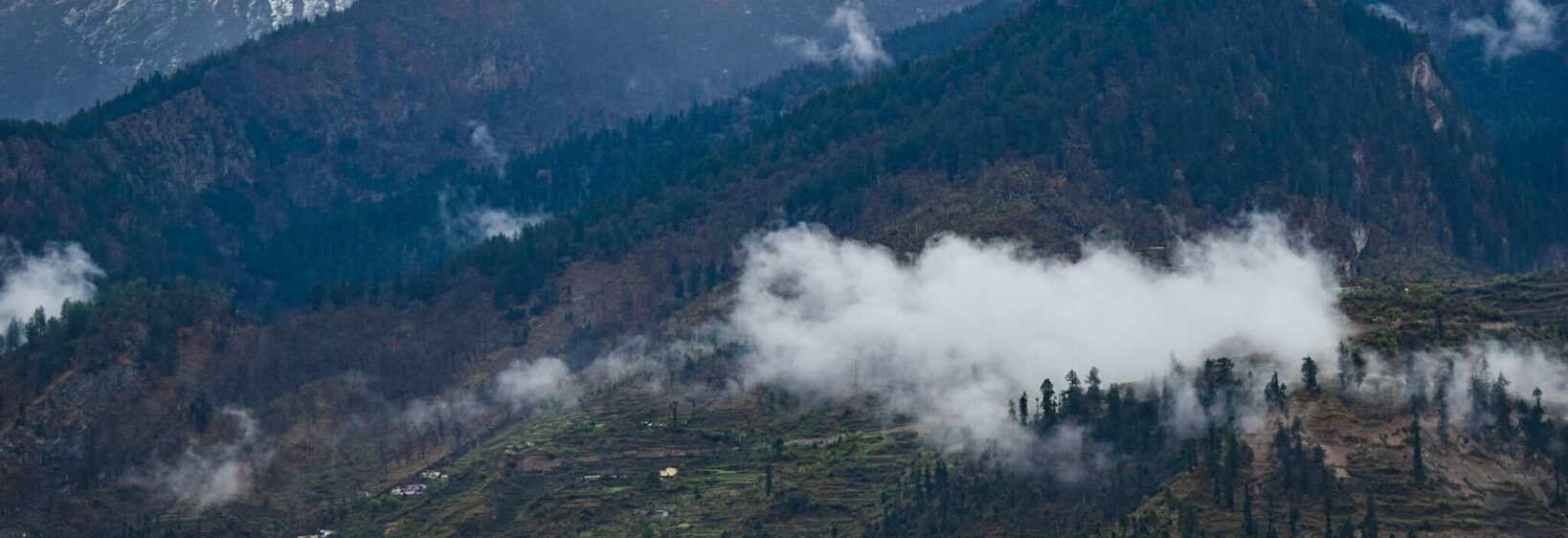
Munsyari: Himalayan base camp for the Kailash Mansarovar pilgrimage
Nestled deep in the Johaar Valley of Pithoragarh district, Munsyari sits at roughly 2,300 metres where the snow-laden peaks of Panchachuli rise above dense pine forests. For trekkers and pilgrims travelling from far-off places, the town acts as the last motorable settlement before routes branch toward the sacred Kailash Mansarovar Yatra via the Lipulekh Pass. Australian visitors familiar with remote outposts like Alice Springs or the Larapinta Trail will recognise the same sense of isolation here, though Munsyari trades red desert sands for glacial white ridges.
The journey from an Australian capital to this pocket of the Kumaon Himalayas usually begins with a flight to Delhi, often routed through Singapore or Kuala Lumpur on carriers like Qantas, Singapore Airlines, or Air Asia. From there, overnight trains or short-haul flights to Pantnagar or Kathgodam bring travellers to the foothills. Many Aussie trekking clubs group this expedition with a broader Char Dham circuit or a stay in Rishikesh, giving them a fuller picture of Uttarakhand's spiritual geography without spending their entire holiday on the road.
Gateway to the Panchachuli range
The five peaks of Panchachuli dominate the skyline just north of town, each summit reaching above 6,000 metres and named after the five legendary wives of the Pandavas. Local guides in Munsyari arrange sunrise viewpoints at Khaliya Top, a moderate climb that rewards bushwalkers with a sweeping panorama of snowfields. For Australians who have hiked the Blue Mountains or tackled sections of the Overland Track in Tasmania, the altitude profile here feels similar in effort but framed by far sharper relief.
Below the peaks, the valley floor hosts apple orchards, terraced millet fields, and the timber houses of the Shauka community. Travellers often stop at Narayan Ashram, a quiet hermitage founded in 1936 and known for its library of Tibetan manuscripts. The drive from Munsyari to this ashram passes through some of the densest rhododendron forests in the state, which bloom crimson in spring.
The Kailash Mansarovar connection
Every year between June and September, the Indian Ministry of External Affairs organises the Kailash Mansarovar Yatra through the Lipulekh Pass, and Munsyari functions as the Indian base camp before the final push toward the Tibetan plateau. Indian pilgrims undertaking this route have been doing so since the early 1980s, when the Indo-Tibetan border at this point was reopened for religious travel. Today, the town hosts government rest houses, medical check-up centres, and briefing halls where travellers receive altitude briefings.
Australian Hindus living in suburbs like Parramatta, Homebush, or Tarneit sometimes join group tours organised by Sydney or Melbourne-based travel agencies specialising in pilgrimage circuits. These packages typically bundle Munsyari with Pithoragarh and Dharchula, allowing travellers to acclimatise before crossing into Tibet. The cultural significance of Mount Kailash in Hindu, Buddhist, Jain, and Bön traditions makes this trek appealing even for non-pilgrim Australians interested in sacred geography.
Treks and trails beyond the pilgrimage
Outside the pilgrimage season, Munsyari becomes a hub for independent trekkers heading to Milam Glacier and Namik Glacier. The Milam trek spans roughly 60 kilometres round-trip, passing through forests of birch and deodar before opening onto a vast moraine. Permit checks are conducted at the forest office in town, and a local guide is mandatory for sections past the inner sanctuary zone.
Winter snows close most trails between December and March, but the town still attracts photographers chasing the rare Himalayan snow leopard in the Askot Musk Deer Sanctuary. Aussies who normally spend winter skiing at Thredbo or Perisher often prefer to escape their own alpine season by chasing summer in the Southern Hemisphere's reverse calendar. That seasonal flip turns July and August into peak trekking months here, when Australian operators can guarantee relatively stable weather windows for the higher camps.
Culture, cuisine and travel practicalities
The Shauka people of Munsyari speak a Tibeto-Burman dialect known as Johaari, which sounds closer to Tibetan than to Hindi. Visitors who wander into a family kitchen might be offered siddu, a steamed wheat bun stuffed with local lentils or green peas, washed down with butter tea. The cuisine is hearty and designed for cold nights, much like a campfire damper in the Australian bush but with fermented grains.
Cash is scarce in Munsyari, and ATMs in the bazaar often run dry by mid-morning. Most Australian travellers arrive with enough Indian rupees for a week, supplemented by traveller cheques or forex cards drawn in AUD. Mobile coverage is patchy beyond the town centre, and a local SIM works better than an Australian roaming plan. For those seeking curated photo stories and destination guides from across Uttarakhand, the UK Photos Gallery blog covers Munsyari alongside places like Mussoorie and Rishikesh.
Comparing Munsyari with other Himalayan base camps
| Feature | Munsyari | Joshimath | Gangotri |
|---|---|---|---|
| Altitude | 2,300 m | 1,890 m | 3,048 m |
| Distance to Tibet border | ~80 km to Lipulekh | ~250 km via road | ~100 km via trek |
| Primary pilgrimage link | Kailash Mansarovar | Badrinath temple | Gomukh, source of Ganga |
| Best trekking months | June to September | April to November | May to October |
| Closest airport | Pantnagar (290 km) | Jolly Grant (290 km) | Jolly Grant (260 km) |