akhudiyar cave paintings: prehistoric rock art on the Almora road
The Lakhudiyar rock shelters hold some of northern India's most quietly powerful prehistoric art, hidden in the Kumaon hills just a short detour off the main Almora road. Tucked along the banks of the Kosi River, these modest sandstone overhangs contain paintings that have endured for thousands of years, offering visitors a direct line back to the people who once hunted and gathered in these forested slopes.
Most travellers heading toward Almora from the railheads at Kathgodam or Haldwani focus on the town's bazaars, the Kasar Devi ridge, or the scenic drive through pine forests. Few realise that the same journey carries them past a site of genuine archaeological importance, where faint ochre forms still cling to the rock face. The Lakhudiyar caves reward those willing to slow down and look closely.
For readers based in Australia, the paintings offer a compelling parallel to the ancient Aboriginal rock art traditions found at places like Kakadu and Ubirr in the Northern Territory. Both are places where the landscape itself holds memory, and where a short walk from a modern road can land you in a completely different era.
Where the caves sit on the Almora road
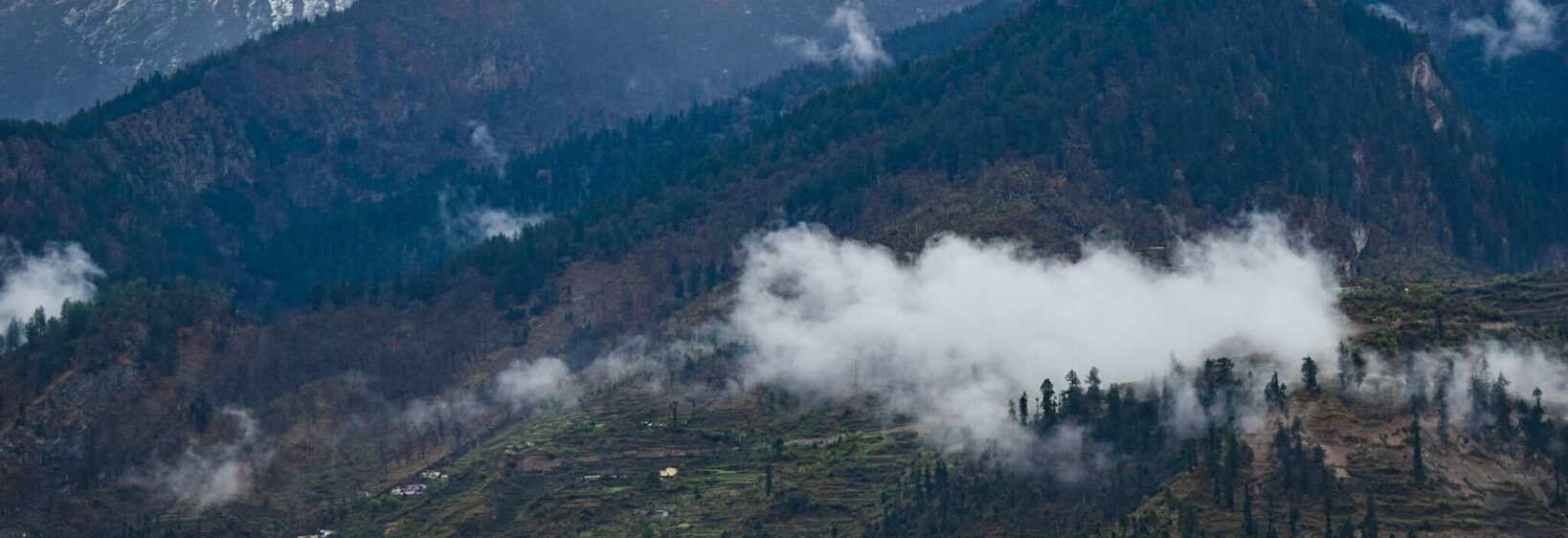
The Lakhudiyar caves sit roughly 15 kilometres from central Almora, close to the village that gives them their name. They are reached via a short diversion from the main highway that connects Almora with neighbouring hill towns. The site rests on a rocky outcrop beside the Kosi River, surrounded by sal forests and terraced fields that have changed little in appearance for centuries.
The road itself is well-maintained and forms part of the standard route taken by tourists travelling between Nainital, Ranikhet, and Almora. Most visitors stop here as a half-day excursion rather than an overnight destination, though the surrounding area offers quiet guesthouses for those who want a slower pace.
What the paintings actually show
Despite the modest size of the rock shelters, the imagery is rich and varied. Scholars have identified a consistent set of motifs across the panels, painted in red ochre and white clay. The scenes appear to document daily life, ritual, and the surrounding ecosystem of a community that lived by hunting and gathering.
Common elements found on the cave walls include:
- Stylised human figures, often shown in dynamic postures suggesting dance, hunting, or warfare
- Animal forms such as bulls, elephants, deer, and fish, sometimes arranged in rows
- Handprints and geometric patterns that hint at symbolic or ceremonial meaning
- Scenes that may depict communal activities, including what some researchers interpret as group dancing or ritual gatherings
The pigments were prepared from locally sourced minerals, which is partly why the colours have survived exposure to monsoon humidity and seasonal temperature swings for so long.
Tracing the age of the art
Most archaeologists date the Lakhudiyar paintings to the Mesolithic period, placing them somewhere between 8,000 and 2,000 years old, though some researchers argue for even earlier origins. The site belongs to a wider tradition of rock art found across central India, including the famous Bhimbetka shelters, but the Almora road examples have their own regional character.
What makes Lakhudiyar significant is the combination of human figures with a wide range of animals, suggesting a settled cultural practice rather than isolated sketches. The art offers a window onto the worldview of communities who shared the Himalayan foothills with species that have since disappeared from the region.
A familiar echo for travellers from Australia
Visitors from Sydney or Melbourne will find a surprising resonance between Lakhudiyar and the rock art sites of Kakadu National Park or the ancient engravings near Uluru. Both traditions grew out of communities with deep knowledge of the local landscape, and both used the surfaces of the land itself as a kind of canvas and library.
Australia's own heritage sites, recognised and protected under arrangements that involve Indigenous traditional owners, share this sense of place-based memory. Standing in front of a Lakhudiyar panel, an Australian traveller can recognise the same instinct to mark significant moments onto rock that persists across continents. It is one reason these caves appeal to international visitors who appreciate Indigenous art traditions at home.
Visiting the site today
The caves are open to visitors throughout the year and there is no formal entry fee, though a small donation to the local community is appreciated. The walk from the road to the rock shelters is short but uneven, so sturdy footwear is recommended, especially after rain. A local guide can usually be arranged through guesthouses in Almora or the nearby village.
Because the paintings are faint and easy to miss without guidance, many travellers prefer to combine a visit with a broader tour of the Almora district. Helpful itineraries that pair the caves with other stops in Kumaon are gathered at UK Photos Gallery, which covers destinations from Rishikesh to Deoria Tal and offers practical context for first-time visitors.
Best season and photography notes
The clearest weather falls between October and March, when the skies over the Kumaon hills stay bright and cool. Summer brings haze and crowds of domestic tourists, while the monsoon months can make the unpaved approach slippery. Early morning light tends to fall favourably across the rock face, which helps when trying to capture the faintest paintings with a camera.
Photographers should bring a wide-angle lens for the broader shelter views and a longer focal length for individual panels. Tripods are useful but not essential, and most visitors find that a quick phone snapshot misses much of the subtle colour work that defines the site.
Pairing Lakhudiyar with nearby stops
Few travellers make the detour just for the caves, and the surrounding area rewards a longer stay. Almora itself sits at a comfortable elevation with cafes, bookshops, and the quiet Nanda Devi temple. A short drive away, Kasar Devi draws visitors interested in the bohemian history of the ridge, while the bright green Deer Park offers an easy family outing.
Easy additions to a same-day or overnight loop include:
- Almora town for the bazaar, Nanda Devi temple, and a sunset view of the surrounding peaks
- Kasar Devi for its countercultural history and views toward the Himalayan snow line
- Ranikhet for quiet walks among orchards and a slower-paced cantonment town atmosphere
- Nainital for boat rides on the lake, reached via a scenic drive back through forested switchbacks
Adding Lakhudiyar to a broader Kumaon loop turns an ordinary road trip into something with considerably more depth, and gives the prehistoric art a fitting context within the wider story of the region.