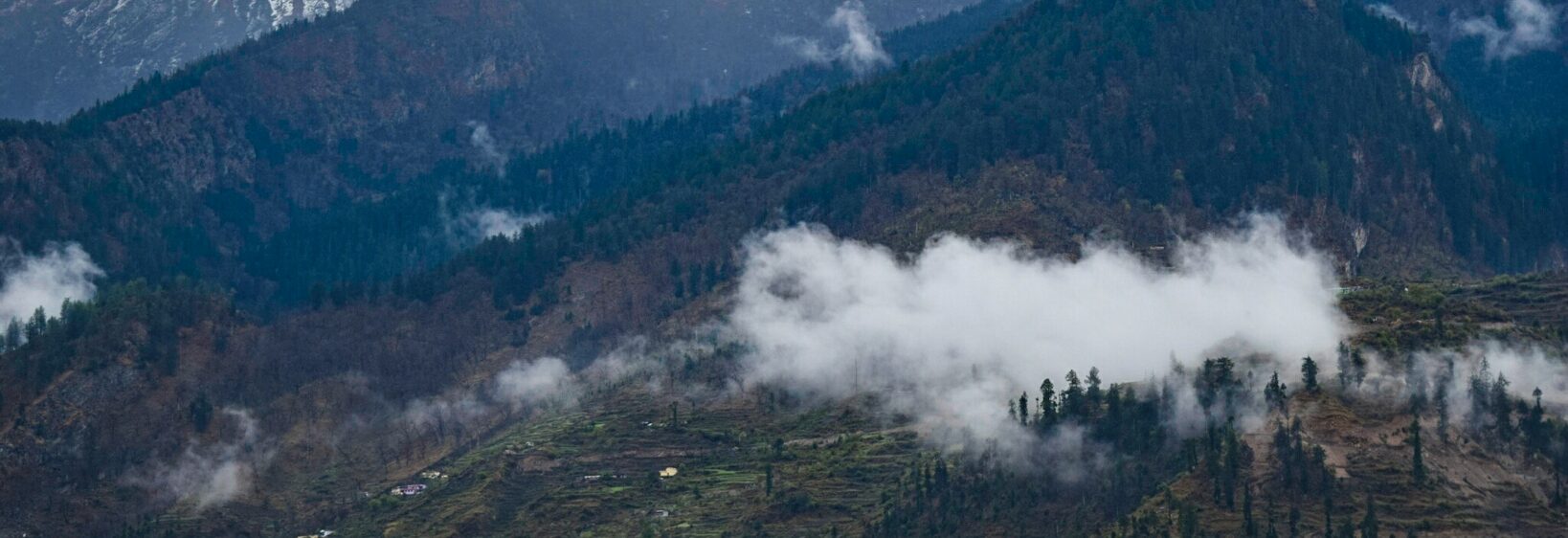
Binsar sanctuary paths for patient wildlife images
The Binsar Wildlife Sanctuary: Forest Trails and Quiet Wildlife Photography takes place within a compact Himalayan reserve of roughly 80 square kilometres. Oak, pine, rhododendron and deodar forests create a varied landscape for observing Himalayan monals, koklass pheasants, goral, sambar and elusive carnivores such as the leopard.
The sanctuary is most rewarding to visitors who slow down and watch rather than chase sightings. Cool forests, distant Himalayan peaks and wildlife-rich clearings provide a peaceful alternative to Uttarakhand’s busier pilgrimage routes and popular hill stations.
Choosing the right season
Most routes begin around Binsar town, with trails toward Godi, Dhak and Kafna crossing forests at elevations of approximately 1,500 to 2,500 metres. Conditions vary quickly, so a local guide can help identify quieter paths and explain seasonal movement between the lower oak belt and the higher conifer slopes.
March to June generally offers comfortable daytime temperatures, flowering rhododendrons and active birds. September to November brings clearer mountain views, while winter can bring snow, icy paths and very cold mornings. The July–August monsoon increases the chance of mist and landslides, making flexible transport essential.
Reaching the sanctuary from Australian cities
Many travellers from Sydney or Melbourne enter India through Delhi before continuing to Dehradun or the railway town of Kathgodam. From there, a taxi or shared vehicle can reach Bageshwar and Binsar, although mountain roads should be approached with more caution than their distance suggests.
Australia and India both drive on the left, giving local drivers and visitors a familiar rule of the road. Bends, mixed traffic, pedestrians and livestock still make these routes unpredictable, so allow extra travel time and avoid driving through heavy rain or darkness without local knowledge.
Reading the forest trails
The Binsar View Point trail is an accessible introduction to the sanctuary, but its sunset crowds limit the sense of seclusion. Short walks along less travelled sections can reveal mixed bird flocks, fresh animal trails and small clearings where forest edges meet pasture.
Some paths become faint after rain, and navigation can depend on old markers, local knowledge or a guide. Walking poles and shoes with good grip are more useful than fashionable hiking boots. Visitors seeking a longer, high-altitude experience can examine the Lohajung base camp route, though the demanding Roopkund journey is quite different from a gentle sanctuary walk.
Photographing wildlife with restraint
A telephoto lens allows animals to remain undisturbed while filling the frame. Start with a 100–400mm or 200–600mm zoom, focus on the eye and wait for natural behaviour rather than constantly changing position. Around 1/800 second suits birds in flight, while slower speeds can record grazing mammals and dramatic forest portraits.
The expression alea iacta est literally means “the die is cast,” a fitting reminder that no sighting can be guaranteed. Patience, silence and a willingness to accept an empty frame often produce better images than repeated attempts to approach wildlife.
Light, weather and seasonal change
Soft dawn light reaches the lower forest before many visitors begin walking. Mist often settles among the trees, reducing backgrounds and revealing the calls of koklass pheasants, Himalayan monals and woodpeckers. Evening light is equally beautiful, but the main viewpoints become busy near sunset.
Australian photographers accustomed to open landscapes and strong sunlight may initially struggle with the sanctuary’s dense shade. Altitude also brings sharper ultraviolet exposure, colder temperatures and rapidly changing cloud, so check weather conditions and protect equipment from moisture.
Building a practical camera kit
A weatherproof camera body, one flexible telephoto lens and a compact tripod cover most needs. Bird photography benefits from continuous autofocus and burst mode, while a beanbag or monopod can stabilise longer lenses without requiring a large tripod. Spare batteries, a lens cloth and a rain sleeve belong in the bag even on apparently clear days.
Used and lightweight telephoto equipment is available through camera dealers and second-hand markets serving Melbourne and Sydney photographers, making it possible to trial a suitable lens before travelling. Rental outlets around Delhi, Dehradun, Kathgodam and Bageshwar offer another option, although lens mounts, batteries and pickup arrangements should be confirmed beforehand.
Respect for wildlife and local communities
Like Australian bushwalkers, visitors are expected to carry out every scrap of rubbish, avoid contaminating water and leave camps exactly as they were found. Never feed monkeys, collect birds or plants, light fires or imitate calls to lure animals. Keep a respectful distance from mothers with young and avoid positioning yourself where the light or movement blocks their route.
Hiring a licensed local guide supports the surrounding community and reduces the risk of wandering onto unstable trails or disturbing sensitive habitat. Monsoon warnings, altitude symptoms and sudden storms require prompt changes to the itinerary. The most lasting images will record calm behaviour within an intact forest, with animals free to move onward whenever they choose.