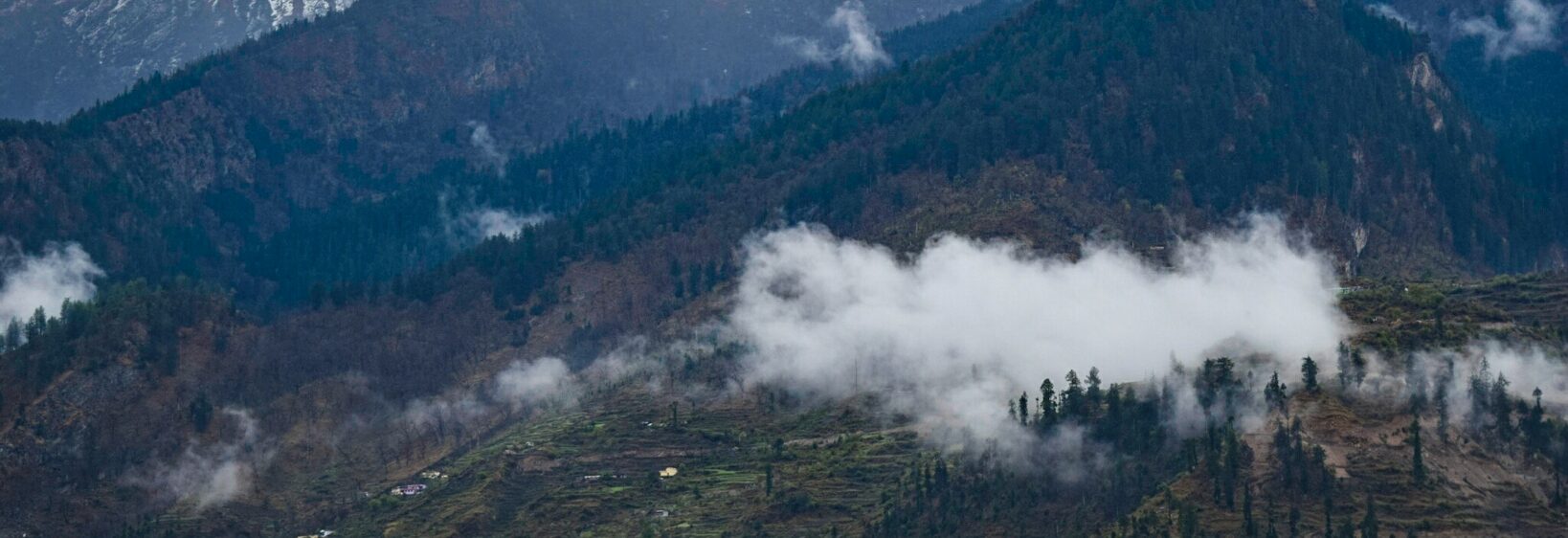
Patna Waterfall and the hidden glen above Tehri
The Patna Waterfall in Tehri is best understood as a seasonal river in a forest glen, not a fixed curtain of water. Fed by monsoon runoff from the Barkot hills, it can look restrained in a dry spell and powerful within hours of heavy rain. Nearby villages offer glimpses of everyday life in this less-visited corner of Uttarakhand.
For visitors from Sydney or Melbourne, reaching the falls usually involves a flight to Delhi, rail travel toward Haridwar or Rishikesh, and a road journey into the Tehri hills. That final approach demands patience: the roads bend above valleys, share space with buses and livestock, and sometimes lose time to weather or repair work. Keeping the waterfall as the day's purpose makes the excursion calmer and safer.
When the monsoon gathers
The dramatic version of Patna Waterfall belongs to the monsoon, particularly from late July through August, when runoff descends in dense veils. Short bursts can make the stream swell quickly, while a gap between storms leaves only silver strands over the rock. The waterfall is therefore a moving subject rather than a fixed scenic backdrop.
Clear weather in October and November can be ideal for a closer look. The forest opens up, autumn colour appears in the hillside trees, and the water becomes easier to photograph against darker stone. In December and January, frost or snow can make the approach slippery or difficult. Local conditions matter more than a fixed opening date.
The forest path from Patna
Patna village lies roughly eight kilometres from Tehri town. A motor vehicle can take visitors close to the village, after which a walking path of a few kilometres leads into the glen. The trail passes through mixed Himalayan forest, with broad leaves, damp stone and occasional openings toward the valley.
India drives on the left, as Australia does, but the mountain bends are narrower than drivers back home may expect. The walking route can also be uneven, with steps, exposed patches and slippery rock during rain. An experienced local guide is useful when the stream is high, particularly if cloud or heavy rain reduces visibility. Keep water, a light layer and a waterproof cover close.
Chai, cash and village comforts
Tea at a roadside stall is usually sweet, milky and often scented with cardamom or ginger. Many Melbourne regulars would order a long black, while Himalayan chai arrives with a different character. This small difference is a useful reminder that local food follows its own rhythm rather than Australian café conventions.
Carry rupees in small denominations for tea, snacks and parking around Patna village and the larger markets in Rishikesh or Dehradun. Cards may work in a busy hotel but should not be expected at a forest stall. Foreign notes are rarely useful for these purchases, and change can be scarce.
Photographing a moving subject
The glen rewards photographers who return to the same spot as the light and water change. Wide frames can hold the upper tiers and forest canopy, while closer views reveal spray on leaves and bright moss on wet rock. A tripod helps in the shaded lower sections, although its legs need careful placement on sloping ground.
Long exposures can soften the water into a pale ribbon, but fast shutter speeds are often better for keeping texture in a heavy monsoon flow. For more visual notes on Himalayan destinations and seasonal conditions, the photography journal at UK Photos Gallery offers a useful companion to the trail.
Reaching the falls from Rishikesh
From Rishikesh, allow most of a day for the drive to Tehri and the onward climb to Patna. The distance is manageable, but mountain traffic and roadside stops can stretch the journey. Transport options and local drivers can be checked through local travel arrangements before departure, especially for visitors wanting a private vehicle and an early start.
Deoria Tal sits higher in the Barkot landscape and needs more walking than the path into the glen. It works better as a separate objective than as an automatic extra stop. A relaxed itinerary protects the waterfall portion of the day and avoids rushing the final descent in poor weather.
Weather that changes quickly
The weather can shift faster than a forecast icon suggests, especially between June and September. A compact rain shell, warm mid-layer and waterproof footwear are more useful than a large umbrella. For an Australian used to summer walks, the cool, damp forest may feel more like the Victorian highlands than a typical weekend at home.
A local prepaid mobile SIM bought in Dehradun or Rishikesh is generally more dependable than relying on an overseas network. Reception may weaken along the road, so download offline maps before leaving town. Keep the camera battery dry and carry a spare card; spray and humidity can damage electronics.
A glen worth lingering in
An early start gives visitors time for the upper forest before afternoon cloud builds along the ridge. It also allows a return to Tehri before darkness, when the final bends and livestock on the road become harder to judge. The waterfall itself may be quieter than the road below, with birdsong replacing traffic and village voices carrying faintly through the trees.
A slower visit reveals why the place feels hidden despite its growing reputation. The changing relationship between water, forest and the lives above Tehri becomes clearer with each visit. When the flow is strong, the glen hums with runoff; when it is light, fine strands of water trace a quieter path through the rocks.