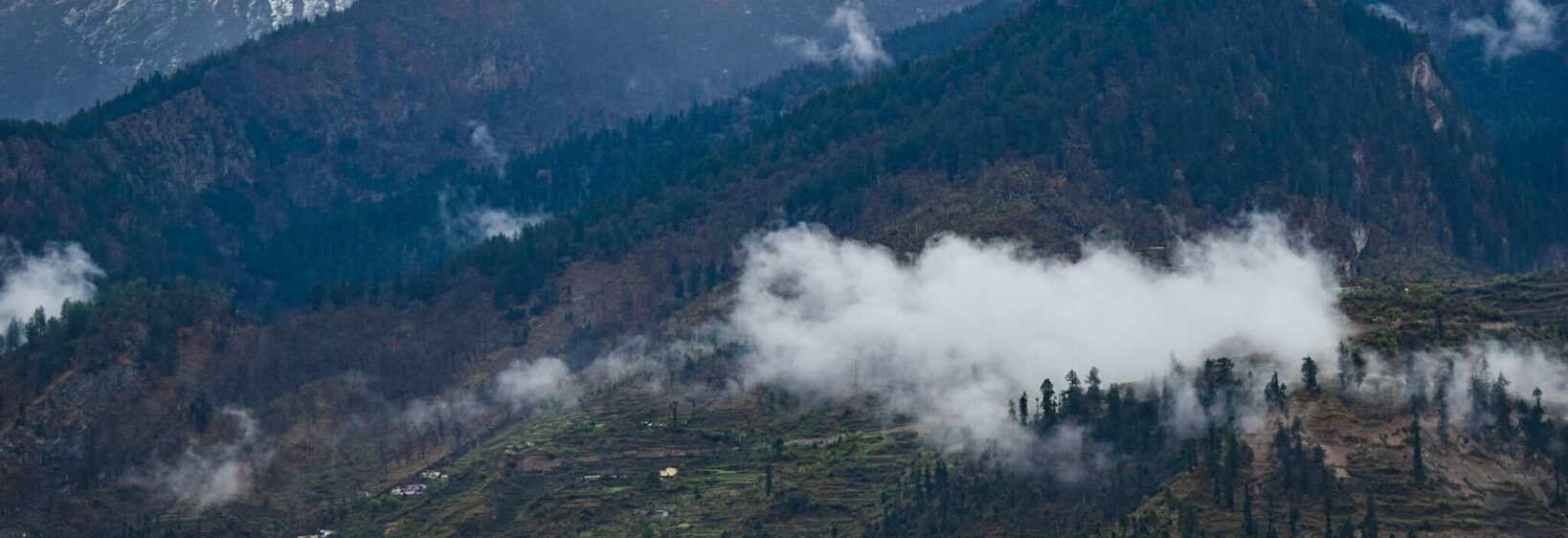
Photographing Trishul Peak From Kausani
Kausani is one of Uttarakhand’s finest Himalayan viewpoints, known for its quiet ridgelines, pine forests, and wide panorama of snow-covered summits. On a clear morning, the Trishul massif rises dramatically across the horizon, creating a memorable subject for landscape photographers.
The appeal lies in the changing light. Trishul Peak may appear pale blue before sunrise, turn rose-gold during the first rays, and gradually fade into a bright white silhouette as the day advances. Photographing this scene requires patience, careful positioning, and an awareness of the mountain weather.
Finding The Best Viewpoints
The central Kausani viewpoint near the main market is convenient and offers an unobstructed direction toward the high Himalayas. Several hotels and terraces also provide elevated perspectives, although trees, buildings, and balcony railings may affect the composition.
For a quieter setting, walk along the forested roads around Kausani or explore viewpoints near the Anashakti Ashram area. The foreground changes from rooftops and prayer flags to deodar branches, sloping meadows, and village homes. These elements can add scale and a stronger sense of place to a Trishul landscape.
Choosing The Right Season
October to March generally offers the sharpest mountain visibility, especially after a cold night. Winter skies are often crisp, and fresh snow can make the summit appear more pronounced. January and February may bring chilly conditions, so warm clothing and batteries protected from the cold are essential.
The post-monsoon months of September and October can also be excellent. Green hills, clean air, and occasional cloud formations create varied images. During the monsoon, mist and rain frequently hide Trishul, but a brief opening in the clouds can produce atmospheric photographs with a dramatic mood.
Light, Composition, And Camera Settings
Arrive at least thirty minutes before sunrise to prepare a tripod and locate the strongest composition. A telephoto lens between 100mm and 400mm isolates the snowy ridges, while a wide-angle lens includes Kausani’s rooftops, pine trees, or distant valleys. A medium focal length is useful when the mountain must share the frame with a human or architectural foreground.
Use a low ISO, a sturdy tripod, and manual focus on the distant ridge. Bracketing exposures helps preserve both the bright snow and darker foreground. A starting point of ISO 100, f/8, and a shutter speed adjusted to the light is practical, though photographers should review the histogram rather than rely on fixed settings.
| Shooting Goal | Useful Lens | Best Light | Composition Tip |
|---|---|---|---|
| Isolate Trishul Peak | 200–400mm | Early sunrise | Place the summit off-centre |
| Include Kausani scenery | 24–70mm | Soft morning light | Use trees or rooftops as foreground |
| Capture changing colour | 70–200mm | First direct sunlight | Take several exposures |
| Create a human-scale view | 35–85mm | Golden hour | Add a person or local structure |
Making The Mountain Feel Close
A distant Himalayan peak can look small in an otherwise empty frame. Foreground layers solve this problem. Frame Trishul between pine trunks, use a stone wall as a leading line, or include the sloping roofs of Kausani homes to show the relationship between the settlement and the high mountains.
Atmospheric perspective is another useful tool. Early morning haze can separate nearby ridges from the brighter summit, while side light reveals snow texture and shadowed gullies. Avoid filling every part of the frame; clean negative space can make the peak appear more imposing.
Practical Tips For A Mountain Shoot
Weather changes quickly, and clouds may cover the summit minutes after sunrise. Check the forecast locally, keep a rain cover in your camera bag, and carry spare memory cards. A microfiber cloth is valuable when condensation forms as equipment moves between warm rooms and cold outdoor air.
Respect private land, temple areas, and local customs when choosing a position. Do not step into cultivated fields or block narrow paths for a photograph. The wider Uttarakhand travel gallery can also provide visual inspiration for combining Himalayan scenery with local culture and everyday life.
Planning A Comfortable Photography Day
Kausani is compact enough for a sunrise shoot followed by breakfast and a relaxed walk through the town. Anashakti Ashram, tea gardens, village trails, and nearby cultural sites offer additional subjects when the mountain is hidden. A second evening session can reveal warm light on the ridges from a different direction.
Carry water, sun protection, a light jacket, and shoes with firm grip. If travelling with heavy equipment, arrange accommodation with a terrace or a clear east-facing view. Local drivers can help reach nearby villages and less crowded locations, while residents may know when seasonal haze usually lifts.
A Simple Field Checklist
- Reach the viewpoint before sunrise and allow time to set up safely.
- Carry a telephoto lens, wide-angle lens, tripod, spare batteries, and lens cloth.
- Photograph in RAW format and bracket difficult high-contrast scenes.
- Use pine trees, rooftops, paths, or people to create depth and scale.
- Leave trails, fields, and religious spaces undisturbed while shooting.
Trishul is most rewarding when photographed as part of Kausani’s living landscape rather than as an isolated white peak. Spend time watching the light, include details of the hills and community, and let the weather shape the story. Pack your camera for the next clear morning in Kausani and create a personal Himalayan photo series that preserves both the grandeur of Trishul and the character of Uttarakhand.