The Kafni Glacier trek: a challenging Himalayan adventure
The Kafni Glacier trek leads into the high valleys of Kumaon, where dense forests, alpine meadows, glacial streams, and broad Himalayan views shape each day on the trail. It is a rewarding route for trekkers who want a quieter alternative to some of Uttarakhand’s busier journeys.
The expedition usually begins near Loharkhet and follows the Pindar Valley through villages such as Khati and Dwali. From there, the trail turns towards Kafni Glacier, rising gradually into a colder and more rugged landscape. The route combines cultural encounters with demanding mountain walking.
Altitude, changing weather, and limited facilities make this a serious Himalayan adventure rather than a casual weekend hike. Good preparation, a realistic itinerary, and support from an experienced local guide can make the journey safer and more enjoyable.
Where the trail begins
Loharkhet is the traditional roadhead for the trek and can be reached from Bageshwar through the mountain roads of Kumaon. Trekkers generally spend the first day walking towards Kahrkia or Khati, depending on the chosen itinerary and current road access. Khati, one of the prominent villages in the region, offers an opportunity to observe traditional houses, terraced fields, and local mountain life.
The trail continues through forests of oak, rhododendron, and pine. Stone paths, wooden bridges, and rushing streams create a varied walking experience, while the Pindar River remains a frequent companion below. Dwali is an important halt where routes towards Kafni and Pindari separate.
Landscape and mountain scenery
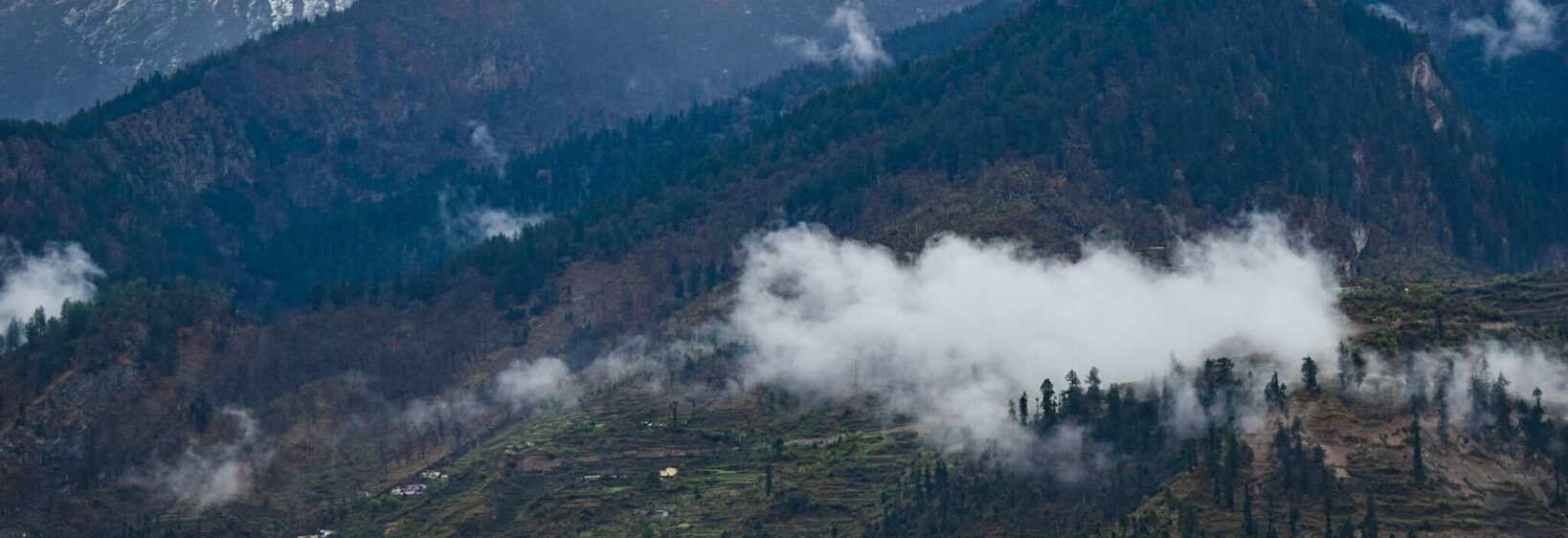
The approach to Kafni Glacier feels increasingly remote as the cultivated slopes give way to rocky ridges and high-altitude grasslands. Waterfalls appear along the valley walls, and the trail may pass through patches of wildflowers during the warmer trekking months. The glacier itself lies beneath a dramatic amphitheatre of Himalayan peaks.
Photography is especially rewarding in the early morning, when clear light reveals snow-covered summits and deep valley shadows. Trekkers who enjoy reflective mountain landscapes may also appreciate this visual guide to Deoria Tal sunrise, although the Kafni route offers a much wilder and more demanding setting.
The final approach can involve uneven moraine, loose stones, and narrow sections beside streams. Snow conditions vary considerably, so the exact viewpoint and distance covered may depend on the season, recent snowfall, and the guide’s assessment of the terrain.
Difficulty, altitude, and timing
The Kafni Glacier trek is generally considered moderate to difficult. The highest point is around 3,800 to 3,900 metres, and the repeated ascent and descent can be tiring even for fit hikers. Altitude gain should be managed slowly, with sufficient rest and attention to symptoms such as headache, nausea, unusual fatigue, or breathlessness.
Spring and autumn are usually preferred for clearer trails and better mountain visibility. April to June can bring blooming rhododendrons and pleasant daytime temperatures, while September to October often provides crisp views after the monsoon. Heavy rain can make paths slippery, and winter snow may restrict access to upper sections.
| Trek feature | Typical expectation |
|---|---|
| Region | Kumaon, Uttarakhand |
| Common starting point | Loharkhet or Kahrkia |
| Key settlements | Khati and Dwali |
| Highest area | Approximately 3,800–3,900 metres |
| Usual duration | About 5–7 days |
| Best seasons | April–June and September–October |
| Main challenges | Steep sections, altitude, rain, cold, and rough paths |
Food, stays, and local support
Accommodation on the route is basic. Trekkers may stay in village guesthouses, simple lodges, or seasonal camps, while higher sections generally require tents. Electricity, mobile connectivity, hot water, and medical facilities cannot be assumed, so the journey demands flexibility and self-reliance.
Local guides, porters, and mule handlers provide valuable support with navigation, equipment, meals, and river crossings. Hiring local assistance also contributes to the economy of remote villages. A registered trekking operator can help arrange transport, permits where required, camping equipment, and emergency planning.
Meals commonly include rice, lentils, vegetables, flatbreads, and tea. Carrying high-energy snacks such as nuts, dried fruit, chocolate, and electrolyte sachets is useful, especially on long walking days when food options are limited.
Practical planning checklist
A successful glacier trek depends on preparation before reaching the mountains. Build physical endurance with regular walking, stair climbing, and longer weekend hikes several weeks in advance. Break in trekking shoes before departure, as blisters can become a serious problem on remote trails.
- Carry layered clothing, waterproof outerwear, warm gloves, and a hat.
- Pack a sleeping bag suitable for sub-zero nights and a reliable headlamp.
- Bring water purification tablets or a portable filter for trail supplies.
- Keep personal medicines, sunscreen, lip balm, and a compact first-aid kit accessible.
- Carry identification, permits if required, emergency contacts, and some cash.
Pack light enough for comfortable walking, but do not remove essential warm or rainproof equipment. Weather can change rapidly in the Himalayas, and a sunny morning does not guarantee a dry afternoon.
Responsible trekking in the Himalayas
The Kafni valley is ecologically sensitive, with fragile vegetation, wildlife habitats, and water sources used by local communities. Trekkers should follow established paths, avoid loud music, and carry all non-biodegradable waste back to an appropriate collection point. Refilling bottles is preferable to buying repeated plastic containers.
Respect for local customs is equally important. Ask before photographing residents, religious spaces, or private homes, and dress modestly in villages. Supporting local homestays, guides, and food providers helps preserve the cultural character of the region while making tourism more beneficial to mountain communities.
The Kafni Glacier trek rewards patience, fitness, and careful planning with secluded valleys and powerful Himalayan scenery. Begin conditioning early, select a responsible local operator, and prepare for changing conditions so the journey can be experienced with confidence. Use the route as an opportunity to explore Kumaon respectfully, capture its landscapes thoughtfully, and leave the high valley as pristine as you found it.