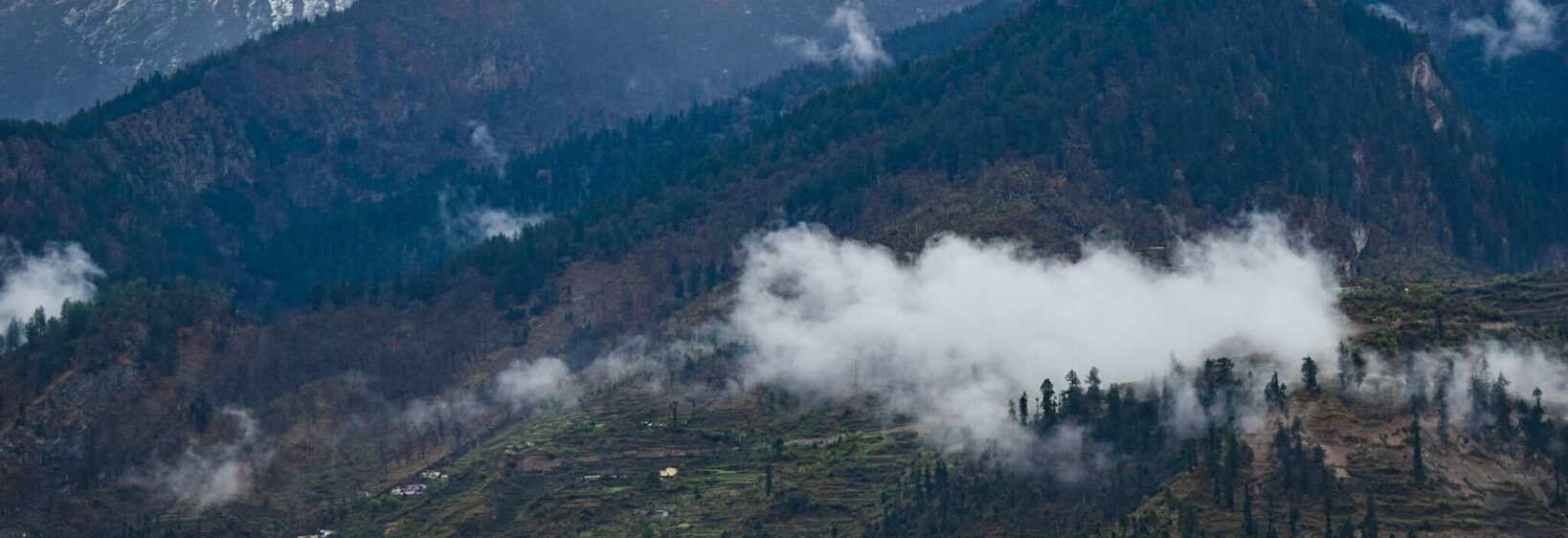
Photographing the Terraced Fields of the Garhwal Highlands
Across the Garhwal Himalayas, cultivated slopes form broad green steps between forested ridges and stone-built villages. These terraces are more than attractive patterns in a landscape photograph: they show how mountain communities have shaped steep land for farming over generations.
The best images capture this relationship between people, soil, water, and altitude. A field of wheat, mandua, or flowering mustard can become a strong subject, especially when paths, cattle sheds, temples, and distant snow peaks add a sense of place.
Finding Strong Viewpoints
Look for elevated viewpoints above villages in the middle hills, where several layers of terraces can lead the eye towards a valley or ridge. Roads near Ranikhet, Rudraprayag, and the wider Joshimath region often offer useful stopping points, although the most memorable perspectives may require a short walk.
Avoid photographing every slope from eye level. Climb a nearby trail, stand beside a village path, or frame the fields from a quiet ridge. A higher viewpoint reveals the repeated contours, while a lower position makes the terrace walls and crops feel more imposing.
Working With Mountain Light
Early morning gives the fields gentle side light, long shadows, and cooler colours. This is particularly effective when the terraces are freshly planted or covered with dew. Late afternoon brings warmer tones and can emphasize the texture of stone embankments.
Cloudy weather should not be treated as a failed photography day. Diffused light reduces harsh contrast and brings out subtle greens, browns, and muted golds. After rain, distant hills may appear unusually clear, while wet paths and reflective irrigation channels add visual depth.
Showing Seasonal Character
The appearance of Garhwal’s farmland changes dramatically through the year. Spring can bring mustard flowers and pale new growth, summer creates dense green patterns, and autumn often reveals harvested plots in ochre and brown. Winter scenes may be quieter, with bare fields contrasting against dark forests.
Include small signs of cultivation rather than presenting the landscape as untouched wilderness. A farmer carrying tools, stacked hay, a water channel, or freshly cut bundles can explain the working rhythm of the highlands without taking attention away from the wider view. For more visual references from Uttarakhand, browse regional photo guides before planning a route.
| Scene or condition | Useful approach | Visual effect |
|---|---|---|
| Fresh green crops | Use a wide lens from an elevated path | Repeating patterns and valley depth |
| Mustard in bloom | Frame flowers against darker slopes | Strong colour contrast |
| Misty morning | Keep distant ridges within the composition | Layered, atmospheric perspective |
| Harvest season | Include hay stacks or field workers | A sense of rural life and texture |
| Stone terrace walls | Use side light and a lower viewpoint | Emphasized structure and relief |
Choosing Lenses And Composition
A wide-angle lens works well for expansive valleys, but it should include a clear foreground such as a trail, wall, or crop row. Without that anchor, a broad mountain view can appear flat. A standard zoom is often more versatile when the scene includes both terraces and village details.
Telephoto lenses are valuable for compressing several ridgelines and making distant fields appear closely stacked. Try placing a solitary tree, shrine, or house among the terraces. Diagonal paths and curved embankments can act as leading lines, guiding attention through the frame.
Respecting Village Life
Terraced fields are private working spaces, so ask before entering cultivated plots or photographing people at close range. Stay on established paths whenever possible, and avoid stepping on seedlings or newly repaired embankments. A respectful distance usually produces more natural images as well.
Travel lightly in remote areas. Keep noise low, carry litter back with you, and do not move farming tools or household objects for a staged composition. Conversations with residents can also reveal the names of local crops, seasonal festivals, and traditional irrigation practices that enrich the story behind the photographs.
Practical Planning For The Highlands
Weather can change quickly in the mountains. Carry a rain cover, lens cloth, spare batteries, and a waterproof way to store memory cards. A polarizing filter may deepen blue skies and control reflections, but use it carefully because uneven darkening can appear across wide scenes.
Plan around walking time rather than road distance. A viewpoint that looks close on a map may involve steep paths and several village crossings. Photographing at dawn requires advance arrangements for transport and accommodation, while sunset locations should allow enough daylight for a safe return.
A Focused Field Checklist
A simple plan helps preserve attention for changing light and unexpected details:
- Visit during planting, flowering, or harvest seasons for stronger visual variety.
- Carry a wide lens, a standard zoom, and a lightweight tripod if practical.
- Use terraces, paths, and irrigation channels as natural leading lines.
- Ask permission before photographing residents or entering active farmland.
- Record village names, crop types, and viewpoints for accurate captions.
These photographs become more meaningful when paired with short notes about place and season. Captions can identify the valley, describe the agricultural pattern, and acknowledge the people who maintain the landscape.
Pack your camera, follow the mountain paths with care, and spend time observing before pressing the shutter. The finest Garhwal terrace photographs come from patient attention to light, texture, and the living culture of the hills.