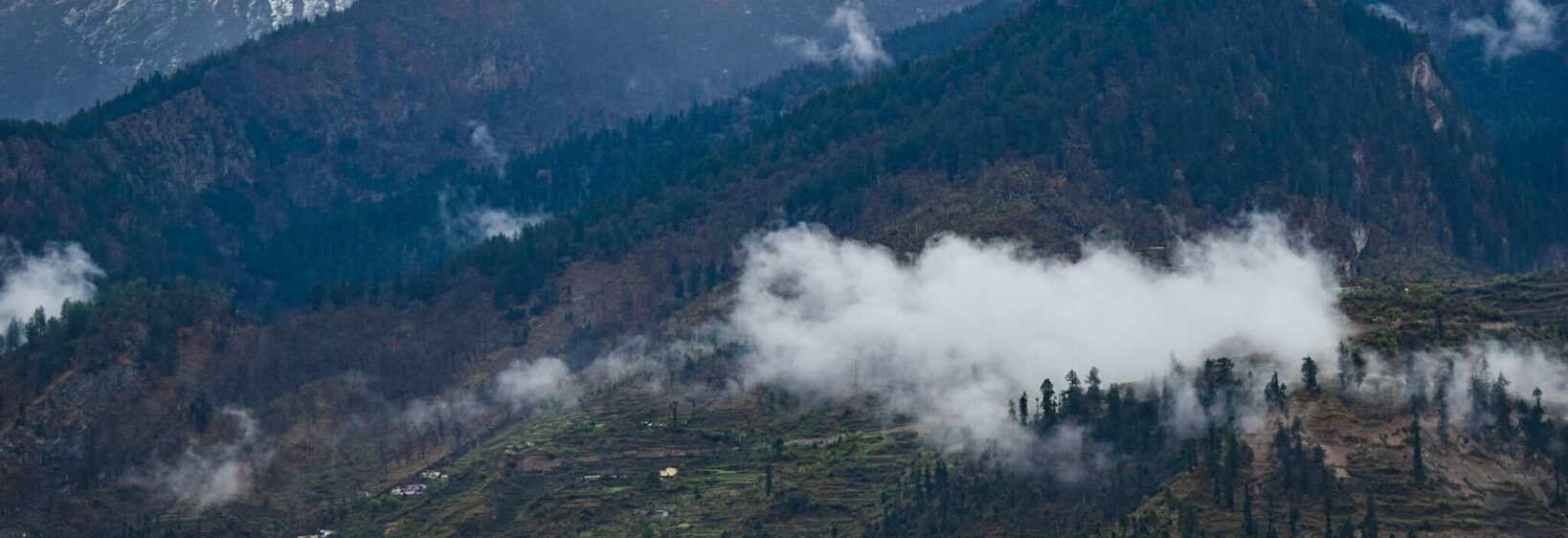
Chaukori sunrise point and the Nanda Devi panorama
Chaukori, a peaceful hill settlement in Kumaon, is known for wide Himalayan views, tea gardens, forested slopes, and quiet mornings. Its elevated position makes sunrise especially memorable, as the first light gradually reaches the snow-covered peaks beyond the valleys.
The Nanda Devi massif is the main attraction on a clear morning. As the sky changes from deep blue to gold, the distant summits begin to glow while the lower ridges remain in shadow. The view feels spacious and unhurried, which is one reason Chaukori appeals to photographers, nature lovers, and travellers seeking a slower Uttarakhand experience.
A sunrise visit is also a chance to observe local life before the day becomes busy. Smoke rising from village kitchens, birds moving through oak and pine trees, and the changing colours of the Himalayan horizon create a scene that feels connected to the landscape rather than separated from it.
Finding the viewpoint around Chaukori
There is no single formal platform that defines the entire sunrise experience. Travellers can usually find open viewpoints near Chaukori’s main ridge, accommodation areas, tea gardens, and nearby forest roads. Your hotel or homestay can help identify a safe place with an unobstructed view of the high peaks.
The most rewarding locations are those with a clear northern or northeastern outlook. Arrive before dawn, as the best light often appears several minutes before the sun itself rises. A short walk from your accommodation may be enough, although some viewpoints require a local taxi or a drive along narrow hill roads.
Avoid entering unfamiliar forest paths in darkness. A torch, warm clothing, and a local guide are useful, particularly during winter when mist, frost, or uneven ground can make a simple walk more difficult.
How Nanda Devi appears at dawn
Nanda Devi is India’s second-highest mountain and one of the most recognisable peaks in the central Himalaya. From the Chaukori region, its snowy profile may appear as part of a broader mountain panorama rather than as a close, isolated summit. Visibility depends on weather, haze, and the exact viewing location.
The colours change quickly. Soft grey ridges can turn pink, orange, and bright gold before settling into a clearer white under the morning sun. Long lenses capture the distant peaks, while a wide-angle view includes the valleys, rooftops, trees, and layered ridgelines that give the landscape its depth.
A tripod is helpful for low-light photography, but it is not essential. Even a phone can record striking images when the camera is stabilised and the exposure is adjusted to preserve the bright sky and snowy mountain details.
| Best time or condition | What to expect | Useful preparation |
|---|---|---|
| October to November | Clear skies and sharp mountain outlines | Warm layers and a charged camera |
| December to February | Cold mornings, occasional frost, dramatic light | Gloves, cap, torch, and sturdy shoes |
| March to April | Pleasant temperatures and emerging spring colour | Light jacket and spare batteries |
| May to June | Comfortable mornings before the monsoon | Arrive early to avoid haze |
| July to September | Cloud, mist, and limited mountain visibility | Flexible plans and rain protection |
Seasons, weather, and visibility
Autumn is often considered one of the strongest periods for Himalayan sightseeing because the monsoon haze has reduced and the air can feel unusually clear. Winter brings colder mornings but may offer crisp outlines when the sky remains open. Spring adds fresh greenery and a more comfortable walking climate.
The monsoon months can transform Chaukori into a lush, atmospheric destination, although clouds may hide Nanda Devi for several days. Rather than treating a cloudy sunrise as a disappointment, photographers can focus on moving mist, wet foliage, and small breaks of light across the slopes.
Weather in the hills can change rapidly. Check local conditions, keep a flexible schedule, and allow at least two mornings if the mountain panorama is an important part of your journey.
Photographing the Himalayan light
For a balanced landscape photograph, include a foreground such as a railing, tea bush, village roof, or tree branch. This gives scale to the faraway peaks. A telephoto lens is useful for mountain details, while a standard lens works well for combining the sunrise colours with the surrounding countryside.
Shoot several exposures as the light develops. The brightest part of the sky can cause a camera to darken the foreground, so gently raising the shadows later may reveal details without losing the sunrise mood. Keep compositions simple and avoid excessive filters that make the snow appear unnatural.
Travel photography in Uttarakhand is also about atmosphere and people. Ask permission before photographing residents, homes, religious places, or working farms. For inspiration from another distinctive photographic destination in the state, explore the Beatles Ashram history, where architecture, art, and local stories create a very different visual experience.
Making the morning comfortable
Chaukori is a destination for unhurried travel rather than a quick viewpoint stop. Choose accommodation close to the ridge, arrange transport the previous evening, and confirm breakfast timings if you plan to leave before dawn. Carry water, a small snack, and a reusable bag for anything you bring outdoors.
Respect the quiet character of the area. Keep music low, avoid litter, do not disturb wildlife, and stay away from unstable edges. The finest memories often come from observing the landscape patiently instead of rushing between several photo spots.
Practical choices for a memorable visit
- Reach the chosen viewpoint at least 20 to 30 minutes before sunrise.
- Carry warm layers even during seasons with mild daytime temperatures.
- Use local guidance for forest paths, road conditions, and private viewpoints.
- Keep a flexible itinerary in case clouds cover the Nanda Devi range.
- Combine the sunrise with a tea garden walk, village visit, or nearby Kumaon attraction.
Chaukori rewards travellers who give the mountains time to reveal themselves. Plan your stay, check the forecast, and use the Uttarakhand travel guide to build a wider journey around this serene Himalayan sunrise.