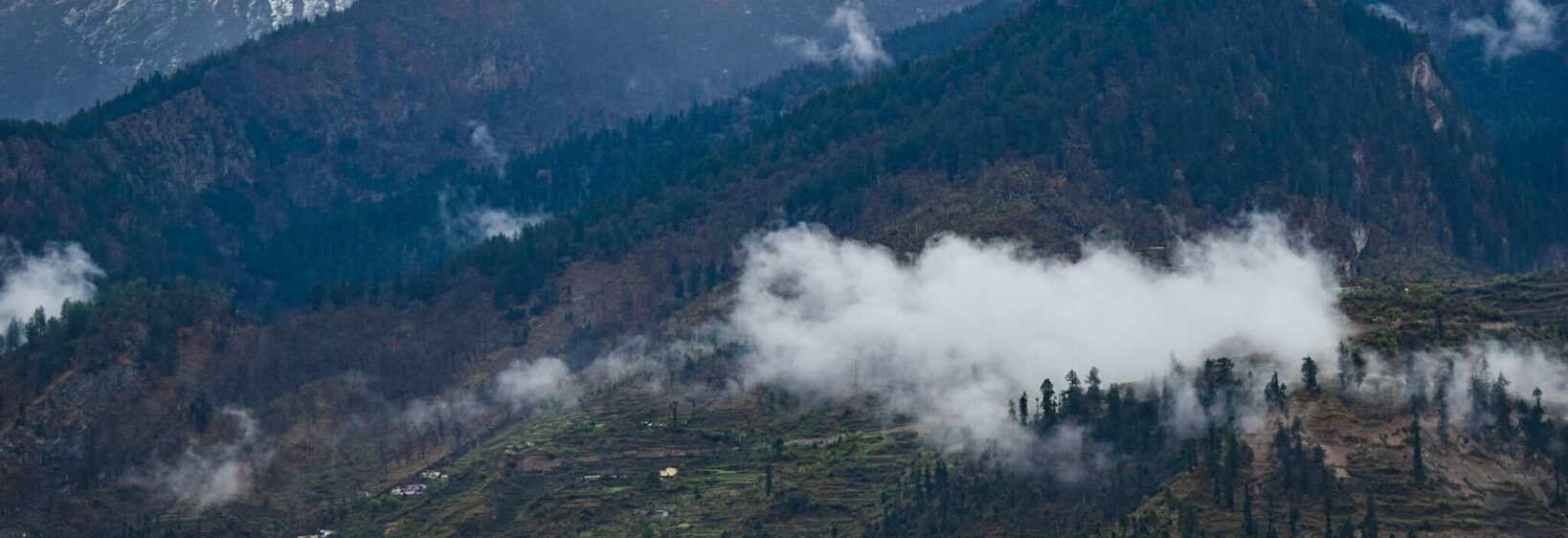
Photographing the Evening Fog Over the Ganga from Laxman Jhula
As daylight fades in Rishikesh, a soft veil of mist often settles above the Ganga. From Laxman Jhula, the river, suspension bridge, forested slopes, and distant temple lights merge into a quiet Himalayan scene. This changing atmosphere gives photographers a short but rewarding window for atmospheric travel images.
Evening fog is rarely dense or predictable. It may drift close to the water, gather beneath the bridge, or catch the last blue light on the far bank. A patient approach is essential, especially when the goal is to show the mood of Rishikesh rather than simply record a famous viewpoint.
The area can become busy around sunset, with pilgrims, walkers, sadhus, and visitors crossing the bridge. Respectful photography, careful movement, and awareness of local customs will help you work smoothly while preserving the character of this sacred riverside setting.
Finding the right viewpoint
The old Laxman Jhula area offers several useful perspectives, including the approach roads, riverside paths, nearby terraces, and elevated viewpoints around the bridge. Look for a position where the Ganga leads into the frame and the bridge creates a strong diagonal or horizontal line.
A clear foreground can make the fog feel deeper. Railings, stone steps, prayer flags, or a quiet stretch of riverbank may provide scale without distracting from the distant hills. Walk a little before setting up, as a small change in position can separate the bridge from trees, buildings, or overhead wires.
Working with evening light
The best period usually begins shortly before sunset and continues into blue hour. Warm light may touch the upper hills while the river remains cool and shadowed. Once the sun disappears, the fog can become more visible as it reflects scattered light from homes, cafés, and temples.
Keep highlights under control when lamps and illuminated signs enter the frame. A slightly darker exposure often protects detail in the sky and preserves the gentle contrast of the mist. Review the histogram instead of relying only on the brightness of the camera screen.
Camera settings for river mist
A tripod is useful for long exposures, especially after sunset, but it should be placed where it does not obstruct pedestrians. Use a low ISO when possible and select an aperture around f/5.6 to f/8 for a balanced landscape. For moving fog, exposures between a fraction of a second and several seconds can produce very different textures.
Manual focus on a distant bridge detail or hillside can prevent the autofocus system from hunting through the mist. Shoot in RAW if available, and capture several exposures as the light changes. A wide lens suits the full landscape, while a short telephoto can isolate the bridge, riverbank lamps, or layers of fog.
| Scene element | Useful approach | Visual effect |
|---|---|---|
| Ganga and bridge | Wide lens, low viewpoint | Strong depth and leading lines |
| Fog over the water | Slightly darker exposure | Preserves soft tonal layers |
| Temple or café lights | Reduced highlights | Avoids blown-out bright spots |
| People crossing | Moderate shutter speed | Adds scale and local atmosphere |
| Distant hills | Telephoto compression | Emphasises overlapping misty layers |
Composing a quiet Rishikesh image
A successful photograph does not need to include every landmark. Leave breathing room around the fog and use the river’s movement to guide the eye. Reflections may be faint, but even broken patches of light can connect the foreground to the bridge and hills beyond.
Human presence can add meaning when handled naturally. A solitary walker, a figure pausing near the railing, or a small group returning from the ghats can show the scale of the setting. Avoid staging strangers or photographing private moments without permission.
For ideas on balancing people, ritual, and low evening light, this evening aarti guide offers a related perspective from another important Rishikesh location.
Respecting the riverside setting
Laxman Jhula is part of an active religious and community landscape, not simply a scenic viewpoint. Keep voices low near shrines, avoid blocking paths, and ask before photographing close portraits of worshippers, priests, or local residents. Dress modestly and follow signs around temples and river access points.
Weather can change quickly in the Himalayan foothills. Protect cameras from moisture, carry a small cloth for condensation, and keep spare batteries warm and dry. After rain, the bridge and stone surfaces may be slippery, so stable footing matters more than finding a dramatic angle.
A practical evening photography routine
Arrive before the strongest colour disappears and spend a few minutes observing the direction of the fog. Then work through a simple sequence:
- Begin with wide landscape frames showing the Ganga, bridge, and surrounding slopes.
- Move closer to details such as prayer flags, lamps, cables, or ripples in the water.
- Recheck focus and exposure as daylight changes into blue hour.
- Photograph several shutter speeds to compare sharp mist with softer movement.
- Pack away equipment before the path becomes too dark or crowded.
The finest images may come after the obvious sunset moment, when the sky turns deep blue and individual lights appear through the haze. This is also a peaceful time to experience the bridge and river without rushing between viewpoints.
Explore more Uttarakhand photography stories, destination notes, and local travel inspiration through UK Photos Gallery. With a little patience and respectful observation, your evening frames can preserve the shifting fog, sacred atmosphere, and unmistakable rhythm of the Ganga at Laxman Jhula. Capture the scene slowly, return to the river when conditions change, and let the landscape reveal its own story.