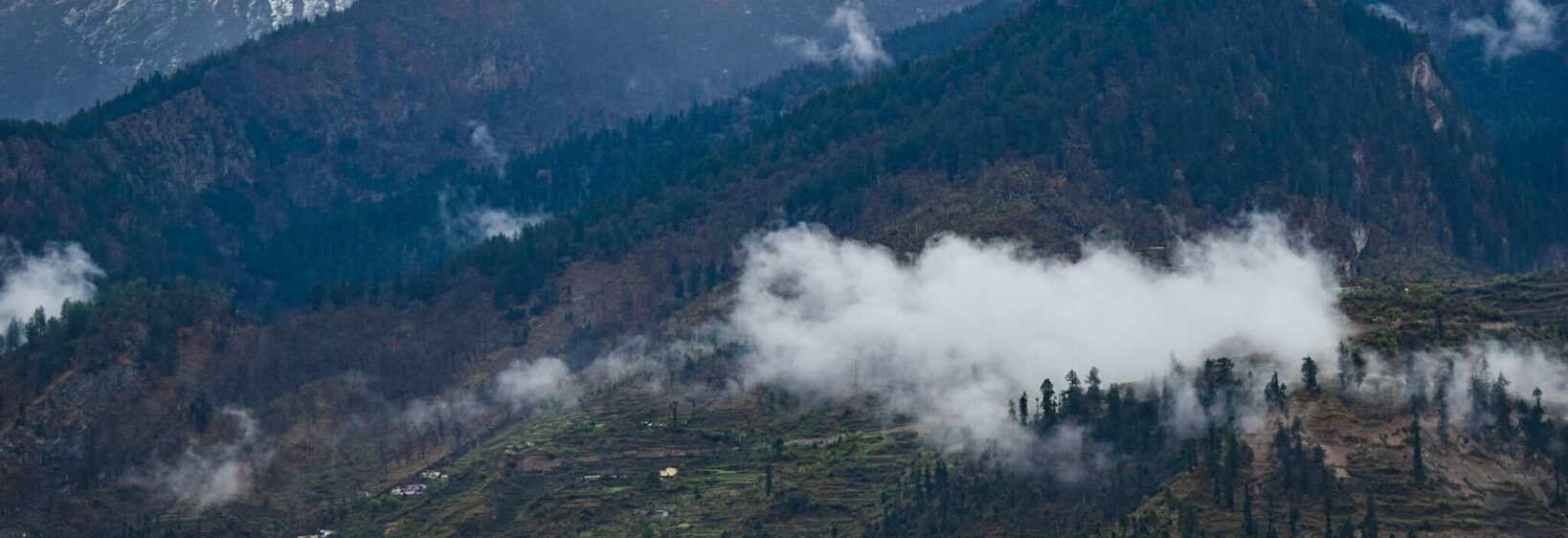
Capturing Morning Mist Over Deoria Tal
Deoria Tal is at its most atmospheric in the quiet hour before sunrise. The lake near Sari village, above Ukhimath, often gathers a thin veil of mist while the surrounding forests remain in deep shadow. As daylight rises, the water can reveal reflections of Chaukhamba and the snow-covered Garhwal peaks.
Photographing this scene is less about rushing to the viewpoint and more about observing subtle changes. The mist may drift across the surface, lift from the shoreline, or briefly hide the mountains before opening a clear window to the reflection.
A thoughtful visit also makes room for the journey. Readers planning a wider mountain route can find useful Uttarakhand photo guides covering local landscapes, villages, temples, and nearby attractions.
First Light At The Lake
The walk from Sari to Deoria Tal is short for experienced hikers, but the pre-dawn trail still requires care. Carry a headlamp, wear shoes with reliable grip, and allow enough time to reach the lake before the eastern sky turns pale. Arriving early gives you a chance to choose a viewpoint without disturbing other visitors.
Morning mist changes quickly. It may appear dense and white near the water, then become translucent as the first rays pass through it. Keep your camera ready for these transitions rather than taking a single frame and packing away. The most memorable image may arrive several minutes after sunrise.
Plan The Walk Before Sunrise
Weather forecasts are useful, but mountain conditions can shift overnight. Check local guidance in Sari or Ukhimath, especially during winter, monsoon, and periods of heavy snowfall. A clear forecast does not guarantee a visible mountain reflection, since low cloud can settle around the lake.
Pack spare batteries because cold temperatures reduce battery life. A microfiber cloth is valuable when moisture forms on the lens, while a lightweight rain cover protects equipment from damp grass and sudden drizzle. A tripod can help in low light, although it should be placed where it does not block the narrow lakeside path.
Camera Settings For Soft Mountain Light
Mist reduces contrast, so photographs can look flat when the camera exposes for the darker forest. Check the histogram and preserve detail in the brighter sky. If the scene appears too grey, a small exposure adjustment can retain the gentle mood without making the fog look artificial.
Use manual focus or a single focus point when the autofocus system keeps selecting the mist. Shoot in RAW when possible, since the format gives greater control over highlights, shadows, and muted colours during editing.
| Shooting situation | Useful starting point | Result to look for |
|---|---|---|
| Dense mist before sunrise | ISO 400–800, f/5.6, slower shutter | Smooth water and soft silhouettes |
| Mist beginning to lift | ISO 100–400, f/8, moderate shutter | Layered trees and clearer depth |
| Mountain reflection appears | ISO 100, f/8–f/11, tripod | Sharp foreground and balanced peaks |
| Sun breaks through the haze | ISO 100–200, f/11, faster shutter | Defined rays and controlled highlights |
Compose The Mountain Atmosphere
A wide-angle lens can include the lake, forest edge, mist, and sky, but do not let empty water dominate the frame. Place a shoreline curve, rock, or tree branch in the foreground to lead the eye toward the distant mountains. Reflections become more compelling when the image has a clear visual path.
Try vertical compositions as well. A portrait frame can emphasize the rising mist and give the peaks more space above the water. If the reflection is broken by ripples, focus on atmosphere rather than symmetry. A partially hidden mountain can suggest scale and depth more effectively than a completely clear panorama.
Travel Light And Tread Softly
The lakeside environment is peaceful and fragile, particularly in the early morning when birds and small animals are active. Keep voices low, stay on established paths, and avoid entering the water or trampling damp vegetation for a better angle.
Useful habits for a responsible photography walk include:
- Carry every wrapper, battery, and food container back to the village.
- Use a red or dim headlamp setting when other photographers are nearby.
- Avoid bright flashes, loud music, and drones around visitors and wildlife.
- Ask before photographing local residents, guides, or ritual activity.
- Follow local instructions about camping, fires, and overnight access.
These small choices protect the character that makes Deoria Tal attractive. A clean shoreline and undisturbed morning atmosphere are part of the photograph’s story.
Turn Images Into A Story
A strong photo series can move from preparation to revelation. Begin with the dark trail or quiet Sari lanes, continue with close frames of wet grass and drifting fog, and finish with the lake reflecting the illuminated peaks. This sequence gives viewers a sense of place instead of presenting the lake as an isolated postcard.
During editing, keep the colour temperature natural and resist adding excessive clarity to the mist. Gentle contrast, restrained sharpening, and careful shadow recovery usually preserve the calm mood. Include a few wider and closer views so the final collection communicates both the landscape and the experience of being there.
Reach Deoria Tal with patience, protect the quiet surroundings, and let the morning provide its own pace. With a prepared kit and an attentive eye, the changing mist can become the central subject of a rich Uttarakhand photo story.