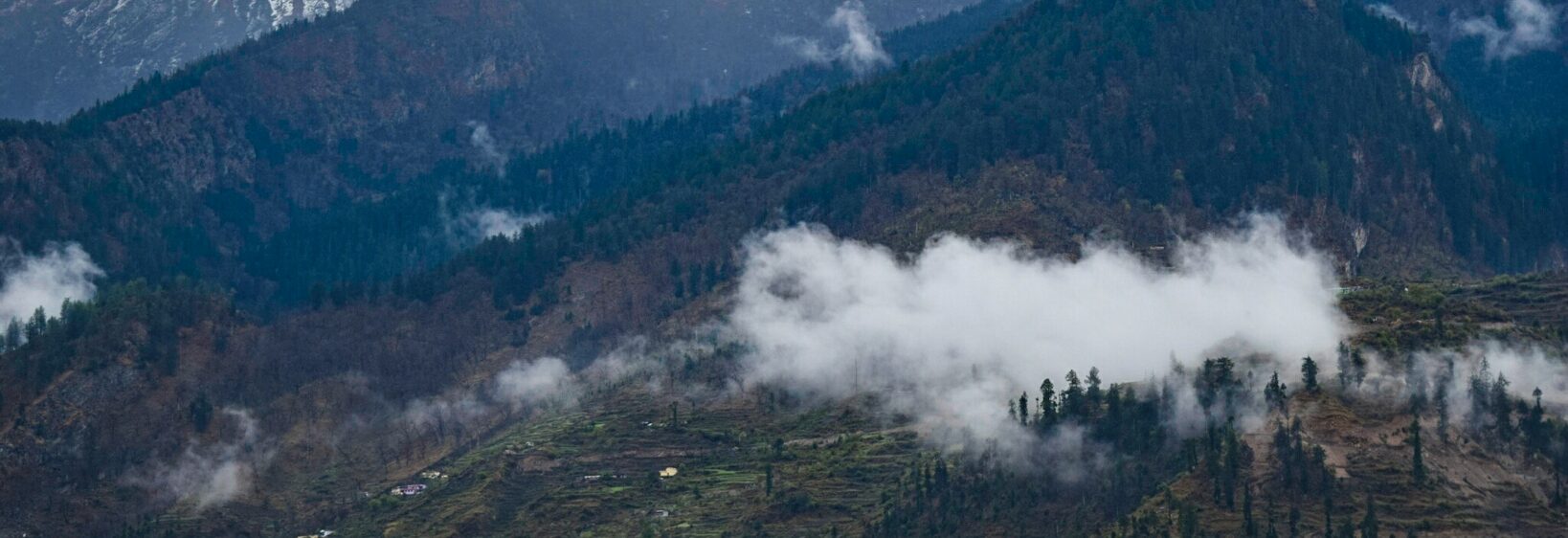
Har Ki Dun Valley Through Autumn’s Forest Light
Har Ki Dun is one of Uttarakhand’s most atmospheric walking valleys, reached through the Govind Pashu Vihar National Park in the western Garhwal Himalaya. The route follows the Supin River from Sankri towards ancient villages, alpine meadows and high mountain viewpoints. In autumn, clear air and changing foliage give the landscape a distinctive photographic character.
The best period for forest photography generally falls between late September and early November. The monsoon has usually withdrawn, trails are more stable, and the slopes around Osla and Har Ki Dun show warmer colours beneath snow-dusted peaks. Travellers arriving from Sydney, Melbourne, Brisbane or Perth should allow time to adjust to the altitude and a long sequence of road and trekking transfers.
This is a landscape where photographs benefit from patience rather than speed. A misty morning in the oak forest, smoke rising from a village kitchen or sunlight crossing the valley floor can say as much about local life as a wide panorama. The Uttarakhand travel stories collection offers useful context for planning a broader journey through the region.
| Feature | Autumn Conditions | Photography Value |
|---|---|---|
| Forests | Gold, russet and deep green foliage | Layered woodland scenes |
| Villages | Cool mornings and active farm life | Cultural and lifestyle images |
| High valley | Clearer views after the monsoon | Mountain panoramas |
| Walking conditions | Cold nights and occasional weather changes | Soft morning and evening light |
The Route Into The Valley
Most itineraries begin at Dehradun, followed by a long drive through the Himalayan foothills to Sankri. The road passes places such as Mussoorie, Naugaon and Purola before reaching the trailhead area. From Sankri, trekkers commonly walk or drive a short distance to Taluka, then follow the Supin River through forested terrain.
The first sections include bridges, uneven paths and steep stretches between Taluka, Seema and Osla. Osla is known for its traditional wooden architecture, slate-roofed homes and distinctive village setting. Beyond the settlements, the trail opens towards broad grasslands and mountain walls, with Har Ki Dun itself sitting at roughly 3,500 metres.
Australian walkers may find the scale different from a coastal bushwalk near Sydney or a day hike in the Dandenong Ranges. Distances feel slower at altitude, and a route that looks manageable on a map can take longer after rain, with a full pack and limited mobile coverage.
Autumn Colours And Forest Layers
The valley’s lower woodland includes Himalayan oak, walnut, maple and conifer species, with birch appearing closer to the alpine zone. Autumn colour is often a patchwork rather than a uniform blaze: copper leaves may stand beside dark evergreens, while yellow grasslands lead the eye towards grey rock and white summits.
Early morning is especially rewarding for woodland images. Low light filters between trunks, highlighting fallen leaves, moss, lichen and rough bark. A telephoto lens can compress layers of forest and ridge, while a wide-angle lens works well when a trail, stream or stone wall provides a foreground anchor.
Useful subjects for a foliage-focused photo walk include:
- Oak leaves catching side light
- Birch trunks against darker slopes
- Supin River rapids and autumn grasses
- Footpaths leading towards snow peaks
Photographing Village Life Respectfully
Osla and nearby hamlets provide a human dimension to the landscape. Terraced fields, stacked firewood, livestock sheds and traditional houses reveal how communities adapt to a high-altitude environment. Autumn can also bring harvesting activity, making it possible to photograph practical details rather than staged scenes.
Always ask before photographing residents, homes, religious objects or children. A friendly greeting and a short explanation of your interest are appropriate, while offering to show the image can build trust. Carrying small notes of Indian currency is useful because card payments and ATMs are unreliable on remote approaches.
For Australians, this is a different travel rhythm from buying supplies at a Woolworths in Melbourne or stopping at a well-serviced trailhead outside Canberra. Pack snacks, batteries, personal medication and water-treatment supplies before leaving the larger towns. Local guides and porters remain valuable for navigation, logistics and communication.
Light, Weather And Camera Choices
Autumn skies can be remarkably clear, but mountain weather remains changeable. Clouds may gather around the ridges during the afternoon, and temperatures fall quickly after sunset. A lightweight tripod, spare batteries, lens cloths and waterproof protection are more useful than carrying every piece of equipment.
A versatile 24–70mm equivalent lens suits most forest and village scenes, while a 70–200mm range helps isolate distant ridges or details in the canopy. Shoot in RAW where possible, expose carefully for bright cloud and snow, and check highlights regularly. The soft contrast of overcast weather can be ideal for foliage, whereas direct midday sun often produces harsh patches.
A simple field routine keeps the walk enjoyable:
- Photograph wide views after checking the light
- Pause for details at eye level and close range
- Keep equipment protected during river crossings
- Leave leaves, stones and plants undisturbed
Planning A Responsible Trek
A local guide is strongly recommended, particularly beyond Osla where route-finding and weather judgement matter. Confirm permits, accommodation, transport and camping arrangements before departure. Autumn nights can be below freezing, so layered clothing, a warm sleeping bag and sturdy footwear are essential.
The valley is part of a sensitive mountain ecosystem. Carry rubbish back to an established collection point, use designated campsites and avoid loud music near villages or wildlife habitat. Refillable water bottles reduce plastic waste, while a compact power bank helps when accommodation has limited electricity.
Travellers extending their Uttarakhand itinerary can compare this walk with other pilgrimage and trekking routes. The Madhyamaheshwar trek guide presents another remote Himalayan journey, though its terrain, cultural setting and seasonal character differ from Har Ki Dun.
With careful preparation, autumn offers a balanced combination of crisp mountain air, forest texture and living village culture. The strongest photographs often come from unhurried observation: a trail disappearing into gold leaves, a shepherd crossing a meadow or late light touching the ridgeline above the Supin Valley.