Mountain Biking And Panoramic Shots At Nainital’s Tiffin Top
Tiffin Top, also known as Dorothy’s Seat, is one of the most rewarding viewpoints around Nainital. Set among oak and deodar forests, the hilltop opens towards layered Himalayan ridges, Naini Lake and the town’s colourful slopes. It is a fine destination for travellers who want an active outing followed by memorable landscape photography.
For visitors from Australia, the experience feels quite different from a ride around Melbourne’s Yarra trails or a lookout in the Blue Mountains. The roads are busier, the gradients are sharper and mountain weather can change quickly. With sensible riding plans and a patient approach to photography, Tiffin Top becomes an excellent day trip from Nainital.
Reaching The Tiffin Top Area
Tiffin Top lies roughly 4 kilometres from central Nainital, although the practical route depends on the condition of the road and the location of the day’s trail access. Many visitors travel part of the way by taxi and continue on foot or horseback, while confident cyclists may use connecting hill roads before leaving the main traffic.
A mountain bike with reliable brakes, wide tyres and low gearing is far more suitable than a casual city bicycle. The ascent includes uneven surfaces, sharp bends and sections where pedestrians, horses and local vehicles share limited space. Riding slowly near blind corners is essential, particularly during busy weekends and Indian school holidays.
Planning A Safe Cycling Route
Tiffin Top is better approached as a scenic mountain outing than a race. Start early, when the air is cooler and Nainital’s roads are less crowded. Carry water, a small repair kit and a charged phone, as mobile coverage may fluctuate in forested stretches.
Cyclists should ask local operators or accommodation staff about current access conditions. Some forest paths are intended for walking rather than bikes, and wet weather can turn exposed soil into slippery mud. A short hike with the bicycle may be safer and more enjoyable than forcing a ride along a narrow trail.
Forest Light And Himalayan Views
The route passes through rich woodland where oak leaves soften the light and tall conifers create strong vertical lines. In the morning, thin shafts of sun can appear between the branches, producing atmospheric photographs with natural depth. Stop in safe pull-off areas rather than blocking the track for a better frame.
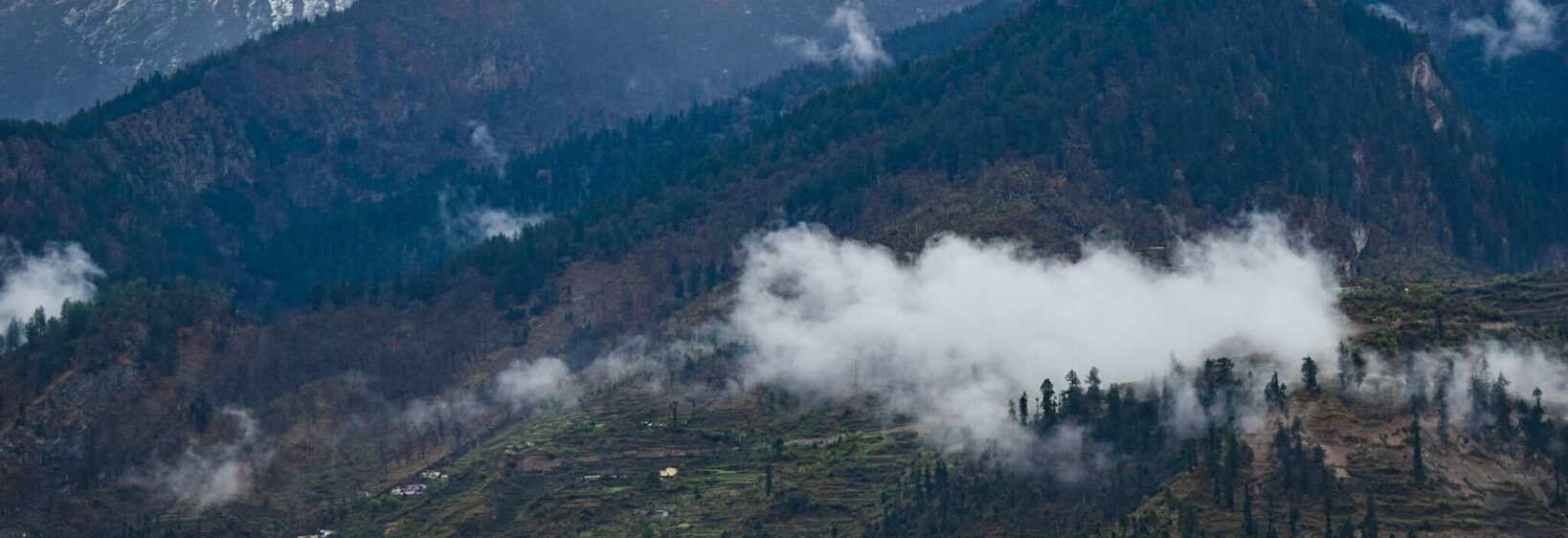
At the viewpoint, the panorama changes with the weather. Clear days reveal distant ridges, while mist creates a quieter, layered composition. The surrounding landscape can resemble the hazy folds seen from Tasmania’s mountain roads, but the dense settlement around Naini Lake gives the scene a distinctly Himalayan character.
Camera Settings For Wide Landscapes
A wide-angle lens is useful for including the foreground trees, the lake and the receding mountain lines. A standard zoom is equally valuable when haze separates distant ridges or when you want to isolate rooftops, temple details and small figures on the paths.
Use a low ISO in bright conditions and check the histogram so pale skies do not lose detail. Bracketing several exposures can help when the foreground is dark and the sky is bright. Smartphone photographers should tap the brightest part of the landscape, then slightly reduce exposure to preserve cloud texture.
For a broader photography itinerary around the lake district, the Bhimtal sunset guide offers useful ideas for combining boating, evening colour and reflective water shots.
Capturing People And Local Character
A photograph of Tiffin Top is often stronger when it includes scale. A distant rider, a family walking beneath the trees or a local pony handler can show the size of the forest and the steepness of the terrain. Ask before making close portraits, especially when photographing guides, vendors or families.
Local details add context: woollen caps, handwoven shawls, painted signs and small tea stalls all belong to the visual story. Keep equipment discreet in crowded spaces. A lightweight camera bag is easier to manage than a large kit, especially when moving between cycling and walking sections.
Timing, Weather And Clothing
The clearest views often occur after rain, when dust settles and the ridges appear sharper. Clouds may gather by midday, so early morning is generally the strongest period for panoramic shots. In winter, frost and cold wind can affect batteries, while summer showers call for a waterproof cover.
Australian visitors should pack layers rather than relying on one heavy jacket. A traveller used to Sydney’s mild coastal mornings or Brisbane’s warm climate may underestimate the chill at altitude. Sun protection remains important: sunglasses, sunscreen and a hat are useful even when the air feels cool.
A Practical Day At Tiffin Top
Allow several hours for the outing instead of treating it as a quick stop. Include time for walking, equipment checks, tea and changing light. Prices for taxis, bike hire and refreshments are usually discussed in Indian rupees, so keeping smaller notes is helpful; travellers can track approximate costs in Australian dollars before setting out.
Food stalls and small cafés may have limited opening hours, especially outside the main tourist season. Carry a modest snack, refillable water bottle and personal medication. Respect forest rules by taking rubbish back to town and avoiding loud music that disturbs wildlife and other visitors.
Useful Cycling Essentials
- Helmet, gloves and dependable brakes
- Repair kit, spare tube and compact pump
- Water, snacks and a waterproof phone pouch
- Light layers, sunscreen and walking shoes
Simple Photography Priorities
- Shoot wide views soon after arrival
- Use trees or riders for foreground scale
- Keep horizons level across lake panoramas
- Photograph details between changing weather
Tiffin Top rewards travellers who balance movement with observation. The bicycle provides access to the mountain atmosphere, while the camera preserves changing light, forest texture and the broad view beyond Nainital. Each stop can become part of the journey rather than merely a pause before the next destination.