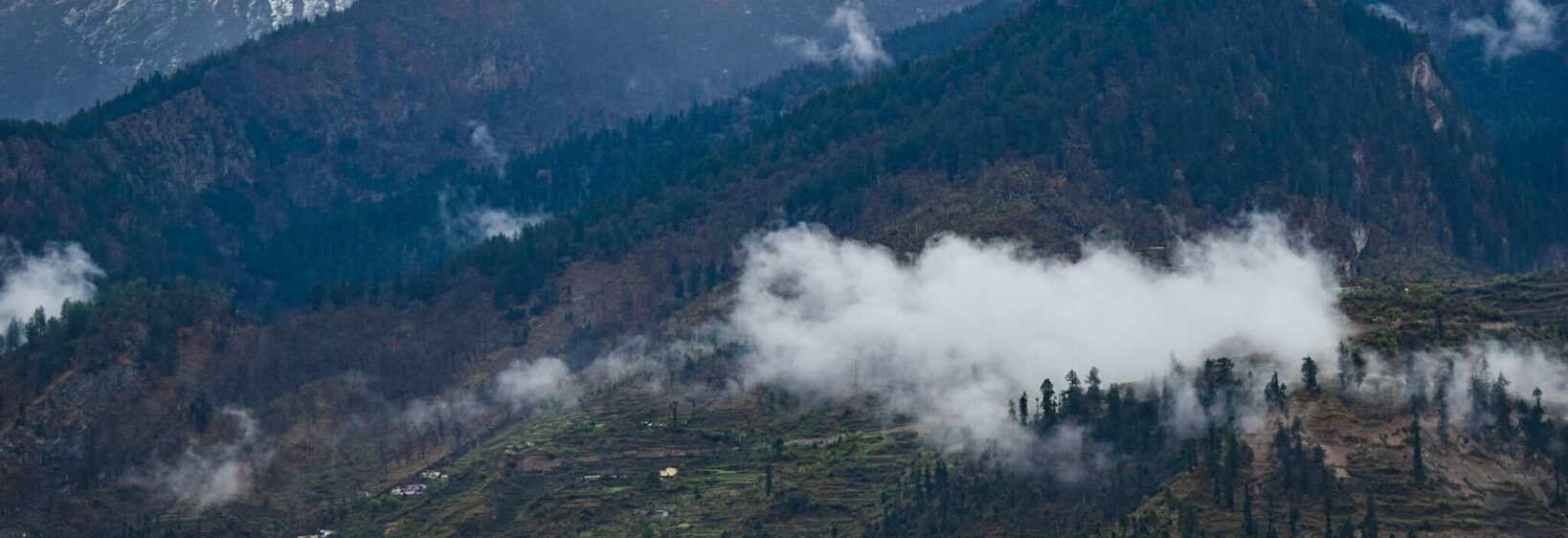
Binsar Zero Point and the sweeping Himalayan horizon
Perched on the forested ridges of the Kumaon Himalayas, Binsar Zero Point draws travellers seeking one of the broadest mountain panoramas in northern India. At roughly 2,400 metres, this clearing inside the Binsar Wildlife Sanctuary delivers a circular sweep of snow-capped summits few viewpoints in Uttarakhand can match. From its grassy knoll, the eye travels uninterrupted across oak and rhododendron ridges, finally resting on Nanda Devi, Trishul, Panchachuli, and Shivling.
For anyone used to the long, flat horizons of the Australian outback, the vertical drama here comes as a pleasant shock, rather like swapping the wide blue dome above Uluru for a wall of ice and stone. Travellers landing in Delhi after a twenty-hour journey from Sydney or Melbourne often use the trip north to break the jet lag, and Binsar offers a quieter counterpoint to busier hill stations.
Many hikers from Down Under already speak the language of trail walking. The word bushwalking, common in Sydney and Melbourne, fits the winding forest paths around Binsar. Tea stalls along the route serve masala chai that pairs with a thermos of flat white, while cold evening winds remind visitors why thermals earn a place in every pack. The sanctuary rewards those who slow down and let the mountain weather dictate the day.
The pine and broadleaf forest around Binsar echoes the temperate wilderness of Mount Field in Tasmania. Bird calls ring through the canopy at dawn, leopards move silently through the undergrowth, and a small cluster of stone cottages near the entrance feels a world away from urban India. Most visitors combine the Zero Point trip with overnight stays in nearby villages such as Kasar Devi.
The climb to Zero Point
Reaching the Zero Point requires a short drive on a rough forest road followed by a 1.5 kilometre uphill walk, or a 10 kilometre trek from the sanctuary gate. The road option suits tight schedules, though walking is more rewarding for photographers. The trail passes mossy boulders, terraced fields, and viewpoints that tease glimpses of distant summits.
Walking sticks are sold at the gate, and porters can be arranged from Almora. The final stretch opens onto a wide grassy clearing edged by a small stone watchtower. From here the horizon unfolds in every direction, rewarding patient visitors with a quiet theatre that feels miles away from crowded lookouts.
The panorama of snow-capped peaks
To the north stands the twin mass of Nanda Devi and Nanda Kot, India's second-highest peak, while the machete-shaped ridges of Trishul rise sharply to the east. Guides point out each summit in turn, often naming lesser-known peaks that even seasoned mountaineers struggle to identify. The full sweep also includes Panchachuli, Chaukhamba, and the distant pyramid of Shivling on clear days.
Locals sometimes call the viewpoint Chinnakaleshwar Mahadev, after a small shrine among the rocks. A short walk beyond reveals a stone temple dedicated to Lord Shiva, where visitors leave flowers for protection on the trail. The combination of sacred ground and natural grandeur gives the place a depth that pure sightseeing rarely offers.
Wildlife encounters along the trail
Oak, deodar, and rhododendron form the backbone of the Binsar forests, painting the slopes in shades of rust and emerald through the year. The sanctuary supports more than two hundred bird species, including Himalayan griffons, Khalij pheasants, and the occasional koklass. Early morning birders from places like the Royal National Park will find plenty to keep binoculars busy here.
Mammals such as barking deer, goral, and Himalayan black bear roam the deeper woods, though visitors usually only spot fresh tracks after rain. Wild boar root along the lower trails, and langur monkeys call from the canopy above. Patient walkers with binoculars are rewarded with brief encounters around dawn and dusk.
Sunrise, sunset, and photography tips
Arrive an hour before sunrise to catch the first light on the snowfields of Nanda Devi. The mountain glows copper-pink briefly before turning white, and warm light spills across the rolling foothills. Sunset brings alpenglow on Trishul while valleys fill with blue mist.
A polarising filter cuts haze at this altitude, while a 70-200mm lens frames the distant peaks without flattening them. Tripods are useful but not essential, since modern cameras handle the pre-dawn light at moderate ISO. Drone use is restricted inside the sanctuary, so check current rules before flying.
When to visit and what to pack
The clearest skies arrive between October and March, when post-monsoon air settles over the lower Himalayas. Spring brings rhododendron blooms, while December and January occasionally dust higher ridges with fresh snow. Australians planning a winter escape should remember the seasons run opposite, so a December trip means swapping southern summer for a chilly mountain holiday.
Layered clothing, sturdy boots, and a rain shell are essential, since weather at altitude can shift quickly from sunshine to fog. Pack warm gear for sub-zero nights at the forest rest house, and bring a refillable water bottle since mountain streams are clean but few reliable after February.
Stays, food, and nearby cultural sights
Accommodation around Binsar ranges from rustic forest rest houses to boutique eco-lodges tucked into village orchards. Most serve simple Kumaoni meals of mandua roti, kafuli, and rajma, washed down with fresh apricot juice when in season. Evenings often include folk music from local Garhwali and Kumaoni musicians around a fire pit, a warmth travellers from Melbourne's inner north will recognise.
A side trip to the old temples around Bageshwar makes a rewarding detour from the Kumaon circuit. The Bageshwar temple complex sits at the meeting point of the Saryu and Gomti rivers and carries centuries of pilgrimage history, making it a natural cultural counterweight to Binsar. The drive between the two takes under three hours through terraced villages and pine-clad valleys.
Small-town cafes near Almora serve surprisingly good espresso, a relief for anyone missing their morning brew. Local operators arrange birding walks and homestays around Ranikhet or Kausani.