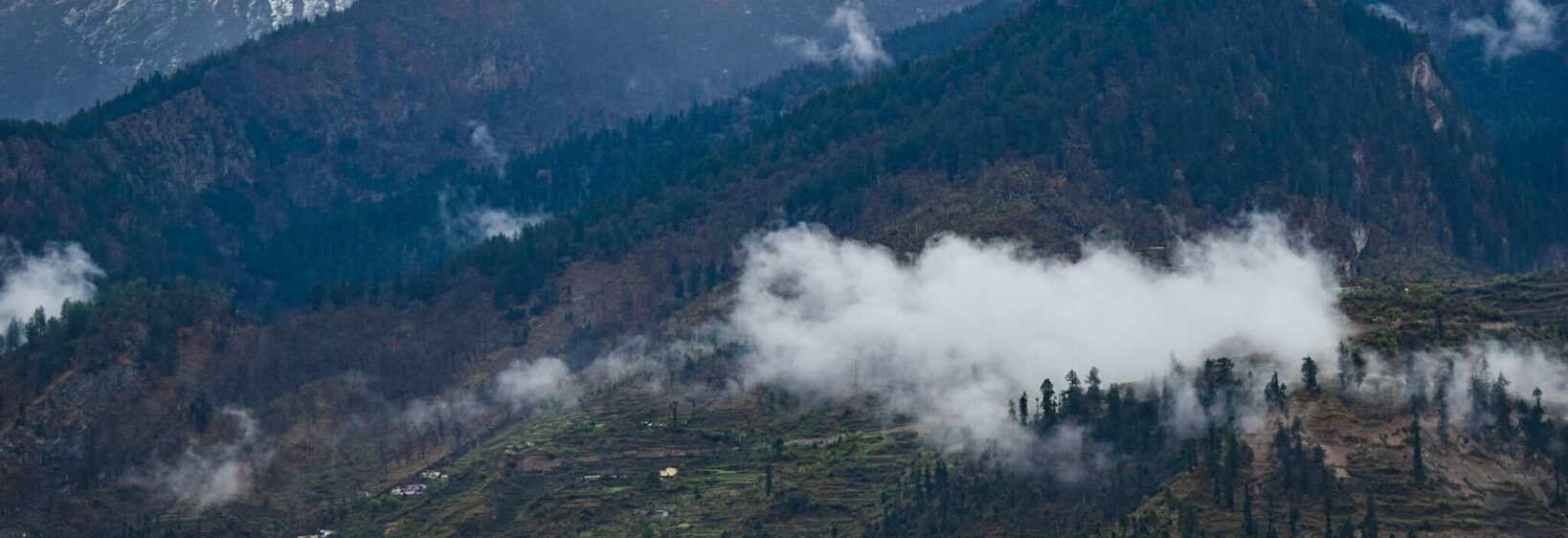
Naukuchiatal Lake: a nine-cornered retreat for boating photoshoots
Hidden in the lower folds of the Kumaon hills, this small lake has a shape that almost no other sheet of water in northern India copies. The water fills an uneven basin splitting into nine distinct corners, and from a certain ridge the outline reads like a star pressed into green slopes. Sitting at roughly 1,220 metres, the air stays sharp in winter and scented with pine through most of the year.
For travellers who think in frames, the lake is a quiet kind of miracle. Mist lifts off an hour after sunrise, egrets walk the reed beds, and the colour shifts from slate to jade to gold. A short stay of two or three nights is enough to combine a couple of boat rides, shoreline walks, and a relaxed photoshoot session.
The trip fits neatly as a slow detour on a wider Uttarakhand itinerary, slotted between Rishikesh in the south and the higher trekking grounds further north. Because motorboats are restricted and the surface stays small, the soundscape remains gentle, which rewards any patient lens.
The nine corners and the legend behind them
Locals count nine promontories jutting into the water, each named after a small hamlet. A short legend says that nine gods met on the shore in a single night, and the lake held the imprint of their gathering. The story explains the quiet respect villagers still show the shoreline, including informal rules against loud music after dusk.
Walking the full perimeter takes a relaxed half-day, though most visitors cover half the rim before lunch and save the rest for sunset. From the western corner, the view drops into terraced fields meeting pine forest. The eastern corners feel more enclosed and hold the best reflections.
Boating across the nine-cornered lake
Paddle boats and small rowboats are available from a jetty near the main road, with rates set by the local panchayat. A full crossing takes barely twenty minutes, but few visitors row in a straight line. The pleasure is in slipping into each inlet, watching the water narrow between two ridges, and finding pockets where the surface turns almost black. Photographers usually rent a boat for an hour to shoot from the centre.
The early morning slot between six and eight belongs almost entirely to mist and birds. By mid-morning the colour warms up and couples or wedding parties appear, especially between October and March. For a pre-wedding or engagement shoot, light is softest after sunrise and before sunset, and boatmen hold position while the shutter clicks.
Light, seasons, and the boating photoshoot
Spring and early summer bring clean skies and sharp reflections, while the post-monsoon window from September to November adds a softer, golden cast suited to portrait sessions. Winter mornings can be bitterly cold but produce the thickest mist and most cinematic frames. Rainy days are best avoided on the water, though they turn the hills into a saturated green that rewards landscape shooters.
Photo angles that work best at the lake
- A low, wide shot from the western ridge capturing all nine corners
- A boat-level view from the centre, looking back towards the tree line
- A close reflection with the paddle cutting a line through the mirrored sky
- A long-lens capture of egrets and reed beds from the eastern shore
Most of these angles produce strong results after a single morning on the water. More visual guides and tips are collected on ukphotosgallery.com.
Stays, food, and quiet evenings
Accommodation clusters around the small market above the jetty, with family-run guesthouses and boutique stays offering lake-facing rooms. Prices sit noticeably lower than in Nainital or Mussoorie. Local food leans towards Kumaoni flavours: kafuli, bal Mithai, and rotis with pahadi dal. Australian visitors particular about their flat white will find cafés now stock espresso machines imported from Sydney and Melbourne suppliers.
Evenings end early, with bonfires in cooler months and stargazing on clear nights. The lake reflects the sky when there is no moon, and that second mirror is often more striking than the daytime surface. Travellers wanting more buzz can drive thirty minutes to Bhimtal or an hour to Nainital, then return to the quieter night Naukuchiatal does so well.
Travelling from Australia to Naukuchiatal
Australian passport holders can apply for an Indian e-Visa online before departure. Most flights leave from Sydney or Melbourne to Delhi via a Gulf hub, and a domestic connection to Pantnagar or a direct taxi from Delhi reaches the lake in seven to nine hours. Travel agents in Brisbane and Perth often include a Naukuchiatal stop and can arrange the boat and photoshoot in advance.
The Australian dollar stretches well in the hills once flights are paid, with mid-range rooms, meals, and a private boat often costing less than a similar weekend in Sydney or Perth. Travellers should remember Australia's strict biosecurity rules on return, which restrict untreated wooden items, seeds, and certain food products, so handmade oars and local spice mixes are best left behind.
Practical items to pack for a Kumaon lake trip
- Waterproof jacket and warm layer for misty mornings on the boat
- Dry bag for camera gear, especially during monsoon weeks
- Walking shoes with grip for the rocky path around the rim
- Printed e-Visa and travel insurance, since mobile networks drop in the hills
Combining the lake with nearby pilgrimage sites
Naukuchiatal pairs naturally with Bhimtal, Sattal, and Nainital, all within an hour's drive, letting photographers build a varied portfolio over a single week. Pilgrims and culture-focused travellers often extend the route east towards the Bageshwar temple complex, where rivers and old stone shrines offer a different but equally photogenic backdrop. The journey passes through oak forests and villages where Kumaoni dialects are still spoken at home.
A short extension of two or three days is usually enough to capture both water and stone in the same trip, which keeps the pace relaxed enough to return home with a full memory card rather than a rushed one.