Chakrata Kanasar Forest Rest House and Its Misty Deodar Walks
Chakrata sits quietly in the Garhwal Himalayas, a cantonment town that most travellers speed past on their way to Mussoorie or Dehradun. For anyone who has spent weekends bushwalking through Tasmania's temperate rainforests or scrambling along the Blue Mountains tracks near Sydney, the calm cadence of Kanasar feels strangely familiar. The deodar canopy filters light the same way a stand of mountain ash does at Mount Field, and the hush beneath the pines is just as thick. Travellers from Australia who crave a quieter shoulder-season escape often find that this pocket of Uttarakhand delivers the kind of forest immersion they used to get back home before the crowds arrived.
The village of Kanasar lies about eleven kilometres from Chakrata town, perched on a ridge where the deodars close in like a curtain. It is here, deep inside the forest, that the Forest Rest House offers a night or two of proper unplugged silence. The setting is unhurried, the lanes are potholed, and the cell signal drops out within minutes of leaving the main road.
Where Chakrata and Kanasar Sit in the Garhwal Hills
Chakrata was developed as a hill cantonment by the British in the 1860s, partly because the deodar forests around it made the air easier on the lungs than the steamy plains below. Kanasar, just up the ridge, grew up around timber workings and a small cluster of Gujjar herders. Today the elevation hovers around 2,118 metres, which keeps the summers mild and the winters dusted with snow.
The road in from Dehradun winds past Mussoorie's edge and then climbs steadily through sal and chir pine before the deodars take over. Anyone who has driven the Great Ocean Road on a grey morning will recognise the mood: mist curling off the treetops, the wipers doing overtime, and the world reduced to the few metres in front of the bonnet. The last stretch before Kanasar is single-lane, rough in places, and best tackled in daylight.
Inside the Forest Rest House
The Kanasar rest house is run by the Uttarakhand Forest Department and offers a handful of clean rooms, a shared verandah, and a kitchen where the caretaker can rustle up rice, dal, and whatever seasonal sabzi the village has to offer. The walls are plain, the mattresses firm, and the lighting comes courtesy of a small solar setup. There is no Wi-Fi, no television, and the geyser runs only when the sun has done its job.
For an Australian traveller used to creature comforts on a weekend in the Yarra Valley or the Barossa, this feels deliberately stripped back. That is part of the charm. The verandah becomes the living room, the kettle becomes a ritual, and brekkie stretches out across an hour of bird calls. Bring your own supplies from Dehradun if you want more than the basics, and don't expect a barista coffee unless you packed one in your bag.
Wandering Through the Deodar Grove
The grove around the rest house is the headline act. Deodars, or Cedrus deodara, are close cousins of the cedars of Lebanon, with longer needles and a softer, almost citrus fragrance when the bark is warm. Walking beneath them is like stepping into a cathedral with the ceiling held up by living columns. Photographers who usually chase light in the Otways or along the Great Western Highway will find similar moody conditions here, except the trees are older and the silence is heavier.
Short loops head out from the rest house through the timber. One trail drops down to a clear stream where you can fill a bottle, another skirts the ridge with sudden views back toward the Doon Valley. None of them are signposted in any official way, so it pays to ask the caretaker about the routes before you set off. The forest floor is thick with needles, which makes the walking soft and forgiving on tired knees.
Misty Mornings and Forest Walks After Rain
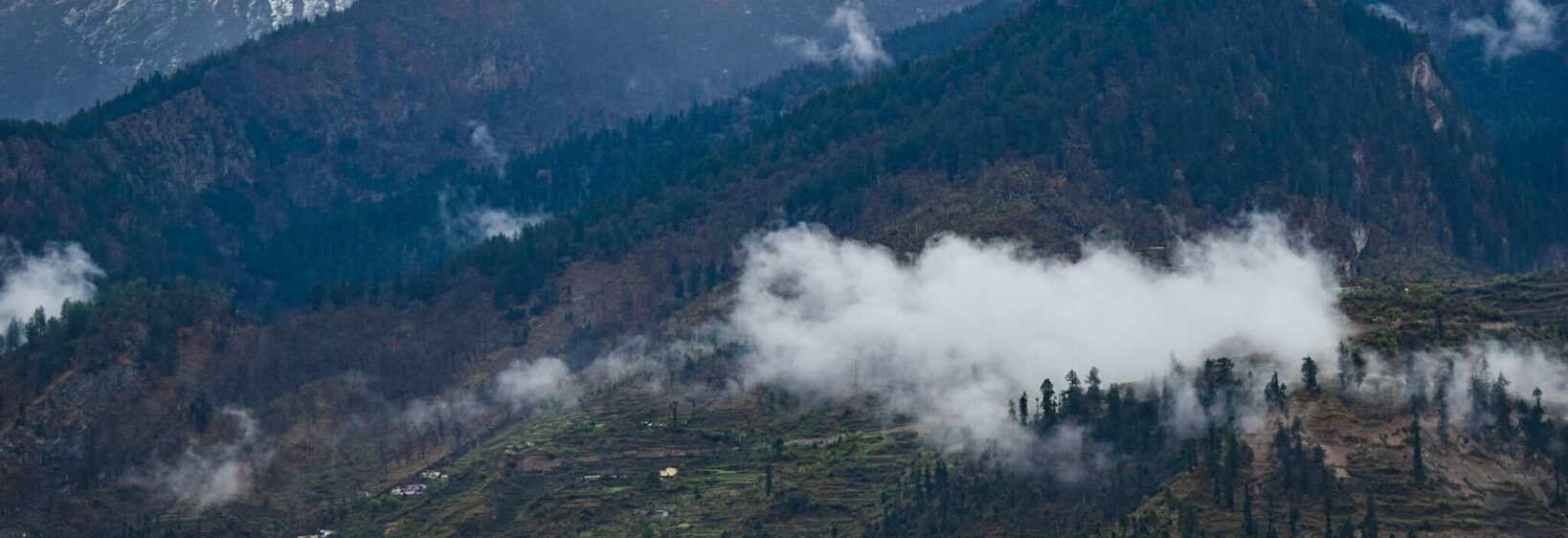
The mist is the other reason people come. Between October and March, the mornings often start under a low cloud that turns the deodars into silhouettes. By ten o'clock the sun usually breaks through and the whole grove steams. A good pair of waterproof boots and a light poncho earn their keep here, much like they would on a winter walk through the Tarkine in Tasmania's north west.
When the rain comes in earnest, the trails turn slick, and it is wiser to stay close to the rest house and watch the weather move through the canopy. There is something restorative about sitting on the verandah with a hot chai while the mist pours over the roof like smoke. You can read, sketch, or simply listen as the forest resets itself.
Birds, Wildlife and the Sound of the Hills
The deodar grove around Kanasar hosts a healthy spread of Himalayan birdlife, including Himalayan bulbuls, warblers, and the occasional koklass pheasant calling from the understorey. Langurs move through the high branches at dawn, and the lucky might spot a yellow-throated marten or a herd of goral on the cliffs above the road. Travellers who enjoy twitching will feel right at home; the checklist is short but rewarding, and the forest does most of the work.
Evenings are punctuated by crickets and the occasional owl. The absence of traffic noise, something Sydneysiders and Melburnians rarely experience at home, hits you within the first hour. Bring a small torch, because the path between the rooms and the verandah gets very dark once the lights go out.
Best Season to Visit and What to Pack
Chakrata is a year-round destination, but each season brings a different personality. March to June is comfortable for long walks, with rhododendrons and wild berries adding colour to the understorey. Monsoon arrives in July and turns the trails slippery until September. October through February is the magic window for misty mornings, cold nights, and occasional snow on the higher slopes around Lakha Mandal.
Pack as you would for a weekend in the Australian Alps: layered clothing, a sturdy pair of waterproof boots, a headlamp, and a power bank for your camera. A light down jacket earns its place even in April, because the temperature drops sharply after sundown. Travellers who plan to cook their own meals should bring a small stove and a few dry supplies from Dehradun, as the village shop stocks only the bare basics.
How to Get There and Where to Go Next
Chakrata is best reached by road from Dehradun, which has good rail and air links to Delhi. Shared taxis run up from Dehradun's Prince Chowk in the morning, and private cars can be hired for the five-hour climb. Allow an extra day on either side of your stay to buffer against landslides or fog, which can close the road without warning.
If you have a few extra days, swing south to the lesser-known picnic spot in Kumaon or fold the trip into a wider pilgrimage by following a Char Dham Yatra planning guide. Either way, give Kanasar at least two nights. The forest needs that long to settle into your bones, and the misty walks are better when you are not in a hurry to leave.