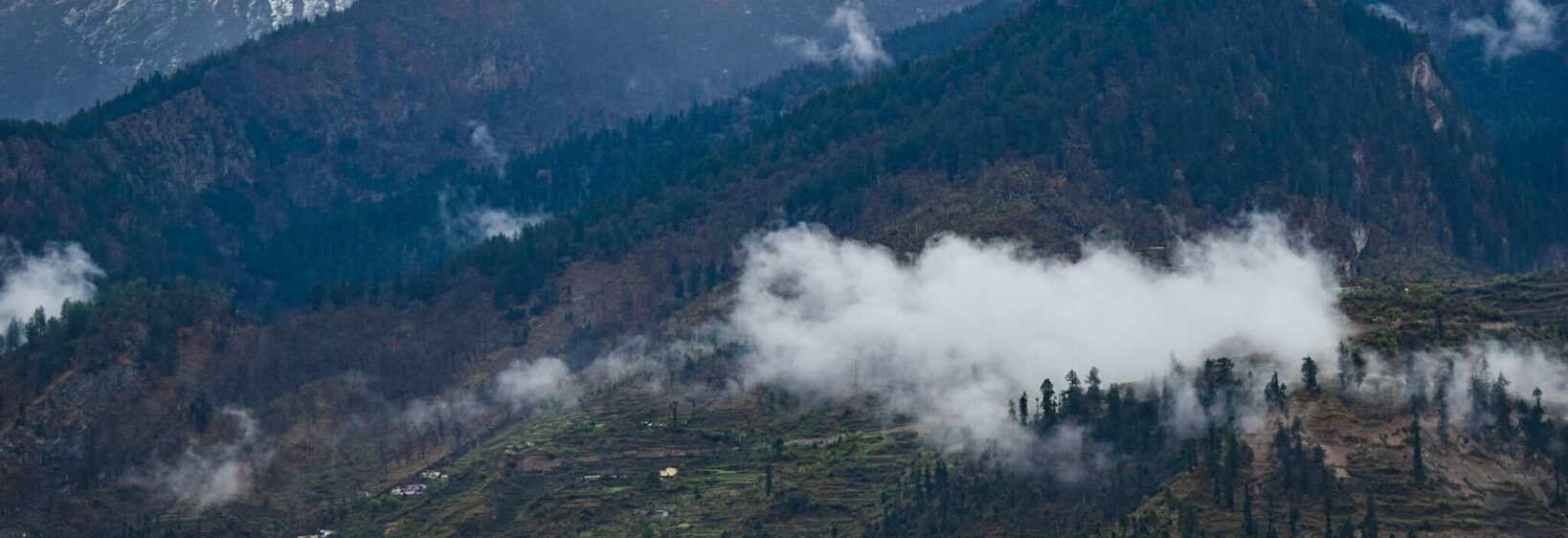
Dhanaulti eco park: forest walks and adventure above the clouds
Tucked at roughly 2,400 metres between Mussoorie and the apple orchards of Garhwal, Dhanaulti is the kind of hill station that rewards travellers who prefer pine-scented silence over crowded bazaars. The crown of the area is the Dhanaulti Eco Park, a protected patch of deodar and oak woodland spread across two levels, where the road from Mussoorie ends in a clearing of Himalayan cedar and the air smells of pine resin after a rain shower. It is not a manicured garden with clipped lawns; it is a working experiment in low-impact tourism, and that is precisely what makes it appealing.
For Australian travellers used to the long-haul flights into Delhi and the patience of a Sydney-to-Brisbane drive scaled up, the journey to Dhanaulti feels strangely familiar. The countryside is closer in rhythm to the Pacific Highway than to the subcontinent's chaotic metros, and the bushwalking culture that defines weekends from Adelaide to Cairns has plenty in common with the trails that weave through this park.
Getting there and the lay of the land
Dhanaulti sits about 60 kilometres from Mussoorie and roughly 300 kilometres from Delhi, and the road winds through pine forests long before the village itself appears. Most visitors arrive by road from Dehradun's Jolly Grant Airport, with the final hour a slow climb through terraced fields and deodar groves. The park itself is split into two zones — Amber and Dhara — each with its own entrance, picnic shelters, and a cluster of viewpoints that look out towards the snow-dusted Garhwal range.
Travel times can feel generous by Australian standards; a Melbourne coffee stop of twenty minutes becomes a forty-minute chai break here. The reward for the slow pace is a quiet that is unusual in Indian hill stations. There is no honking traffic in the park, and the only soundtrack is the wind through cedar needles and the occasional call of a Himalayan bulbul.
Walking trails through deodar and oak
The Eco Park's walking trails range from easy 800-metre loops to longer 3-kilometre circuits that climb gently toward the highest viewpoint. Most paths are surfaced with packed earth and stone steps, broad enough for two walkers side by side, and shaded by a canopy of Himalayan cedar (Cedrus deodara), which is so dense in places that even at midday the sunlight arrives in shafts rather than sheets. The understorey holds rhododendron, oak, and the occasional wild mulberry, and small interpretive boards name the trees and the birds that nest in them.
Australian bushwalkers will recognise the etiquette that keeps these trails in good shape: stick to the marked path, leave nothing behind, and keep voices low so the wildlife stays put. In winter, the same trails can carry a thin dusting of snow, and visitors are advised to start early, just as hikers on Tasmania's Overland Track are urged to do before the weather closes in.
Adventure activities above the canopy
Beyond the walking trails, the Eco Park has built up a small but satisfying menu of adventure activities. There is a zipline that hums between two deodar stands, a short rock-climbing wall suited to beginners, and rappelling sessions run by local instructors who know the cliffs intimately. The most popular activity, though, is the Burma bridge — a swaying rope-and-plank crossing strung between two trees, roughly 30 metres above the forest floor. It is not technically demanding, but the view straight down through the canopy is enough to wake up any traveller who has spent too many hours on planes and buses.
Children as young as eight can join most activities, and group bookings are common for families and school trips. The park keeps numbers capped on the more thrilling crossings, which means the queue moves faster than the line for a Bunnings snag on a Saturday morning and the experience feels personal rather than industrial.
Camping, stargazing and forest nights
Camping is permitted in designated clearings within the Eco Park, and a handful of operators supply tents, sleeping bags, and simple meals of dal, rice, and locally sourced vegetables. Nights get genuinely cold, even in summer, so a warm layer is non-negotiable — much like a winter night in the Blue Mountains west of Sydney. Campfires are restricted to raised metal platforms, and any rubbish must be carried back out, a rule that echoes the leave-no-trace standards adopted across Australia's national parks.
The reward for braving the chill is a sky so clear that the Milky Way appears as a pale ribbon above the cedar silhouettes. Photographers tend to gather near the highest viewpoint after midnight, when the surrounding valleys slip into a soft darkness and the only lights are the camp lanterns below.
Travelling light in a fragile forest
Eco-tourism in Dhanaulti works only when visitors tread carefully, and the park's management asks guests to avoid single-use plastic, to stay on marked trails, and to refrain from feeding the langurs that often wander near picnic shelters. Australians who are already used to strict biosecurity rules at home — declaring food at the border and keeping foreign soil out of the bush — will find these guidelines intuitive rather than restrictive.
Uttarakhand holds other quiet natural marvels worth combining with a Dhanaulti trip, including the living root bridges found in the eastern districts, where villagers have trained tree roots across streams for generations. Pairing these slow, place-based experiences turns a short hill break into a richer story of the Garhwal Himalayas, told at the pace the mountains deserve.