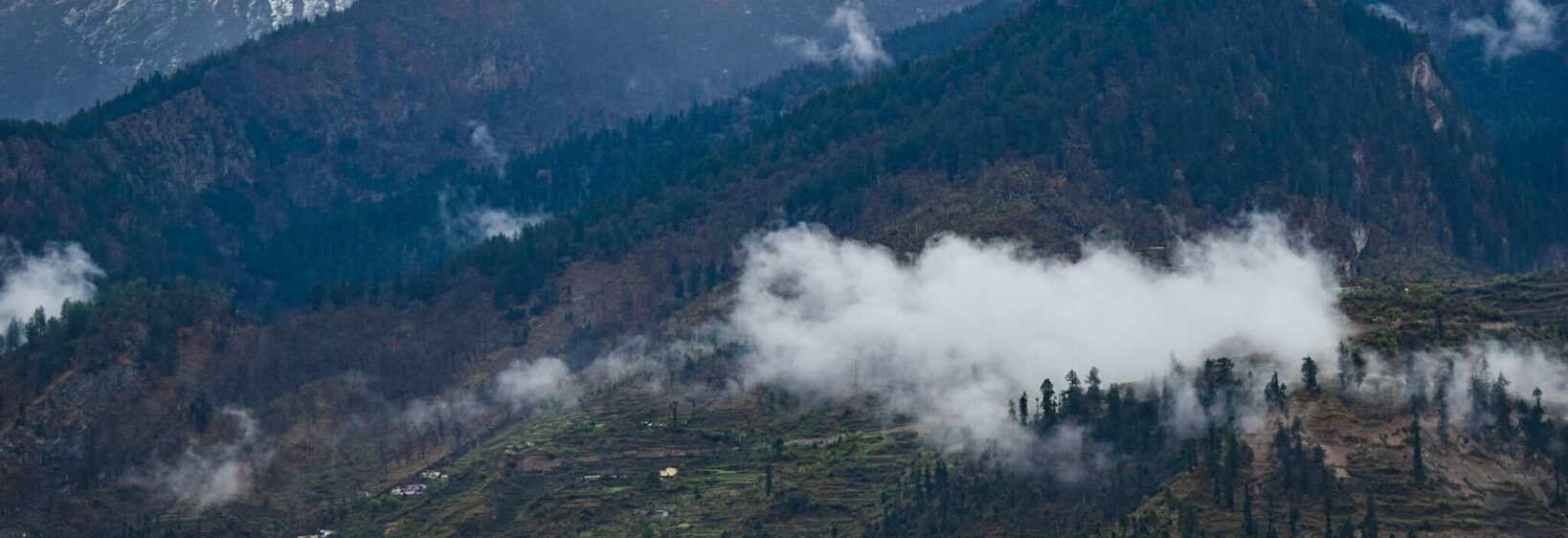
The Thal Kedar Trek: Rock Formations and Remote Hilltop Temple
The Thal Kedar trek cuts through one of the quieter corners of the Garhwal Himalayas in Uttarakhand, where weathered rock formations rise like sculptures above the pine forests. The route climbs steadily from villages near Rudraprayag before revealing a centuries-old hilltop temple that feels suspended between sky and valley. For trekkers tired of the crowded trails around Rishikesh and Mussoorie, this walk offers solitude, geology, and devotion in a single journey.
Australians planning the trip will find that direct flights from Sydney or Melbourne to Delhi have made the Indian Himalayas far more accessible than a decade ago. The Indian e-Visa scheme accepts Australian passports online, and the process usually takes less than a week. From Delhi, an overnight train or shared taxi brings you to Haridwar, where the real adventure begins.
The trail itself rewards those who come prepared for sudden weather changes and basic mountain terrain. It is not a technical climb, but altitude, exposed ridges, and the absence of mobile signal in higher sections demand respect. Reading recent trail notes and booking a local guide through a https://ukphotosgallery.com/ resource helps first-timers avoid common logistical mistakes.
Starting the journey from Rudraprayag
Rudraprayag sits at the confluence of the Alaknanda and Mandakini rivers and serves as the natural base for the trek. Buses and shared jeeps connect it to Haridwar, Rishikesh, and Srinagar, and the town has a handful of budget-friendly guesthouses. Most trekkers spend a night here to acclimatise and stock up on dry food, water, and any last-minute gear.
From Rudraprayag, the motorable road winds upward through terraced fields and deodar forests before ending at a small village that marks the actual trailhead. The walk begins on a stone path used by shepherds, crossing a stream and climbing through mixed forest. English is rarely spoken beyond a few words, so a guide or translation app is helpful.
Rock formations that define the ridge
The defining feature of the upper trail is a series of giant granite outcrops that locals call "Thal," meaning flat-topped rock. These formations have been shaped by centuries of wind, monsoon rain, and frost, leaving smooth shelves, deep grooves, and balanced boulders that look almost intentional. Photographers often spend an entire morning exploring a single cluster, as the light changes character every hour.
Walking between these rocks feels like moving through an open-air gallery, with the snow peaks of the Garhwal range visible in the distance. The path occasionally narrows along a ledge, and a few sections require a careful step, but there is no serious exposure. The formations also act as natural way-marks, helping trekkers orient themselves when the trail fades into grass.
The remote hilltop temple
Perched at roughly 2,500 metres, the Thal Kedar temple is dedicated to Lord Shiva and is believed to be over a thousand years old. The structure is small, built from local stone, and surrounded by a courtyard where bells and prayer flags catch the wind. Priests stay on site only during the warmer months; for the rest of the year, villagers from lower hamlets look after the shrine.
The spiritual atmosphere is quiet rather than dramatic, with most visitors sitting on the flagstones to watch the sun drop behind the ridges. It is the kind of place that suits meditation, slow conversation, and a long evening of star-gazing, as light pollution in this part of the Himalayas is almost nil. Travellers seeking a more elaborate temple experience can later combine the trek with a longer Uttarakhand pilgrimage circuit.
Comparing Thal Kedar with nearby treks
| Feature | Thal Kedar | Deoria Tal | Chandrashila |
|---|---|---|---|
| Altitude | ~2,500 m | ~2,400 m | ~4,000 m |
| Difficulty | Moderate | Easy | Moderate–Hard |
| Highlight | Rock formations and temple | Alpine lake reflection | 360° summit view |
| Crowd level | Low | Medium | High |
| Best season | Apr–Jun, Sep–Nov | Year-round (winter snow possible) | Dec–Apr for snow |
The comparison shows that Thal Kedar sits comfortably between easy lake walks and demanding summit climbs. It is the right pick for those who want geological drama without committing to a multi-day high-altitude expedition. Travellers interested in similar remote circuits can explore sacred trail itineraries elsewhere in the Asian highlands.
Best season and weather windows
The ideal months are April to June and again from September to early November, when the skies are clear and the monsoon has either ended or not yet arrived. July and August bring heavy rain, slippery rocks, and a real risk of landslides along the access road. Winter snow closes the upper sections entirely, and even the trailhead becomes hard to reach after January.
Daytime temperatures on the ridge are pleasant, but nights drop sharply, and wind chill on the exposed rocks can be biting. Australian trekkers used to the mild climates of Brisbane or Perth should pack a proper down jacket, gloves, and a wind-shell even in summer. Checking the Indian Meteorological Department's regional forecast a day before departure is a habit worth keeping.
Packing and preparation essentials
- Layered clothing for shifting temperatures
- Sturdy trekking shoes with ankle support
- Headlamp, basic first-aid kit, and water purification
- Offline maps and a power bank
Local guides can be arranged through guesthouses in Rudraprayag, and their fees are modest by international standards. Hiring one supports village families who have maintained the trail for generations. Australians travelling on a Working Holiday visa or a tourist visa should carry passport copies and proof of travel insurance, as local checkpoints occasionally ask for identification.
Capturing the landscape
Landscape photographers will find the rock formations and the temple architecture equally rewarding, especially in soft morning and late-afternoon light. A wide-angle lens helps with sweeping ridge views, while a mid-range zoom is useful for the texture work on the granite surfaces. Early starts are rewarded with mist rolling through the valleys below, a sight hard to capture later in the day.
- Shoot during golden hour for warm tones on the rocks
- Carry a microfiber cloth for sudden mist or rain
- Use a polarizing filter to cut glare from the granite
- Respect prayer times when photographing the temple
For those who enjoy the textures of the Garhwal landscape, https://ukphotosgallery.com/blog/1019-a-weekend-in-ranikhet-top-spots-for-landscape-photography covers complementary viewpoints in the Kumaon hills. The Thal Kedar route is a reminder that some of the most meaningful journeys still begin where the road ends and the walking starts.