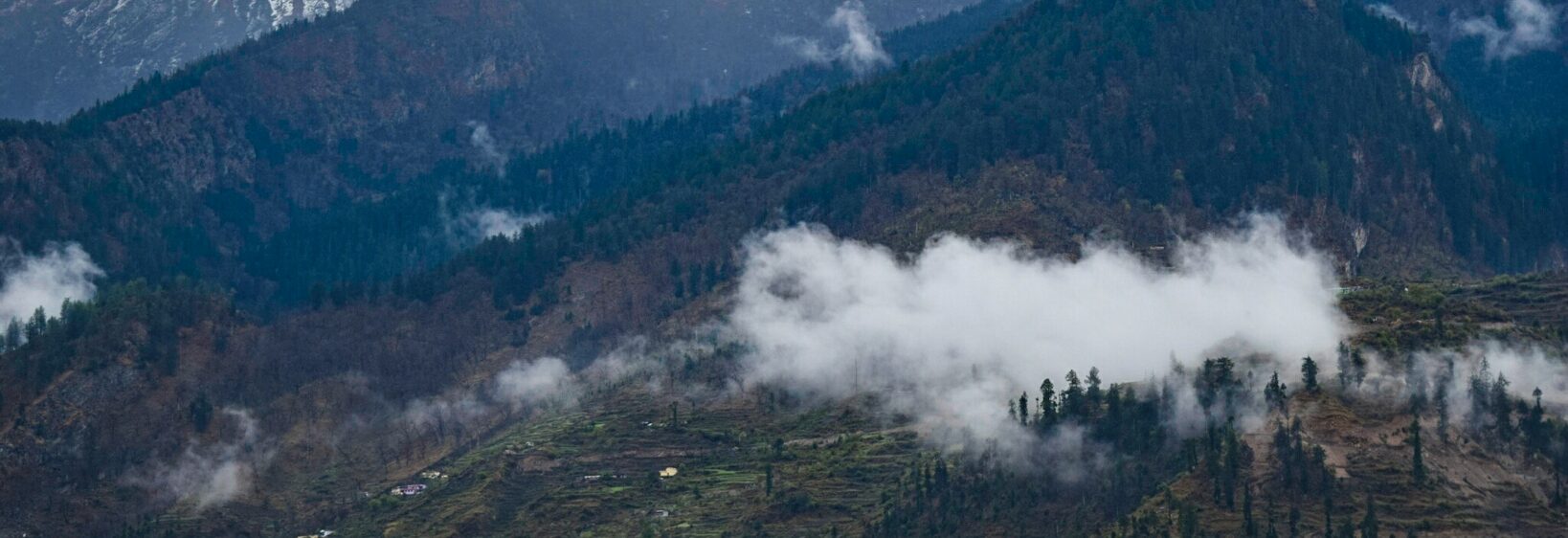
Dunagiri Temple: ancient architecture and Shivalik views
At roughly 3,000 metres above sea level, the Dunagiri Temple rises above its namesake village in Chamoli, about 24 kilometres from Gopeshwar. Its quiet setting gives the Shivalik foothills, river valleys and distant Himalayan snowfields an unusually clear presence.
Dedicated to Durgaji, also known as Dundiyal, the shrine is associated with Uttarakhand’s wider 88 Dham pilgrimage tradition. Stone walls, a pillared entrance and a metal-clad dome make it a compact example of high-Himalayan religious architecture.
Many visitors from Sydney or Melbourne reach the region through Delhi before continuing by road toward the Char Dham and Kedar routes. Dunagiri rewards slower travel, revealing mountain villages, local markets and a changing sequence of wooded ridges.
Architecture that mirrors the Himalayan pilgrimage tradition
The temple is generally associated with Rawal Amar Chand and dated to the 16th century. Its form follows regional building traditions: stone walls, carved wooden details around the entrance and a metal roof that withstands heavy snow. A raised platform gives the small sanctum a commanding presence within the village.
The closest visual comparison is Badrinath, although Dunagiri is smaller and less ornate. Reading the Badrinath temple history clarifies the shared northern Indian temple vocabulary and the importance of high-altitude sacred sites along the Alaknanda pilgrimage corridor.
Shivalik light and distant snow peaks
On clear winter mornings, views can extend from the layered Shivalik ridges to higher snow peaks, including Nanda Devi and Trishul under exceptional visibility. The valley below shifts between deep green after the monsoon and crisp brown-white tones in winter.
Photography is most rewarding around sunrise or late afternoon, when the roof catches warm light and the ridges separate into distinct planes. Cloud can close these views quickly, making a second look worthwhile rather than relying on one fixed panorama.
| Planning detail | Around Dunagiri | Familiar Australian pattern |
|---|---|---|
| Transport | Shared jeeps and taxis serve winding mountain roads | Australian cities combine trains, buses and ride-hailing |
| Payments | Cash is useful; UPI and cards vary by business | Contactless cards are common, including at many market traders |
| Road habits | Vehicles drive on the left | Australia also drives on the left, but mountain conditions demand slower speeds |
| Legal checks | Visitors carry a passport and applicable Indian visa | Australian customs and biosecurity declarations apply when returning home |
Reaching Dunagiri from Gopeshwar
Dunagiri lies between Gopeshwar and Karnprayag, with taxis and shared jeeps forming the usual means of reaching the village. Staying overnight in Gopeshwar, Karnprayag or Saman allows more flexibility than a same-day journey from the plains. Heavy monsoon rain can affect roads and landslides, making an early start and locally informed driver valuable.
Around Gopeshwar, small shops sell rice, rajma, marigolds, oil, prayer supplies and provisions for temple visitors. At Australian farmers’ markets, produce is commonly sold by weight with convenient card payment; in the Himalayan towns, bargaining is gentler and carrying cash avoids delays. India’s left-hand traffic may feel familiar to Australian drivers, but blind bends and narrow village roads require a different level of concentration.
On a longer Uttarakhand itinerary, the Kaliya Dhak waterfall guide introduces another peaceful forest excursion near Mukteshwar, suited to travellers who prefer walking and quiet natural settings to crowded viewpoints.
Worship, festivals and village manners
Durgaji is approached as a protective presence connected with the village and its wider landscape. Devotees offer flowers, food and water, while the ringing of bells and the scent of incense define the inner shrine. Many worshippers move clockwise, and footwear is removed before entering the sanctum.
Temple visitors should cover their shoulders and knees, keep their voices low and ask before photographing worshippers or ceremonies. During Navratri and Ganga Dussehra, devotional activity increases across the Gopeshwar area, with garlands, lamps, processions and shared prasad revealing a side of the temple’s life that ordinary sightseeing can miss.
Responsible travel in the high Himalaya
Altitude, cold and rapidly changing weather are the main challenges. Visitors should allow time to acclimatise, drink filtered water, wear layers with reliable footwear and avoid wandering alone after dark. Forest fires, stray cattle and damaged stretches of road are more significant concerns than isolated crime, but remaining alert around the temple is still essential.
For an extended Asian itinerary, country-specific emergency pages such as Vietnam police information can be useful, though Dunagiri travellers should rely on Uttarakhand police contacts and 112. Returning to Australia also requires attention to federal customs and biosecurity legislation: soil, seeds, fresh plant material and unpackaged food may require declaration, while medicines should remain in their original packaging. That combination of mountain awareness and village courtesy leaves the temple more memorable than a checklist stop.