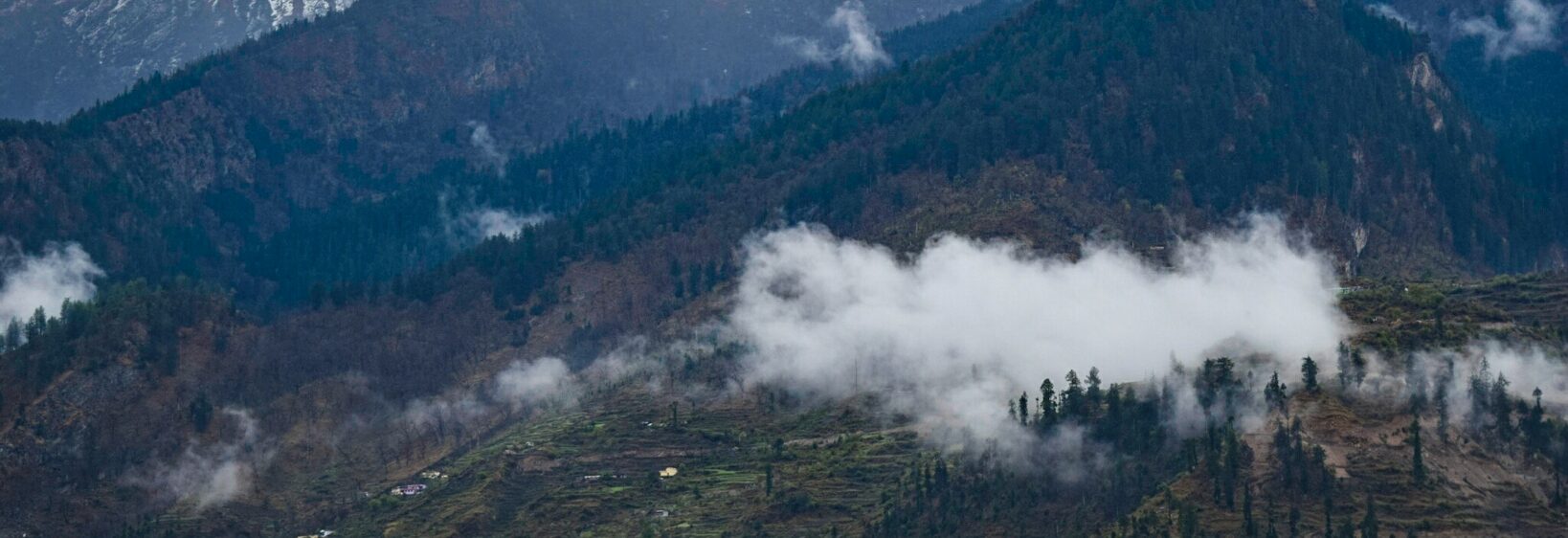
Spring bloom in Uttarkashi district: Wildflowers and alpine meadows
Uttarakhand’s upper Gangetic valleys wake from winter with a brief rush of colour. From sheltered slopes near Bhaironghati to open bugyals around Barkot and the upper valleys, the spring bloom in the Uttarkashi district brings rhododendrons, buttercups, primulas and daisy-like flowers into view. Lower paths can colour by mid-March, while higher meadows may wait until April or May.
The display is strongest between thinning snow patches and grazing grounds, yet no timetable guarantees it. Rain, frost and altitude decide which species open, and some areas flower later than others. Combine a fixed walking plan with the patience to move slowly, watch the weather and leave the plants where they grow.
When the Himalayan wildflowers emerge
At valley level, flowering often begins in March around Dhaulti, Chaurikhamba and lower approaches to Barkot. As temperatures rise, pink Himalayan rhododendron brightens paths, while buttercups occupy moist hollows and primulas, corydalis and daisy-family plants emerge on warmer banks. The richest patches are often found by slowing down rather than following one viewpoint.
Species flower in succession, so a meadow can look sparse one week and vivid the next. Frost can close flowers overnight; a clear morning may bring fresh openings, while cloud and wind can end the session early. Check recent local reports, but treat them as clues rather than guarantees.
Meadows shaped by altitude and snow
In local Himalayan speech, open high pasture is often called a bugyal, a useful word when asking about a route. Around Barnala, the meadows near Dhaulti and the approaches to Chauribhanar, grassland meets pine, birch and rhododendron before opening into broad shelves. Above the tree line, meltwater channels create ribbon-like strips of colour.
These are working landscapes as well as scenic ones. Grazing animals, mules and seasonal camps shape tracks and vegetation, while villagers manage paths, water and permits. Dayara has particular access conditions because of its proximity to the Indo-Tibetan border and defence areas; confirm routes and permissions locally rather than assuming every meadow is open.
Walking routes and seasonal access
Chauribhanar meadow rewards walkers comfortable with a sustained climb from the Chaurikhamba side. Barnala pairs with the short approach from Bhaironghati, while gentler Dhaulti and Warsi Valley walks offer meadow views with less altitude gain. Camping rules differ, so a local operator or recent trekker can provide current information.
For a different high-altitude experience, this Kuari Pass trekking guide traces Nanda Devi views on another Himalayan route. It is a reminder that spring timing is not identical across the range: lower meadows may be finishing while snow still closes the highest slopes.
A photographer’s field guide
Photographers can work with soft early light, mist in depressions and colour against dark rock. A close view of one rhododendron cluster often tells more than a wide panorama, while a wider lens can pick out tiny flowers beside a trail. Frost and moving cloud make the same slope look different within an hour.
Bring a weather cover, lens cloth and spare batteries. For visual context, the Uttarakhand photo journal provides a broader look at landscapes and trekking scenes around the state. Avoid walking through a meadow to reach one flower; the compressed path may take years to recover.
Local culture around the blooms
Many upper-valley families keep small herds of cattle, sheep and goats, and pastoral routes connect villages with summer pasture. Spring visitors may encounter herders moving animals to grass as snow retreats. Respect the seasonal rhythm: animals have priority, and picnic or camp sites should be chosen with local guidance rather than on a fragile flower slope.
Small bazaars in Uttarkashi town and Barkot sell rajma, chana, millet flour, honey, buransh drink and seasonal greens. The rhythm may feel familiar to visitors accustomed to a growers’ market in Melbourne or Sydney, though quantities here often arrive in paper packets or reused jars. For a playful comparison, a Ginza walking itinerary shows how architecture and shopping turn a walk into a sequence of discoveries; Uttarkashi’s bazaars reward similar attention to signs, doorways and street life.
Planning a journey from Australia
Australians should remember that March and April are autumn at home, not spring. Sydney and Melbourne travellers usually connect through Delhi, Bengaluru or another Indian hub, while Australian school-holiday timing can suit families. Reserve Delhi–Dehradun and Delhi–Uttarkashi train tickets early, and allow a buffer for weather or landslides.
Altitude is the main adjustment. Uttarkashi town sits much lower than the meadows, so walkers can acclimatise before a day hike or sleep at a forest rest house or camp. Bushwalking clubs in Melbourne and Sydney often follow Leave No Trace principles: carry out rubbish, stay on established tracks, avoid prohibited campfires and never feed grazing animals.
A responsible flower-viewing checklist
A little preparation protects visitors and fragile alpine plants. These two compact lists suit a day walk or a longer camping route, subject to current local advice.
Before leaving the valley
- Check the forecast, trail status and local permit requirements.
- Carry warm layers, water, a first-aid kit and offline map access.
- Confirm that your transport and accommodation leave time for weather delays.
Among the flowers
- Stay on established paths and keep gates, walls and grazing areas clear.
- Photograph flowers without climbing, picking or moving stones.
- Keep litter and food scraps with you throughout the day.
- Ask local guides about fragile areas and seasonal camp rules.