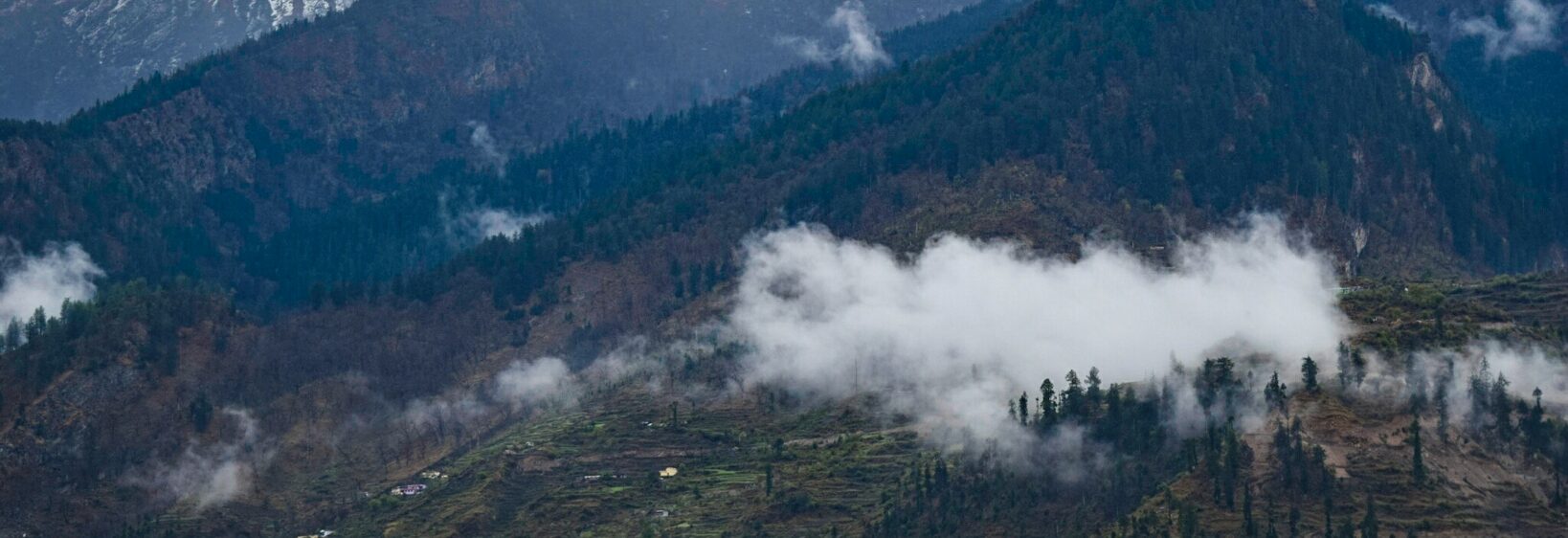
Kausani’s sunset point and the 360-degree Himalayan panorama
Kausani’s appeal changes with the light. In late afternoon, the hills around this quiet Uttarakhand settlement turn copper, while higher Himalayan peaks catch the final sun. The viewpoint above town is a favourite place to photograph the range and watch the valley settle into evening.
Kausani’s Sunset Point: Three Hundred Sixty Degree Himalayan Panorama is best understood as a sweeping circle of views, not one uninterrupted mountain wall. Clear conditions may reveal Nanda Devi, Trishul, Panchachuli and other snowy summits, although haze and cloud often soften the farthest ridges.
A short walk from central Kausani leads to the viewing area. Plan around transport, weather and sunset time, and consider staying overnight so you can experience the atmosphere after day visitors leave.
Reading the Himalayan horizon
At the viewpoint, look slowly instead of focusing on a single peak. The broad Kausani travel gallery provides useful regional context, while Eco Point offers a different relationship between pine forest, villages and mountain walls. From Sunset Point, foreground slopes create layered frames around the distant snow.
Visibility determines how dramatic the scene becomes. Monsoon clouds can produce spectacular shafts of light, while crisp winter air may uncover far-off summits. A panoramic lens adds breadth, but a wide-angle zoom is more practical for visitors who want recognisable photographs of individual peaks.
Timing the light and protecting the camera
Arrive 60–90 minutes before sunset to find a clear position before the viewing area fills. The light moves from warm side-light on nearer ridges to pink and amber on the highest snow. Keep the horizon level and take several frames, as cloud can change within minutes.
Australian seasons run in reverse. January is midsummer in Australia but winter in Kausani, with cool evenings, misty mornings and potentially excellent visibility. Visitors travelling from Sydney or Melbourne should check the local sunset time rather than relying on an Australian almanac.
Clothes, food and small comforts
The hill station can feel cool even in bright weather. Bring a wind-resistant layer, warm fleece and closed shoes for dew, loose gravel or the occasional leech after rain. A compact tripod and spare camera battery are useful, although a phone can also capture the changing colours beautifully.
Tea at a roadside stall, warming noodles and simple vegetarian meals are easier to find than a broad international menu. Kausani’s small local market sells woollen gloves, caps, socks and snacks, often at fixed prices. Visitors arranging portraits or a small wedding shoot can review makeup preparation ideas before travelling.
Reaching Kausani from Kathgodam or Almora
Most visitors drive from Kathgodam, roughly 40 kilometres away, allowing five or six hours for the winding road and stops near Bageshwar. Almora is closer at around 22 kilometres, but the mountain journey still takes time. Shared jeeps and local buses exist, though they are less convenient for reaching sunset light on schedule.
Australian road-trip habits are useful here: drive on the left, allow generous distances between towns and refuel before leaving larger settlements. Roads may be narrow, with slow lorries, pedestrians, animals and sharp bends. A driver familiar with the route is valuable, especially for visitors unused to Himalayan traffic.
Temples and traditions beyond the viewpoint
About 20 kilometres towards Bageshwar, the Baijnath temple complex makes an easy cultural companion to a Kausani stay. Sacred imagery, old stone carving and the setting near the Saryu River reward a slower visit than the quick stop many day travellers make.
Explore the Baijnath temple complex for insight into its architecture and spiritual setting. Pair the visit with time to observe everyday village life. Respect dress codes around shrines, remove shoes where requested and ask before photographing worshippers.
Australian habits that make the journey easier
Carry cash in small denominations for roadside stalls and the local market. Cards and UPI payments work in many hotels and established shops but are not universal in small businesses, unlike the tap-and-pay routine familiar around Sydney and Melbourne.
A stop for masala chai reflects Melbourne’s laneway coffee habit, although the setting is a plastic chair beside a Himalayan road rather than a fitted-out café. Similarly, a Saturday visit to Melbourne’s Prahran Market might inspire a browse through Kausani’s stalls, where produce, snacks and warm woollen goods provide a snapshot of hill-station life.
Download offline maps before leaving Almora or Kathgodam, since mobile coverage can weaken on exposed viewpoints. Keep accommodation and transport confirmations accessible without a connection, and allow time for unhurried stops rather than treating the journey purely as a transfer between destinations.
Comparing Kausani with familiar Australian scenery
Viewpoints in the Blue Mountains west of Sydney offer eucalyptus-covered valleys and broad sunset colour, making them a useful benchmark. Kausani feels more Himalayan because of its snowline, dense conifers, village architecture and immediate proximity to high passes. The result is a meeting of inhabited slopes and immense peaks rather than an uninterrupted wilderness.
Kausani rewards travellers who pause and plan for changing visibility, while Blue Mountains lookouts are generally easier to reach and pair with picnic areas or heritage railway trips. Both destinations suit a slow afternoon, but Kausani’s mountain roads, cooler evenings and wider horizons create a distinctly different sense of scale.
| Feature | Kausani sunset point | Blue Mountains viewpoints near Sydney |
|---|---|---|
| Landscape | Conifer hills, villages and distant snow peaks | Eucalyptus forest, sandstone cliffs and deep valleys |
| Access | Short walk from central hotels; winding roads from Kathgodam | Signed lookouts, picnic areas and heritage rail nearby |
| Evening light | Broad alpine glow with rapidly changing cloud | Warm colour across cliffs and distant ranges |
| Planning | Check haze, carry layers and allow a full day | Check traffic, book parking and prepare for sudden showers |