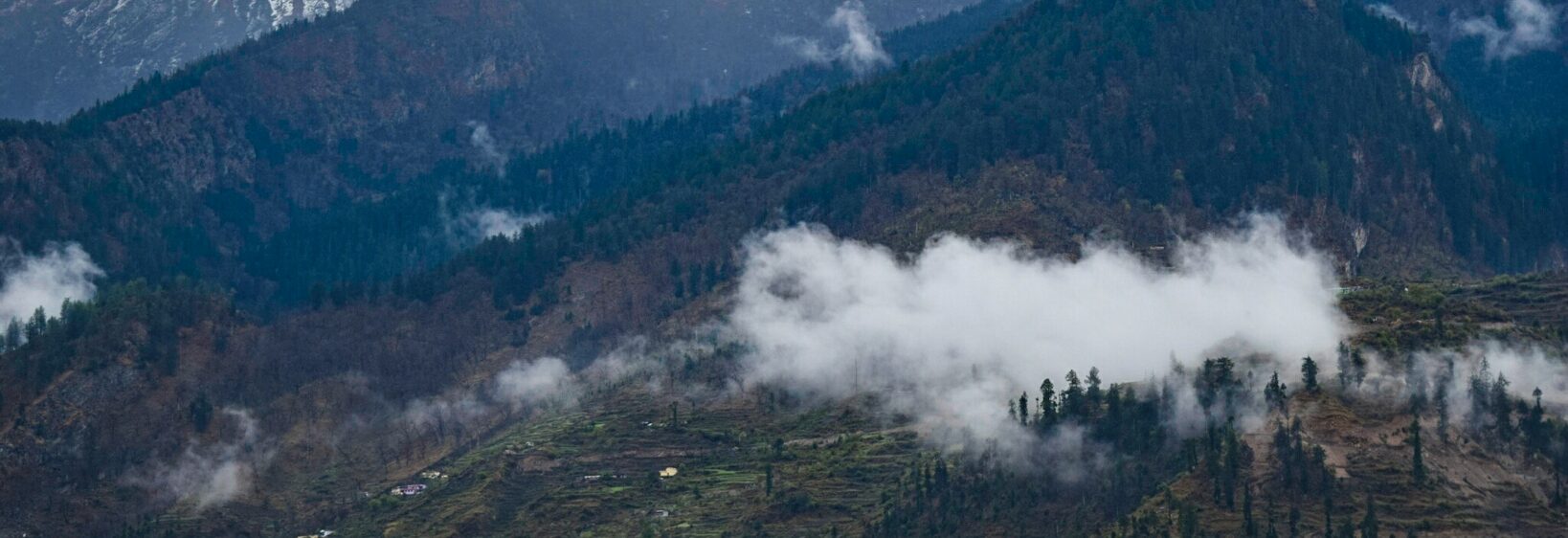
Binog wildlife sanctuary: mossy forests and bird photography
Binog Wildlife Sanctuary offers a compact yet rewarding encounter with the Pithoragarh valley’s moss-dark forests, highland birds and changing monsoon light. For photographers, its value lies in the layered scenes waiting along village paths: wet leaves, lichen-covered trunks, mountain mist and birds moving quietly through the canopy.
The sanctuary lies in Uttarakhand’s Pithoragarh district, close to Binog and Dhak, within a landscape shaped by Himalayan forests, terraced villages and traditional community life. Elevation changes bring distinct habitats within a relatively short drive, while trails remain informal and conditions can shift quickly after rain.
The bird list rewards patience. Depending on the season and forest patch, sightings may include Himalayan monal, koklass and cheer pheasants, Himalayan cutia, grey sibia, thrushes and other montane species. Identification should be based on field marks and behaviour, not images alone, and every photograph should preserve the birds’ wild context.
For Australian travellers, Binog feels different from the eucalyptus woodlands many know around Melbourne, yet the early starts, wet-weather caution and careful observation will feel familiar. A practical trip combines a reliable vehicle, modest gear, respectful conduct and enough flexibility to follow weather rather than a fixed checklist.
Forest light and trails near Pithoragarh
Oak, pine, rhododendron and broadleaf vegetation create a rich vertical palette, with moss and epiphytes softening trunks and branches. Damp mornings often produce the strongest atmospheric photographs, but slippery paths and leeches make footwear more important than a large camera bag. Walk slowly, keep voices low and stay on established village routes.
The surrounding valley has broader photographic appeal. A photographer’s perspective on Pithoragarh Valley photography can help connect forest fragments with ridges, fields and settlements. At Binog, frame details first—feathers on the trail, rain-filled leaves, weathered bark—then widen the view only when birds and people are comfortable.
A practical birder-photographer rhythm
Plan two slow sessions rather than a frantic full-day circuit: one around first light for canopy species and another near dusk for calls, silhouettes and shifting forest colour. Keep the longest lens capped until a bird settles, use a shutter or silent mode appropriate to the light, and avoid flash, playback and repeated approaches.
Small groups create less disturbance than a crowd. Local guiding knowledge can be valuable, especially for access and species identification; Mukteshwar village homestays illustrate how village-led stays can connect food, accommodation and regional knowledge with a slower exploration of the landscape.
Monsoon photography with care
The monsoon turns Binog into a study of texture. Mist lifts from fields, saturated moss glows under soft light, and streams rise beside footpaths. A monsoon forest guide provides wider advice on navigating wet conditions, while photographers should add insect protection, dry bags, spare clothing and dry socks to every kit.
Rain also raises ethical and practical questions. Do not bait birds, handle chicks or block routes used by villagers. Leeches are common but not a reason to hurry beyond one’s ability; pause, dress the wound properly and continue only when stable. Never leave feeders or call playback behind, since habituated birds become vulnerable after visitors depart.
Binog and familiar Australian birding
Melbourne bush walkers may compare the damp forest floor with Victorian eucalypt country, but Binog’s oak-rhododendron communities and richer montane bird mix feel distinct. Australian favourites such as kookaburras, rainbow lorikeets, bell miners and magpies should not be expected; instead, search for Himalayan monal, pheasants, cutias, sibias and alpine thrushes.
Photographers coming from Sydney may already know the discipline of dawn shoots in the Royal Botanic Garden, where suburban birds tolerate close observers only when disturbance remains low. Australian birding culture also values precise field notes and responsible reporting through bird-record apps, but sensitive coordinates and nesting information should remain private.
Local camera markets can make preparation easier. Melbourne’s specialist dealers and Sydney’s second-hand camera shops often stock lightweight telephoto glass, while rental desks may supply a 100–400mm lens for a short visit. Buying used, carrying less and protecting equipment from monsoon rain all support a lighter footprint.
Planning a respectful and productive visit
Spring and autumn generally offer clearer trail access and active birdlife, although conditions depend on local reports. Carry water, offline maps, a charged power bank and basic first-aid supplies; tell someone your route; and follow the Leave No Trace habits familiar to Australian bush-walking groups. Hiring a local vehicle and guide also supports regional livelihoods.
Build the day around weather, access and daylight rather than a rigid list. Confirm permissions where required, avoid nesting areas, and ask before photographing residents, ceremonies or private property. A telephoto lens can compress the forest beautifully, but a smaller camera and watchful silence often reveal more.
| Aspect | Binog wildlife sanctuary | Australian comparison |
|---|---|---|
| Forest setting | Oak, pine, rhododendron and mossy broadleaf habitat | Eucalypt forests dominate much of southern Australia |
| Bird subjects | Himalayan monal, pheasants, cutias, sibias and thrushes | Familiar subjects include kookaburras, lorikeets, honeyeaters and magpies |
| Photography rhythm | Slow dawn and dusk sessions on village trails | Similar discipline applies in parks and botanic gardens |
| Weather | Monsoon mist, wet trails and dense green foliage | Heavy rain is familiar around Melbourne, Sydney and Australia’s tropical north |
| Equipment | Lightweight camera, rain protection and sturdy footwear | Used-camera dealers and rental outlets are widely available in major cities |
Choose one or two target species, leave time for delays and accept that no photograph is guaranteed. The reward is the search itself: a bird glimpsed through rain, a trail disappearing into oak and a landscape observed without altering it.