Mukteshwar Temple: hilltop shrine and architectural details
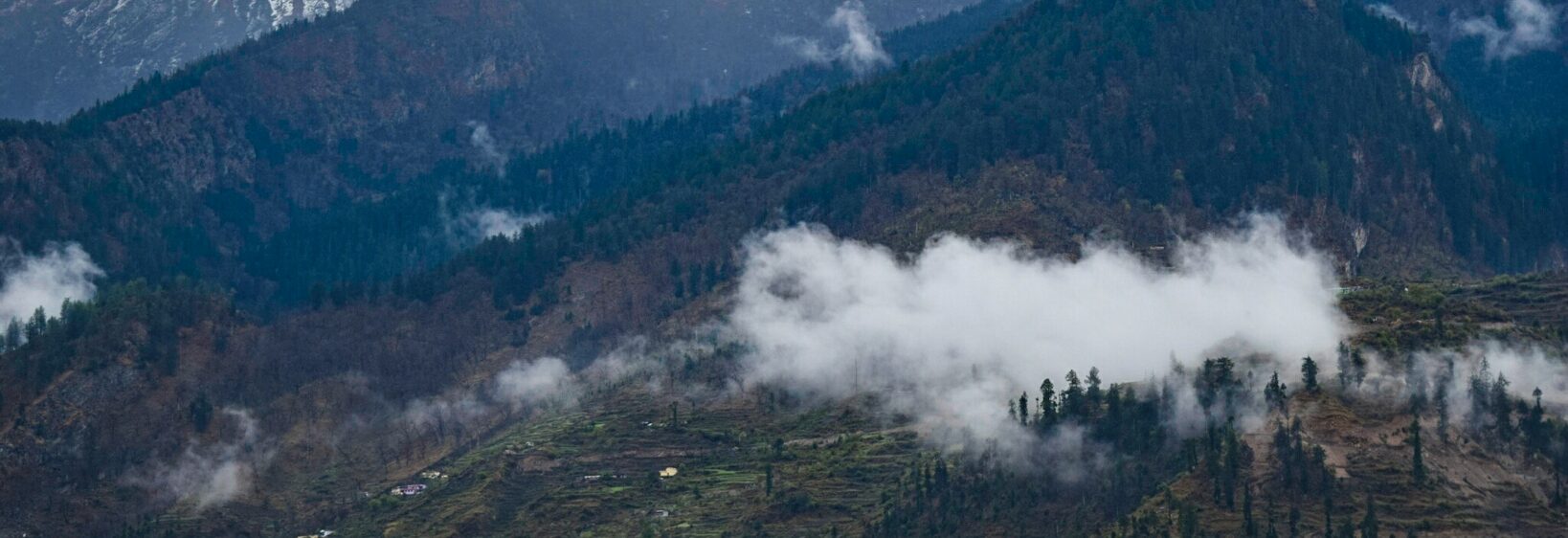
Mukteshwar Temple stands on a rocky rise in the Chakrata area of Dehradun district, Uttarakhand, where a steep path opens to broad views across the Doon Valley and towards the Himalaya. Dedicated to Shiva, this is a working shrine whose compact proportions, carved stonework and mountain setting repay attention beyond a skyline photograph.
The temple belongs to a wider Dehradun–Chakrata circuit, yet it is not a sightseeing complex. A rewarding visit combines close observation of its architecture with patience around daily worship, while changing weather and uneven access make flexible timing essential.
Origins and the hilltop setting
The present shrine is generally dated to the 12th century and linked to Raja Garhwan of Sirmour. Later repairs and repainting have altered its surface, so it is best understood as a medieval foundation renewed by generations of devotees rather than an untouched monument.
At about 2,330 metres, Mukteshwar occupies a wind-exposed ridge above the valley. The final approach is roughly 1.5–2 kilometres from the road or parking area. Rock-cut steps and uneven paving make sturdy footwear more useful than a tightly timed schedule.
Local legends connect the hill with royal vows and Shiva, and their details vary between storytellers. More significant is the continuing relationship between nearby villages, resident priests and pilgrims, who keep the shrine active through daily worship and festival gatherings.
Architectural details
The building belongs broadly to the North Indian Nagara tradition, although successive repairs complicate any strict stylistic label. Its form is compact: a raised base, defined entrance, small forecourt and sanctum draw the eye inward and upward, while painted finishes soften the weight of the stone.
Details sit at human scale. Carved mouldings, floral or geometric bands, pillar forms and devotional figures appear around the doorway and threshold, with brass lamps and ritual fittings adding texture closer to the sanctum. The altar centres on a Shiva lingam, and the progression from exposed ridge to dim interior feels deliberately compressed.
Stone, plaster, timber, painted metal and brass appear together, recording construction and continuing use. Monsoon moisture, strong sun and winter frost put pressure on paths and surfaces. The complex therefore looks cared for and alive, maintained piece by piece rather than preserved as a static relic.
Worship and regional craft
Puja, aarti, offerings of flowers, fruit and bilva leaves, and the ringing of bells establish the temple’s daily rhythm. Devotees commonly circle the shrine clockwise. Mondays and major Shaiva festivals, especially Maha Shivaratri, bring larger crowds, while early morning offers a quieter chance to observe preparations.
The surrounding valley has its own craft language, seen in woollen shawls, woven textures and repeated regional motifs. The close relationship between pattern, place and handwork is explored in quilting and textile traditions, offering a complementary perspective on how communities preserve identity through making.
These traditions should not be treated as decorative scenery. The temple remains a sacred workplace, so the people making offerings, tending lamps or waiting for darshan are part of the experience, not interruptions to it.
Planning the visit from Australia
Travellers from Sydney, Melbourne or Brisbane reach the region through Delhi, then connect by rail or road to Dehradun or Chandigarh. Jolly Grant Airport has limited services, so onward arrangements should be secured before the international booking. Consult Smartraveller and official Indian visa guidance because entry requirements and airline schedules can change.
Many Australians rely on contactless cards and transport apps, but UPI is the dominant domestic payment system and foreign cards can fail outside major hotels. Carry rupee cash in small notes, use reputable ATMs and keep a backup payment method. Indian distances are already metric, but cold hill conditions are not reflected in an Australian summer wardrobe.
Australian outdoor retailers usually stock merino layers and waterproof shells, yet this shrine needs a modest town kit rather than serious alpine equipment. In Dehradun, Sahastradhara market and the Tibetan Market are practical places to find marigold garlands, prasad, incense and warm shawls. Ask before photographing vendors and avoid aggressive bargaining.
Returning to Australia also requires care. The Biosecurity Act 2015 means food, soil, plant material and wooden items must be declared, while brass purchases should be checked against current Customs rules. Photography is usually easier outside the sanctum, where posted restrictions should be followed and worshippers should not be photographed without consent. For wider terrain and visual context, Hathi Parvat views complements the temple’s panorama.
| Feature | Mukteshwar Temple | Hathi Parvat trek |
|---|---|---|
| Main appeal | Hilltop shrine, ritual atmosphere and mountain panorama | Rugged landscape and trekking scenery |
| Best for | Architecture, quiet worship and a short cultural outing | Active walkers seeking wider views |
| Access | Moderate uphill path with uneven surfaces | Steeper trail and greater weather exposure |
| Typical stay | Two to three hours | Half a day or a full day |
| Photography | Exterior details and ridge views; discretion inside | Open panoramas and mountain textures |
Respectful visit recommendations
A little preparation makes the climb easier and the visit more considerate. These essentials suit the temple and the wider walking circuit.
- Start early for cooler conditions, lighter crowds and clearer morning views.
- Wear modest clothing and shoes that are easy to remove; carry a warm layer.
- Bring water, a small cash supply, identification and offline maps.
- Respect worshippers, avoid flash inside and support nearby guides and vendors.
Leave time for the return walk rather than racing towards the next destination. A quiet pause on the ridge often reveals the scale of the valley and makes the temple’s hilltop position clearer.