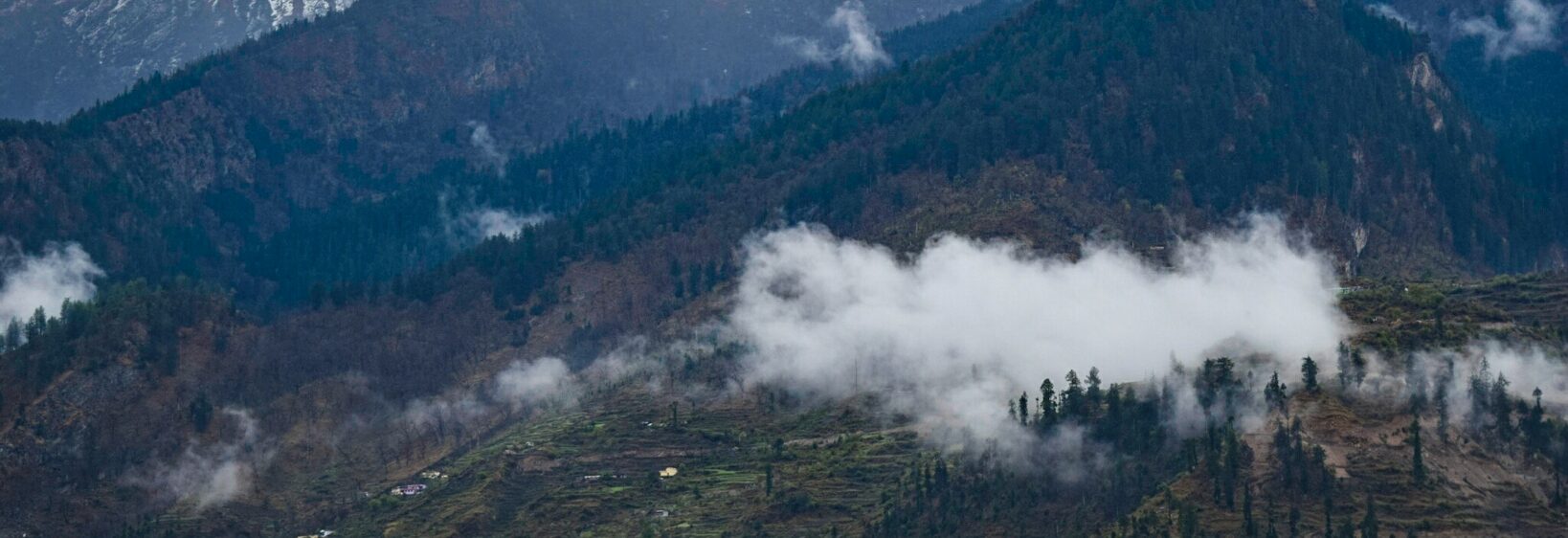
Capturing the Monsoon Greens of the Kumaon Hills
The monsoon in Kumaon turns the hills into a restless study of green, cloud and rain. Around Pangot, Chaukori and Munsiyari, forests deepen in colour, trails soften into mud, and distant ridges appear only when the weather briefly opens. For photographers, the season rewards patience more than long exposures: one shaft of light can transform an entire valley.
For Australian travellers, the Himalayan monsoon falls during the southern winter, roughly June to September. It follows a different rhythm from the summer wet season around Darwin, making early-morning fog, rain-washed villages and saturated landscapes central to the experience.
When Rain Reshapes the Roads
The core monsoon generally builds through June, becomes more frequent through July and August, and may continue into September. Clouds gather around ridges such as Chaukori and Munsiyari, while tea gardens, oak forests and terraced fields remain intensely green. The strongest downpours can overwhelm drainage, so even short journeys may take longer than expected.
Road access changes quickly near Almora, Ranikhet and the Kumaon villages. Landslides, falling branches and standing water may divert buses or restrict taxis. Check current conditions locally, carry water, and keep travel days flexible. Photographing from the roadside is safest, but never step into unstable slopes or blocked sections for a better frame.
Finding the Lushest Kumaon Scenes
Pangot and nearby Khurpatal offer forest paths, misty ridges and broad views towards Nainital. Chaukori provides dramatic cloud formations, while Munsiyari combines Himalayan scenery with traditional villages and quieter side valleys. Around Almora, the Sarola and Hawaragarh areas reveal different elevations, plant life and rain patterns within a relatively short drive.
Early light is especially valuable before the cloud thickens. Look for oak trees wrapped in moss, water flowing over slate, fern-lined paths and droplets suspended against dark foliage. These details often work better than sweeping panoramas because they show the monsoon at human scale.
Working with Soft Light and Mist
Cloud cover acts as a giant diffuser, producing gentle colour and low contrast. Use it to isolate layers of hills, photograph reflective puddles or reveal texture in old stone buildings. A polarising filter can deepen foliage, but rotating it carefully preserves the pale, luminous quality of fog.
Rain also creates opportunities for portraits, wedding photography and atmospheric street scenes. Trends travel quickly, and this account of visual culture evolution offers a parallel on how specialist imagery can reach mainstream audiences without losing its identity. Keep that perspective in mind, but let Kumaon’s weather determine the visual language.
Short Treks and Village Stays
For a foundation before Kumaon trails, this beginner trekking guide covers Garhwal preparation, although altitude, monsoon mud and local access rules still need checking for the specific route. Short walks from Pangot, Khurpatal and Satpula suit many visitors, while longer routes require a local guide and careful planning.
A homestay offers useful access to regional meals and early trail conditions. Ask guides about current paths, stream crossings and landslide warnings rather than relying solely on an app. Overnight temperatures can fall noticeably, even when nearby towns feel mild, and a dry layer is often more valuable than heavier equipment.
Monsoon Food and Everyday Language
Monsoon kitchens feature local grains, potatoes, beans, greens and warming broths. dishes such as siddu, bhatt ki churkani and aloo ke gutke are common in hill communities, while chai provides welcome warmth beside a wet trail. Ask about ingredients and dietary requirements before ordering, especially at small homestays.
Local speech adds another layer to the visit. Residents often use Hindi, Kumaoni and English together, with “ji” added for respect. Australians may hear “theek hai” meaning “all right” or “yes”, although it does not carry quite the same casual reassurance as “no worries”. A little language sensitivity improves conversations with drivers, guides and shopkeepers.
Planning a Trip from Australia
Most Australian visitors reach Delhi from Sydney or Melbourne, then continue by domestic flight, train or road towards Uttarakhand. Leave several days for connections and weather disruption, particularly when onward travel depends on the same day. Current visa requirements, passport rules and travel-insurance conditions should be confirmed before departure.
The season does not match northern Australia’s December-to-March wet season. Kumaon’s rain is driven by a different weather system and often creates cold, persistent cloud rather than tropical humidity. India also drives on the left, as Australia does, but mountain traffic, narrow roads, livestock and sudden stops require greater attention than the familiar road rules suggest.
Carry rupees in cash for small guesthouses, roadside stalls and taxis, even though cards and mobile payments work in larger hotels and established businesses. Keep emergency funds separately, confirm hotel acceptance of foreign cards and download maps before leaving urban areas. A local SIM can improve communication, while a power bank helps during frequent outages.
Gear Choices for Wet Mountain Days
Use a waterproof camera cover, lens cloth and sealed dry bags. Choose trail shoes with grip, wear quick-drying clothing and pack a warm waterproof layer. Rain leggings and a compact umbrella are more useful during village walks than on exposed ridges, where wind can turn an umbrella ineffective.
| Condition | Visual effect | Practical response |
|---|---|---|
| Steady rain | Saturated colour and soft contrast | Protect the camera and preserve highlights |
| Mist | Layered, fading ridgelines | Clean the lens and wait for openings |
| Mud | Slippery paths and slower travel | Use grippy boots, poles and a measured pace |
| Humidity | Condensation and damp straps | Store gear in a sealed bag away from warm equipment |
| Village roads | Spray, traffic and blocked sections | Check local conditions and allow extra time |
Keep batteries outside the main dry bag until needed, and carry a small cloth for condensation on lenses or camera bodies. Avoid using hot hands to warm a fogged lens, since the moisture can form spots on the front element.
Respect village privacy, follow guide instructions and avoid photographing ceremonies without permission. Leave no litter, use established paths and keep voices low around homes and livestock. The Monsoon Greens of the Kumaon Hills reveal themselves gradually, making careful travel and observant photography part of the same rewarding journey.