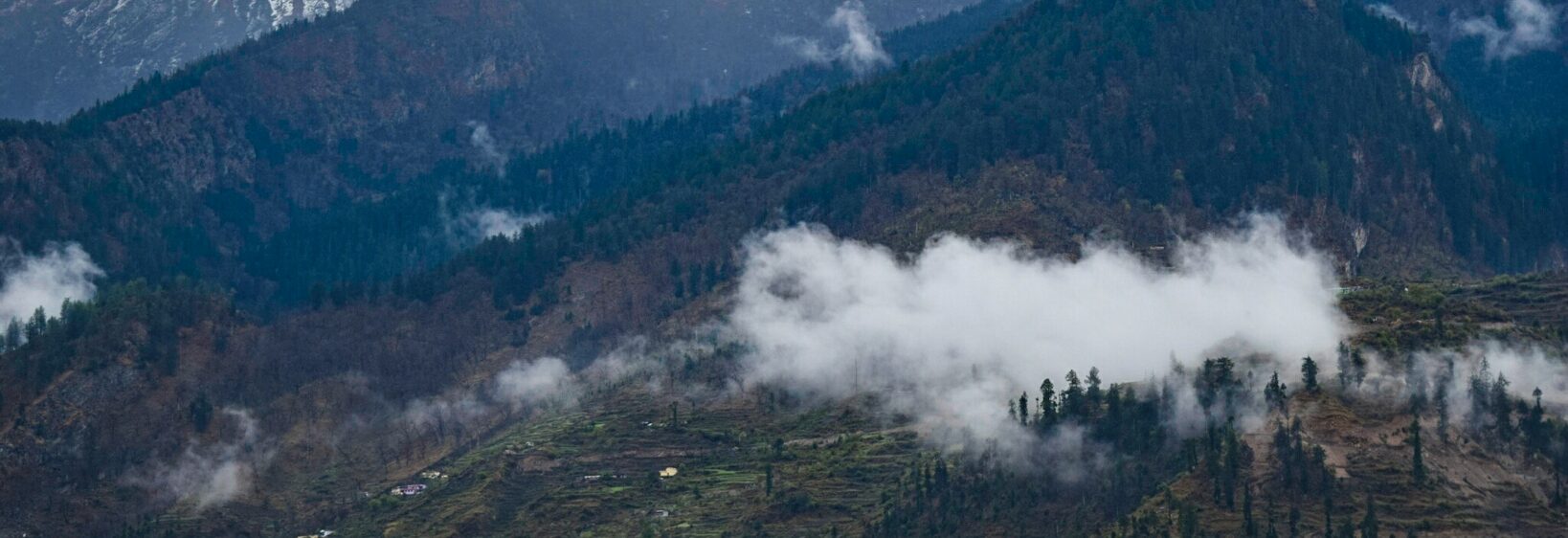
Dwarahat temples and their carved stone ceilings
Dwarahat is a historic village in Uttarakhand’s Almora district, about 20 kilometres from Almora town. Its old stone shrines form one of Kumaon’s most atmospheric sacred landscapes, with narrow lanes, wooded slopes and the Himalaya beyond. The buildings are compact, but their carved pillars and ceilings reward a slower look than the roadside view suggests.
The Dwarahat temples are commonly dated to the 8th–10th centuries, although local foundation stories and scholarly datings do not always align. Often called among Kumaon’s finest surviving stone temple groups, they preserve early masonry, shrine design and carving traditions. The craftsmanship shows how builders worked with the mountain environment long before nearby resort towns appeared.
Light is crucial to understanding the site. Narrow openings draw beams across pillars, carved lintels and ornamented ceilings, causing motifs to emerge and disappear as the day changes. The Dwarahat temple ceilings are not simply decorated surfaces: they express religious imagery, construction techniques and the close relationship between sacred space and mountain settlement.
Australian visitors normally reach the area through Delhi, flying from Sydney, Melbourne, Brisbane or Perth before continuing overland into the hills. Compared with the fixed timetables familiar in Australian cities, mountain roads and weather require patience. That slower rhythm shifts attention from arrival to detail.
Stonework shaped by the Himalayan landscape
The temples use stone extensively rather than plaster, allowing carved detail to remain part of the structure. Piers and lintels frame openings, while ceiling courses project inward to close the sanctum above. Close-fitting pieces demanded precise measurement, particularly where walls meet and loads change around doorways.
Carved pillars are both supports and visual markers. Bases, shafts and capitals move from firm geometry into floral and figurative motifs. Weathering softens some edges, but protected surfaces retain dense original workmanship. Looking from a pillar to the ceiling reveals how ornament and engineering were designed as one experience.
Deities, legends and a living sacred landscape
Names associated with the complex include Har Chandi, Champa Mata, Vimaleshwar, the Dashavatara shrine and a Shakti Peeth, reflecting Shaiva, Shakta and Vaishnava traditions. Local stories cannot always be separated from later retellings, yet they help explain why these remain active places of worship rather than isolated relics.
Offerings, painted marks or worshippers can change a shrine’s appearance within an hour. For a contrasting Himalayan pilgrimage, the Madhyamaheshwar temple trek reaches a remote shrine through forest and high country, showing how sacred travel extends beyond Dwarahat’s stone village.
Reading the carved ceilings in changing light
The ceilings reward close attention. Lotus forms, rosettes, geometric bands and miniature figures occupy the stone in layers, sometimes directly above a sanctum and sometimes along transitional spaces. Some patterns appear abstract until viewed from the right angle, when the relief resolves into repeated forms. Early and late light create different textures.
Photography should be restrained: ask before photographing worshippers, avoid unwanted flash, and never climb or lean on historic masonry. Indian heritage rules may restrict photography or access inside protected monuments. Visitors accustomed to open, evenly lit Australian galleries need time to appreciate this subtler, directional illumination.
Planning a journey from Australian cities
Most itineraries use Delhi or Dehradun as the gateway, then travel by road toward Almora and Dwarahat. October to April generally offers clearer mountain conditions, while monsoon rain makes side roads slippery. A local driver or guide can be more useful than a rigid schedule for combining Dwarahat with nearby valleys.
Australian passport holders need a valid Indian visa; the e-visa facility is available only to eligible travellers, so current government advice should be checked before booking. Keep digital copies of the visa and passport, but carry the originals required at checkpoints. India and Australia both use the left side of the road, though mountain traffic has its own rhythm of tight bends, slow lorries and frequent horn signals.
Cash remains useful in small shops and at temple donations, unlike the near-Contactless routine common in Sydney or Melbourne. Almora’s bazaar sells rajma, gahat, apples, spices and woollens in open bays. Its direct, seasonal character recalls the growers’ markets familiar in Melbourne and Brisbane, but bargaining should remain friendly and an asking price is not always final.
A respectful visit and nearby Himalayan journeys
Modest dress, removable footwear and quiet behaviour make visits easier for worshippers and other guests. Dwarahat’s shrines are close together, but upper paths and slopes can be steep; suitable shoes and a water bottle matter more than a heavy day pack. Local guides can explain which shrines remain active and where photography is appropriate.
These practical choices help preserve the character of the site:
- Visit in clear weather, preferably when afternoon light reaches the carved ceilings.
- Ask before photographing people, ceremonies or objects that have been offered.
- Carry modest cash for donations and small purchases without leaving litter.
- Follow requests concerning shoes, mobile phones and access to sanctums.
- Use a local guide for the wider lanes and lesser-known shrines.
Nearby options reveal different Kumaon landscapes. The Pangot birdwatching walk near Nainital offers woodland paths and Himalayan birdlife, while longer routes reach Deoria Tal or Sualkuchi. Returning to Australia, travellers must follow biosecurity law by declaring fresh fruit, grains, nuts, soil and other plant material, and presenting outdoor gear for inspection if requested. The carved ceilings of Dwarahat endure through both craftsmanship and care, and that pairing gives them lasting power.